A Journey Through London and Beyond: The Cinematic Landscape of Bridget Jones: Mad About the Boy
Bridget Jones Mad About the Boy film locations spotlight London and Hampstead, blending poignant storytelling with iconic British scenery.
A decade has passed since the world last shared a glass of Chardonnay with Bridget Jones, and in 2025, her return in Mad About the Boy is a poignant exploration of life after loss. Directed by Michael Morris, this long-awaited sequel finds Bridget, portrayed once more by the luminous Renée Zellweger, navigating the complexities of single motherhood, rekindled career ambitions, and the tentative steps back into the world of romance, four years after the death of her beloved Mark Darcy. Her journey is not merely emotional but geographical, charting a new map of her life across the vibrant tapestry of London and the serene beauty of the English countryside. No longer the South Londoner of old, Bridget's story in 2025 unfolds in a series of locations that are as much characters in her narrative as the people she meets.

The heart of Bridget's new world is her home in the leafy, literary enclave of Hampstead. Here, in a cozy house filled with the echoes of a past life and the lively chaos of her children, Billy and Mabel, she attempts to build a new normal. Director Michael Morris described filming in Hampstead as "fabulous," a place where "everywhere you look is beautiful," even if its charmingly narrow streets presented a logistical puzzle for the film crew. This setting marks a significant shift from her iconic previous apartments, symbolizing both her growth and the weight of her new responsibilities.
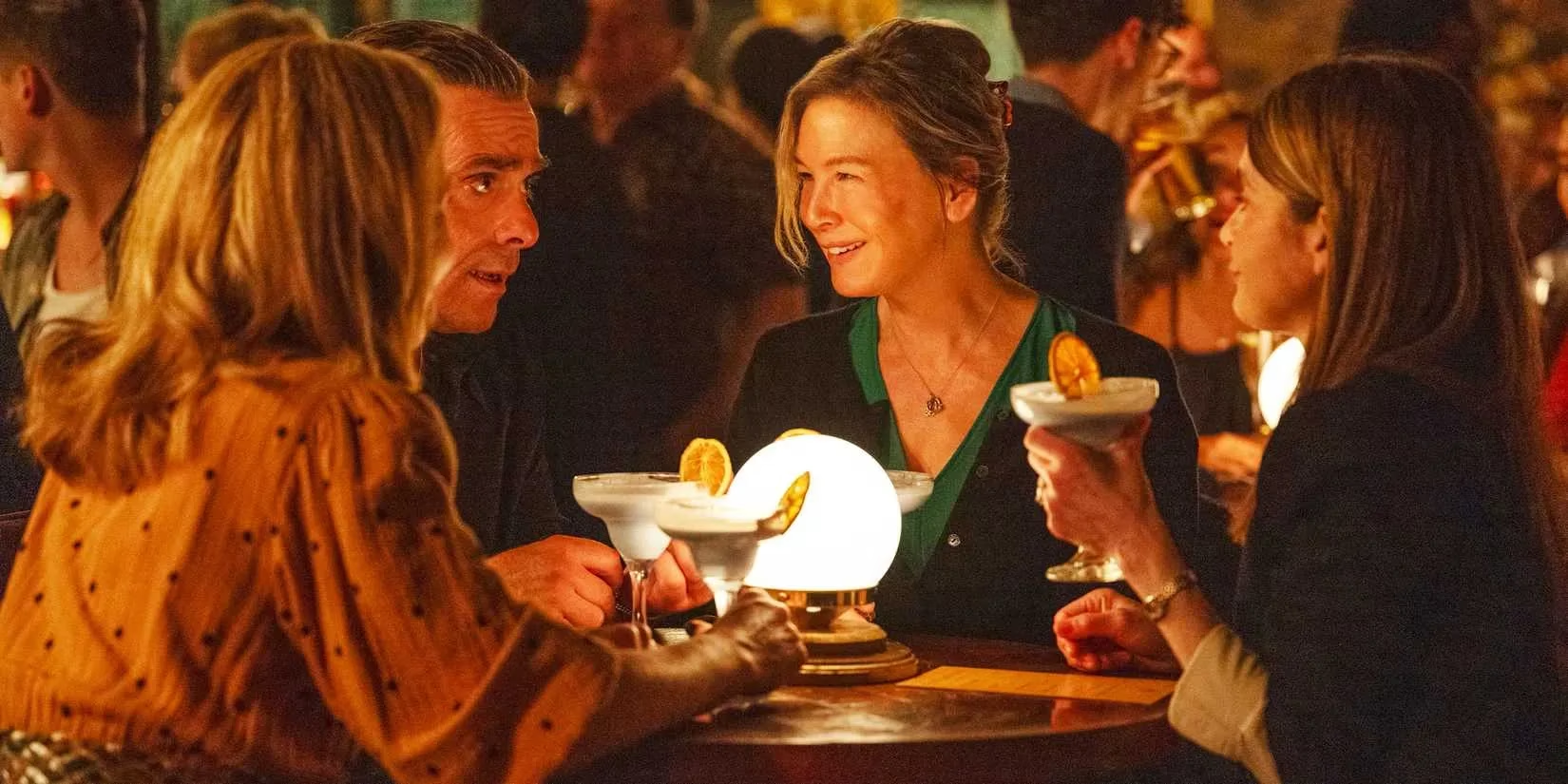
Her re-entry into social life, encouraged by friends like the ever-rogueish Daniel Cleaver, begins in the atmospheric pubs of London. Cleaver himself is reintroduced in a scene shot at the Hope & Anchor in Hammersmith, a venue with a perfectly preserved vintage aura reminiscent of the 1920s. Though closed to the public for years, its cinematic preservation allows a glimpse into a bygone era. Bridget's own pub crawls with friends lead her to historic establishments like the allegedly haunted Old Queens Head on Essex Road and the famously literary Spaniards Inn, nestled between Hampstead and Highgate—a pub immortalized in the pages of Dracula and The Pickwick Papers.
A pivotal moment of personal reclamation occurs not in a quiet corner, but in the bustling heart of the city. As Bridget finds the courage to return to work, a wave of pure, radiant joy carries her across the iconic Tower Bridge. Morris captured this scene on a Sunday morning, employing hundreds of background actors to create a river of humanity, against which Bridget's sweet, triumphant smile shines like a beacon. This public declaration of happiness contrasts beautifully with the more intimate professional spaces she inhabits. Her return to television production takes her to the hallowed halls of the Television Centre in Shepherd’s Bush, a legendary studio complex that has been home to iconic British talk shows, where she dances through the challenges of her revived career.
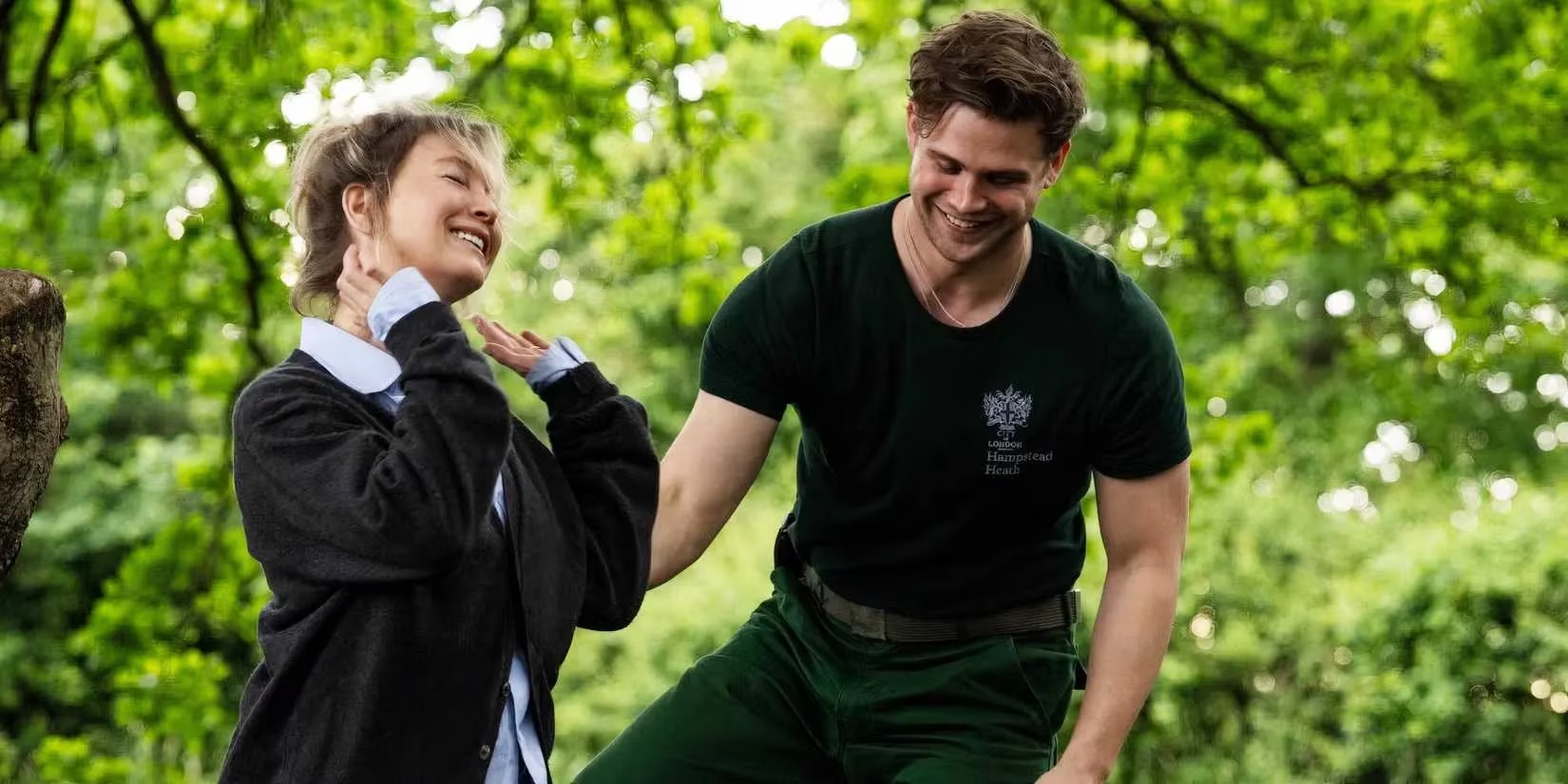
Of course, a Bridget Jones story is incomplete without romance, and hers arrives in the form of the charming 29-year-old Roxster, played by Leo Woodall. Their meet-cute is anything but conventional, involving a rescue mission from an ancient oak tree on Hampstead Heath—a location requiring special permission from the park service to film. Their first date weaves through London's culinary history, beginning at the vast and ancient Borough Market in Southwark, a nostalgic nod to her past adventures, before settling into the intimate depth of the Electric Diner on Portobello Road.
The romance reaches a memorable, splashy peak at a party hosted by her friend Talitha. In a scene destined for fan lore, Roxster makes a dramatic, pool-plunging entrance to rescue a puppy, filmed at the exquisite Petersham House in Richmond—a location so exclusive it opens to the public for only a single day each April.
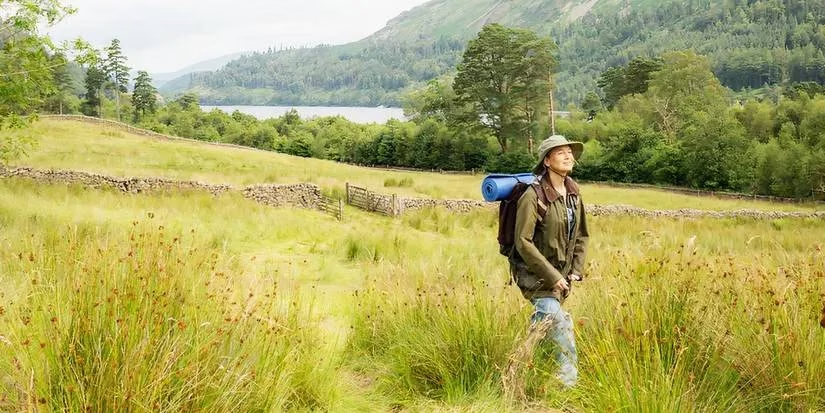
Yet, the film's soul stretches beyond the city limits. True to form, Bridget finds herself unintentionally signed up as a chaperone for her son's school trip, led by the stern but kind science teacher, Mr. Walliker. This adventure transports her—and the audience—to the breathtaking landscapes of the Lake District in Cumbria. Here, amidst the literary echoes of Jane Austen's England, Bridget's spirit, though tested by comical slips and stumbles, remains unbroken. The rustic Old Brandlehow Barn near Derwentwater provides a real and tangible anchor to this journey into nature.
The emotional crescendo of her family's healing occurs back within London's cultural fabric, at the historic Normansfield Theatre in Teddington. Built in 1877 and featured in series like Downton Abbey, this venue becomes the stage where Mr. Walliker helps Billy channel his grief into a musical tribute to his father, weaving past and present into a single, heartfelt melody.
| Location | Significance in Mad About the Boy | Notable Feature |
|---|---|---|
| Hampstead | Bridget's new home neighborhood | Leafy, literary, with narrow streets |
| Tower Bridge | Symbolic moment of joyful reclamation | Filmed with hundreds of extras |
| Hampstead Heath | Site of Bridget & Roxster's meet-cute | Ancient oak tree rescue |
| Lake District | Setting for the school trip & introspection | Scenic, literary connections |
| Normansfield Theatre | Venue for Billy's emotional concert | Historic, built in 1877 |
In Mad About the Boy, every location is a verse in the poem of Bridget's renewal. From the haunted pubs of London to the silent majesty of northern lakes, the film uses space to chart the contours of a heart learning to beat strongly again. It is a love letter not just to a beloved character, but to the landscapes—urban and rural, historic and personal—that hold her story. The map of her life has been redrawn, and in 2025, we are invited to walk its every path with her, step by wobbly, wonderful step.