
A Shift in the Silver Screen: Marvel's Georgia Departure and the UK's Rising Star
Marvel's Georgia exit marks a seismic shift in Hollywood's Southern hub, driven by UK cost savings and reshaping the film industry's future.
I remember the Georgia clay, red and rich, holding the footprints of heroes. For years, the hum of generators and the clatter of set construction were the soundtrack to Atlanta's transformation into a cinematic heartland. I wandered past soundstages that once conjured the dystopian arenas of Panem and the eerie dimensions of Hawkins, feeling the collective pulse of a thriving industry. Marvel was a cornerstone of that world, its heroes—from the Star-Spangled Man to the King of Wakanda—finding life under the Southern sun. But now, the air feels different. A quiet has settled where there was once creative chaos, a silence that speaks of a profound and deliberate shift. The era where Georgia was the undisputed 'Hollywood of the South' for Marvel's grandest tales is drawing to a close, its chapter ending not with a bang, but with the distant echo of a studio door closing for the last time.
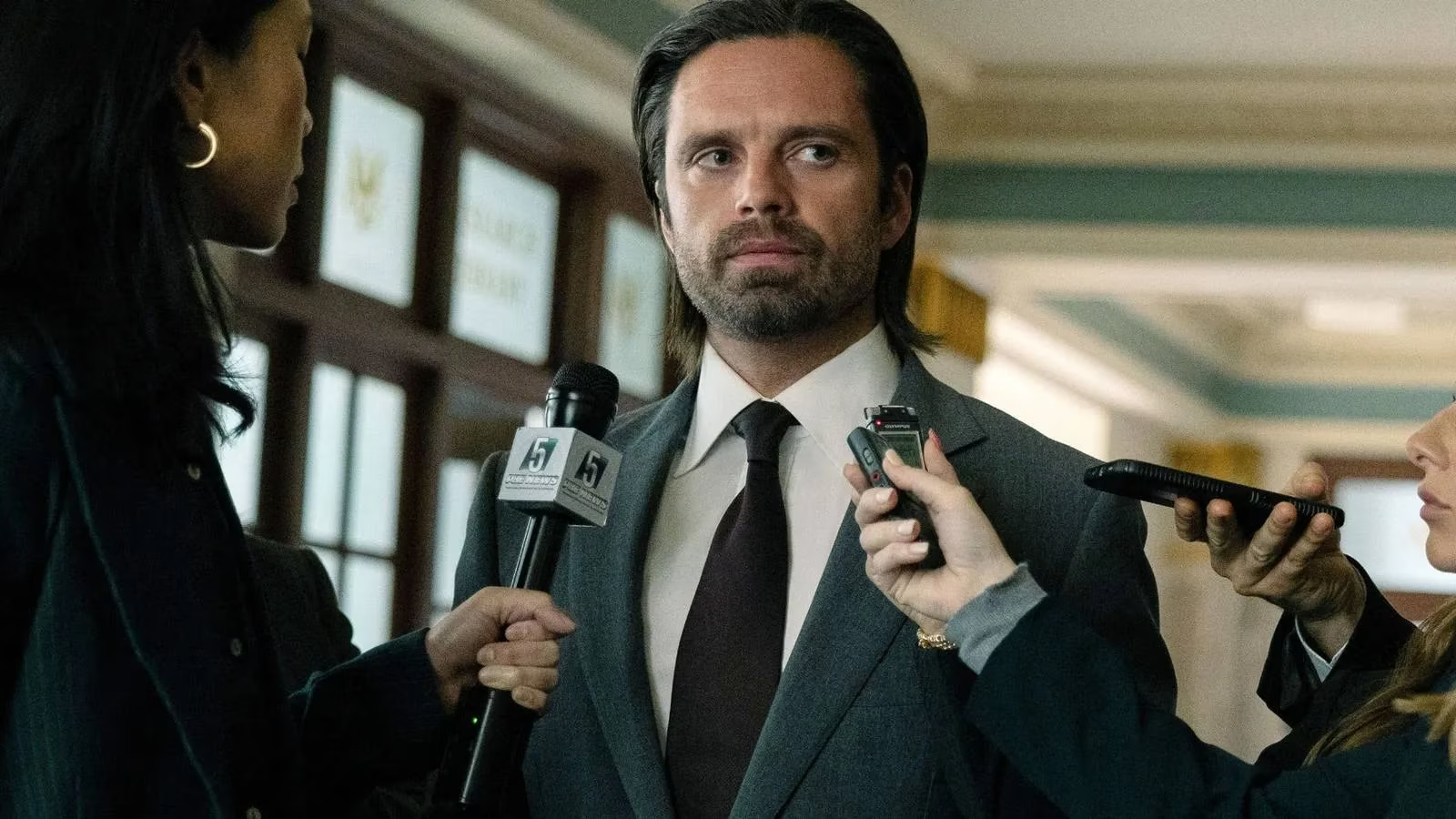
The decision, as momentous as any plot twist in the multiverse, began with The Fantastic Four: First Steps. The compass needle swung away from American shores, pointing steadfastly across the Atlantic. The logic, laid bare in financial reports and boardroom discussions, is a stark calculus of modern filmmaking: reduced production costs, cheaper labor, and the absence of employer-subsidized medical expenses thanks to the UK's universal healthcare system. For a studio where the average production budget soars around $190 million, these are not mere pennies saved; they are mountains of financial pressure alleviated. The new home is a studio complex outside London, where Disney has planted a flag with a long-term lease, a new fortress of solitude for its mightiest heroes. Here, the webs of Spider-Man: Brand New Day are being spun, and the earth-shattering conflicts of the next two Avengers sagas are being meticulously planned.
This exodus is more than a corporate relocation; it's a tremor through the lives of countless artisans. I think of the local crews—the carpenters, electricians, costume assistants, and caterers—whose livelihoods were woven into the fabric of these productions. While the stars and directors would always be fleeting guests, the backbone of any shoot is its local workforce. Marvel's departure, coupled with a broader industry cooling, has led to what reports call a 'nearly 50% drop in production spending' in Georgia in recent years. The fear is palpable, a heavy fog settling over communities that had grown to depend on the glitter of the industry. Since the labor strikes, recovery has been fragile, and for many families who built their lives around set lights and call sheets, the search for new horizons has begun out of necessity, not choice.

Yet, as one stage dims, another is brilliantly illuminated. The United Kingdom is experiencing a creative renaissance, a surge that feels both historic and inevitable. 🎬
-
A Legacy of Magic: From the hallowed halls of Hogwarts to the trenches of a galaxy far, far away in the original Star Wars, the UK has long been a sanctuary for epic storytelling.
-
The Barbie Effect: Greta Gerwig's pastel-pink phenomenon, Barbie, wasn't just a cultural moment; it was an £80 million injection into the UK economy, largely filmed at Warner Bros. Studios, Leavesden.
-
The New Marvel Hub: With Marvel's pivot, the UK solidifies its role as a primary production nexus, promising a sustained boom for its own creative sectors.
The contrast is a study in cinematic geography. Georgia's warmth and versatile landscapes are being traded for the historic studios and experienced infrastructure of the UK. It's a recalibration of the global filmmaking map, where economic incentives and logistical frameworks are redrawing the lines of where our myths are made.

As I look ahead to 2026 and beyond, the narrative of this shift continues to unfold. The scheduled Harry Potter television series promises to be another crown jewel in the UK's production slate, ensuring the magic continues. For Marvel, this move is a strategic new phase, a way to steward its vast universe through an evolving economic landscape. But in Georgia, the question lingers like a unresolved chord: what comes next? Can the 'Hollywood of the South' reinvent itself, attracting new stories and storytellers, or has a golden age passed? The departure of Earth's Mightiest Heroes leaves behind a tangible void, a reminder that in the business of dreams, the scenery changes, and the show must adapt to find its new stage. For now, the spotlight has pivoted, casting the ancient stones and green fields of Britain in the luminous glow of a cinematic future being built, frame by meticulous frame.