
Adolescence: A Cinematic Symphony in Real-Time
Netflix's psychological crime odyssey, *Adolescence*, is a breathtaking feat of cinematic endurance, weaving a haunting tapestry of guilt and grief through its audacious, unbroken narrative.
In the realm of contemporary storytelling, where digital trickery often conceals the seams of creation, a singular vision emerges, a testament to raw, unfiltered artistry. Netflix's psychological crime odyssey, Adolescence, transcends mere entertainment to become a breathtaking feat of cinematic endurance. Conceived as a continuous, unbroken narrative across its four chapters, the series weaves a haunting tapestry of guilt, grief, and the unraveling of a young man's psyche following a tragic death. It is a project where the camera becomes a silent, relentless witness, its gaze never faltering, pulling the audience into a vortex of emotional and visual intensity that feels less like viewing and more like inhabiting a living, breathing moment stretched across time.
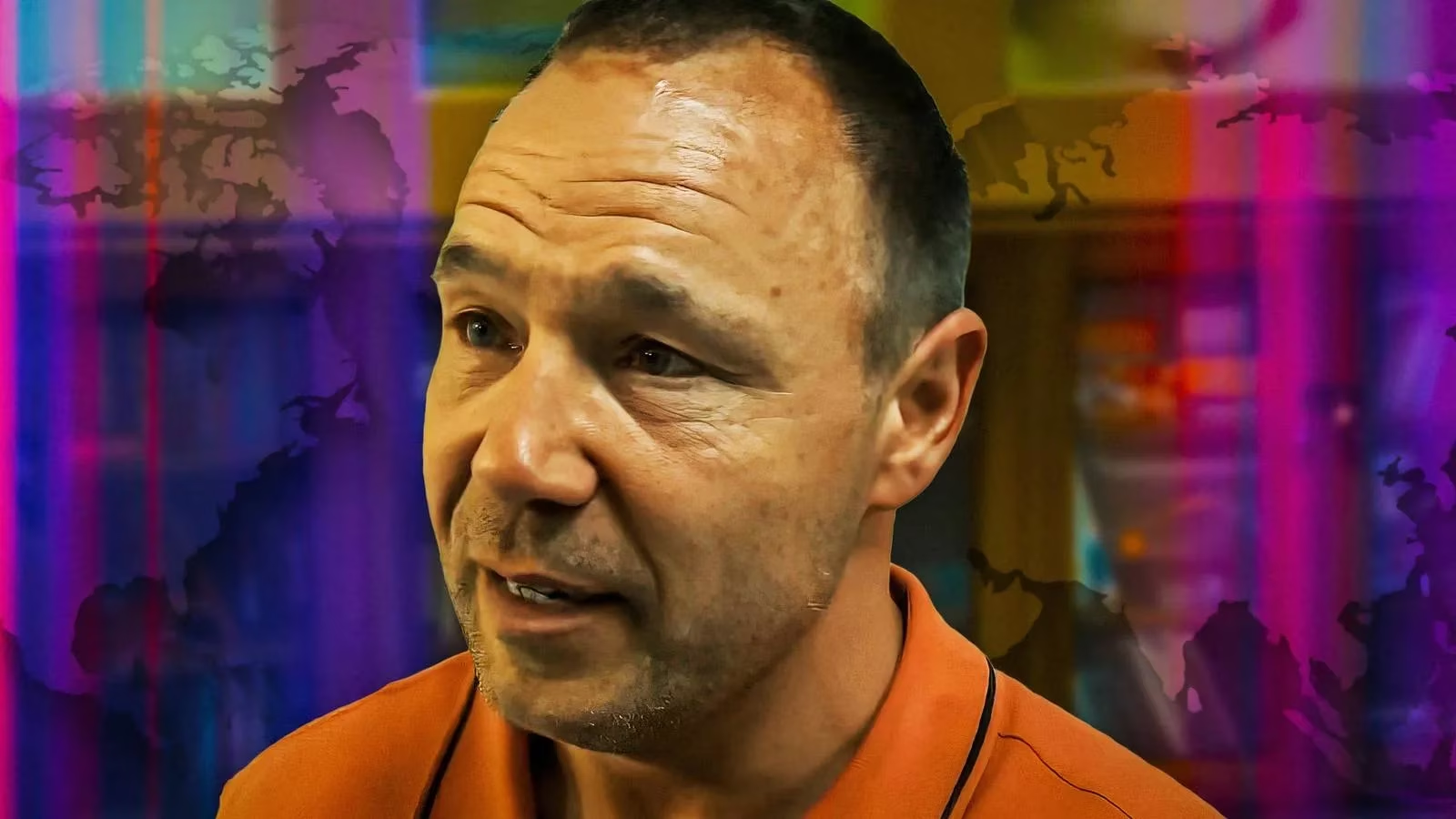
The Unblinking Eye: The One-Take Marvel
The core technical triumph of Adolescence is its audacious commitment to genuine, unedited long takes. While celebrated films like Birdman and 1917 masterfully crafted the illusion of continuity, this series raises the bar to a staggering new height. Each episode, ranging from 51 to 65 minutes, was filmed in a single, uninterrupted shot—a true cinematic marathon. As the production team confirmed, there are no hidden cuts, no digital stitches masking transitions. This "real-time" approach forges an unparalleled intimacy; the viewer is tethered to the characters' every breath, every hesitant glance, as the mystery surrounding Katie's demise slowly, painfully unfurls. The camera, operated with precision on a stabilizing gimbal, becomes a dancer, weaving through corridors, pivoting between characters in tense exchanges, creating a fluid, theater-like immediacy that is both mesmerizing and deeply immersive.
The Canvas of Yorkshire: Authenticity in Setting
The emotional weight of the narrative is grounded in the stark, authentic landscapes of Yorkshire, England. The production was deeply rooted in this locale, with filming occurring in specific areas like Pontefract in Wakefield. This choice was poetically intertwined with casting; the young lead, Owen Cooper, hails from nearby Warrington, and his use of his natural accent lends a gritty, undeniable verisimilitude to his portrayal of the troubled Jamie. Key locations were either found or built from the ground up to serve the relentless camera:
-
The Police Headquarters (Episode 1): Constructed entirely on a sound stage at Production Park in Yorkshire, this set was a bespoke creation, allowing for the intricate, continuous choreography required.
-
Minsthorpe Community College (Episode 2): The entirety of this episode unfolds within this Wakefield school, a setting transformed by a massive orchestration of talent. Reports indicate a staggering 320 teenagers and 50 adults were meticulously coordinated, all required to be in the exact right place at the precise right moment—a testament to the monumental logistical ballet behind the scenes. This episode alone required 13 takes to achieve perfection.
-
The Interview Room & Finale: The psychologically charged dialogue in episode 3 was filmed at Production Park, while the series' poignant conclusion was captured in a residential neighborhood in Yorkshire, closing the story within the same earthy, relatable geography where it began.
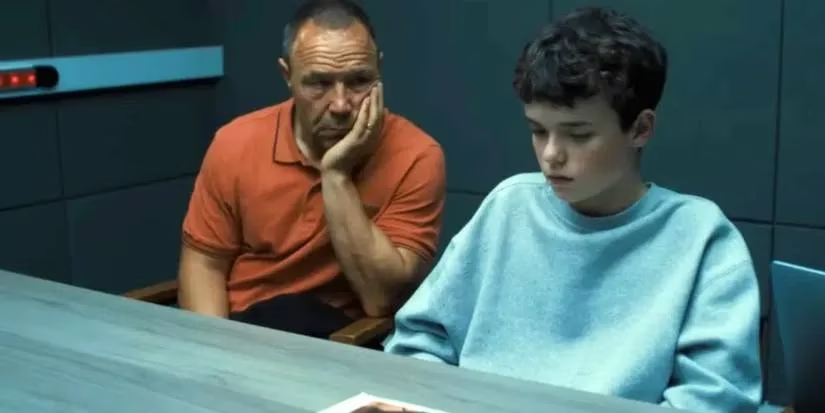
The Choreography of Perfection: Rehearsal and Resilience
The execution of such a visionary project was a monumental exercise in preparation and resilience. Once the script was locked for four continuous takes, the blocking—for both actors and the camera—was established. This was a complex puzzle where every element, from lead performers to background extras and crew members, had to move in a perfectly synchronized symphony. Rehearsals were the bedrock of this process, building a muscle memory for the entire ensemble. The margin for error was zero; a single mistake, even forty minutes into a take, meant scrapping everything and starting anew from the beginning. The original plan of 10 takes per episode was often surpassed by the ambitious reality of production, with the final shot used in episode 4 being the 16th take on the last day—a number that speaks volumes about the relentless pursuit of the flawless flow.
A Sudden Ascent: The Drone's Poetic Flight
Amidst the grounded, handheld intimacy, Adolescence delivers a moment of breathtaking lyrical release. At the climax of episode 2, in a move that puzzled and delighted audiences, the perspective suddenly soars, the camera lifting into the air in a graceful aerial drift. This was not a digital effect but the seamless integration of a drone, to which the camera was physically latched in a meticulously planned handoff. Cinematographer Matthew Lewis revealed this was a last-minute creative decision, a desire to find a "nice beat" and return to the devastated figure of Eddie, played with raw power by Stephen Graham. This ethereal ascent serves as a powerful metaphorical exhale, lifting the viewer from the claustrophobic intensity of the school setting to a wider, more contemplative vantage point, reminding us of the world continuing beyond the immediate tragedy.
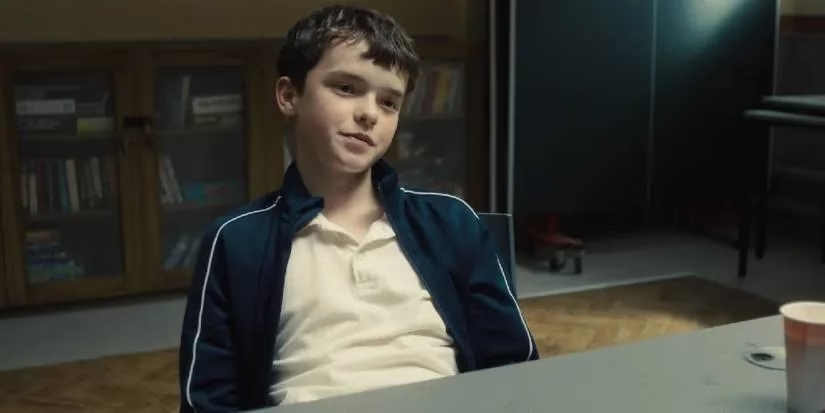
A Legacy in Motion
As a piece crafted for 2025 and enduring into 2026, Adolescence stands as a bold benchmark in narrative television. It is a series where form and function are inextricably fused; the unbroken take is not a mere gimmick but the very heartbeat of the story, amplifying the inescapable tension and the relentless passage of time for its protagonist. It is a collaborative masterpiece of acting, direction, and cinematographic courage, proving that within the digital age, the most profound magic can sometimes be found in refusing to cut away, in having the audacity to simply watch, and feel, in one sustained, unforgettable breath.
| Element | Detail | Impact on the Production |
|---|---|---|
| Filming Technique | Genuine single continuous shot per episode | Creates immersive, real-time tension; no editorial manipulation. |
| Primary Location | Yorkshire, England (Pontefract, Wakefield) | Provides authentic, gritty backdrop; integrates local talent. |
| Key Logistical Feat | Coordinating 370+ actors in Episode 2 | Required military precision for the uninterrupted shot to succeed. |
| Signature Camera Move | Handoff to aerial drone at end of Episode 2 | Adds a poetic, transcendent visual metaphor to the grounded drama. |
| Core Creative Challenge | Zero margin for error during takes | Demanded exhaustive rehearsal and incredible resilience from cast & crew. |