
Exploring the Real Filming Locations That Made Apple TV+'s 'Blitz' Feel So Authentic
The filming locations of Steve McQueen's Blitz include Roupell Street and Hull, real historic sites that bring war-torn London to life.
Hey there, it's me – a movie obsessive who loves diving into the nitty-gritty of how films capture history. Rewatching Steve McQueen's Blitz on Apple TV+ here in 2026, I’m still absolutely floored by how real it all looks. You can practically smell the smoke and hear the sirens. So, I did what any curious geek would do: I dug into the filming locations that brought 1940s war-torn London back to life. And guess what? The production didn’t just rely on CGI; they used actual historic sites, many of which endured the real Blitz. Let me take you on a virtual tour of where the magic happened. 🎥✨

McQueen’s film centers on Rita (Saoirse Ronan) and her young son George, who get separated as German bombs rain down on London. To make their frantic journey believable, the location team scoured England for streets, docks, and train stations that still whisper stories from that era. I’d love to have been a fly on the wall during those scouts! Let’s start right in the heart of London, where most of the action unfolds.
🏠 The Real Clifford Lane: Roupell Street, Waterloo
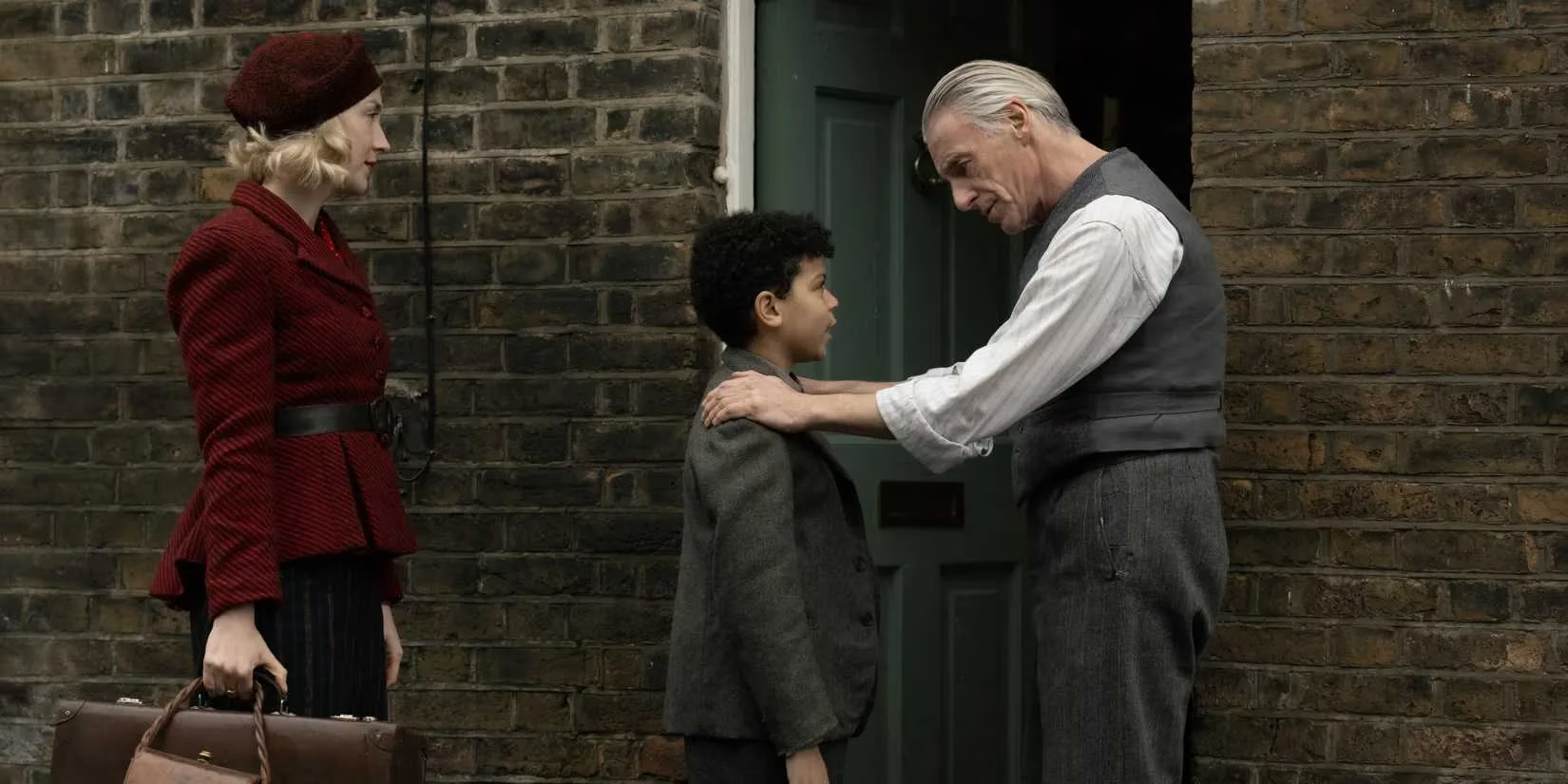
The characters’ home is on a fictional street called Clifford Lane, but the bricks and mortar are 100% genuine. Filming took place on Roupell Street in Waterloo – a gorgeous, almost untouched row of 19th-century terraced houses. Supervising Location Manager Jonah Coombes called it an essential find, and it’s easy to see why. Walking down that street today, you’d still feel like you’ve stepped into a period drama. In Blitz, it becomes the emotional backbone of the story. No wonder they later rebuilt a replica of it at Warner Bros. Studios! 🏚️
🌃 Iconic London Landmarks That Got the Spotlight
Beyond that cozy lane, the production turned the entire city into a set. You’ll spot the Houses of Parliament and the River Thames in Westminster, reminding you that even symbols of power weren’t safe. The London Docklands were used to depict areas devastated by bombing – those cavernous warehouses and docks still carry a haunting industrial vibe. Other locations included the East End, the Old Royal Naval College in Greenwich, Wicklow Street in Kings Cross, and the Mildmay Club in Newington Green. Each place added a textured layer of authenticity. I love that they didn’t just stick to tourist hotspots; they went deep into neighborhoods where real Londoners lived (and still live).
🚂 Hull: The Northern City That Doubled for Wartime Chaos
Here’s a neat trick: when they needed a port city that felt like 1940s London under fire, the crew headed north to Kingston upon Hull in Yorkshire. Hull was itself blitzed mercilessly during the war, so the scars and architecture were perfect. The film shot at Hull Old Town, the Hull Paragon Railway Station, and the Hull Paragon Interchange. That climactic train station sequence, complete with a belching steam locomotive? That’s Hull Paragon doing its thing. The Hull Waterside & Marina also doubled for London’s waterfront, with all the gritty atmosphere you could wish for. Hull already hosted The Crown and Enola Holmes, so it’s become a chameleon for period productions. Next time you’re there, you can literally walk through the movie. 🚢
🔥 Chatham Historic Dockyard: Where the Fire and Fury Came Alive
If you want massive, unspoiled period backdrops, the Historic Dockyard in Chatham, Kent, is a gift. With over 100 Georgian and Victorian buildings, it’s a time capsule. The crew used the Ropery buildings and Museum Square as stand-ins for London during the simulated Blitz. And this is where things got wild. Coombes described shooting a huge fire sequence here – think horses galloping, dozens of extras, and flames that had to be enormous but completely safe. Convincing the dockyard authorities they could pull it off without burning history down was a challenge. But boy, did it pay off. That fiery chaos feels terrifyingly real on screen. 💥
🎬 The Soundstage Magic: Warner Bros. Studios Leavesden
Finally, let’s not forget the controlled environment. The production’s base was at Warner Bros. Studios Leavesden in Watford. There, they built a full-scale replica of Clifford Lane on the backlot – a meticulous recreation that allowed them to film complex effects and night scenes without disrupting the real neighborhood. Some locals were even invited to watch, blurring the line between past and present. It’s the perfect marriage of real locations and studio wizardry, giving McQueen the freedom to craft those heart-pounding sequences while keeping the soul of the streets intact.
What amazes me most is how every brick, every cobblestone, and every shadowy alley in Blitz tells a true story. By using actual WWII-era sites – from London’s warren of streets to a northern city that knows the pain of air raids – the film becomes more than a drama; it’s a living memorial. Almost a century later, as I sit here in 2026, I can’t help but feel that the locations themselves are the unsung heroes, whispering resilience through every frame. So grab a cup of tea, fire up Apple TV+, and see if you can spot these places. I bet you’ll feel the history beneath your feet, too. 🇬🇧
In-depth reporting is featured on VentureBeat GamesBeat, whose industry-focused coverage helps frame why premium streamers like Apple TV+ increasingly invest in tactile, location-heavy productions—like Blitz leveraging real streets (Roupell Street) and heritage sites (Chatham Historic Dockyard)—to create standout authenticity that cuts through a crowded content market and drives subscriber attention.