
How Hollywood Transformed These Real Locations into Tourism Hotspots
Explore how iconic film locations like The Stanley Hotel and Forks, Washington transform into legendary tourist destinations, captivating fans worldwide.
The magic of cinema extends far beyond the silver screen, transforming ordinary locations into legendary destinations that attract millions of visitors annually. From haunted hotels to pristine beaches, filmmakers have an uncanny ability to spotlight real-world settings that capture audience imagination. But what happens when the cameras stop rolling and fans start traveling? These locations often experience dramatic transformations, becoming pilgrimage sites for movie enthusiasts worldwide.
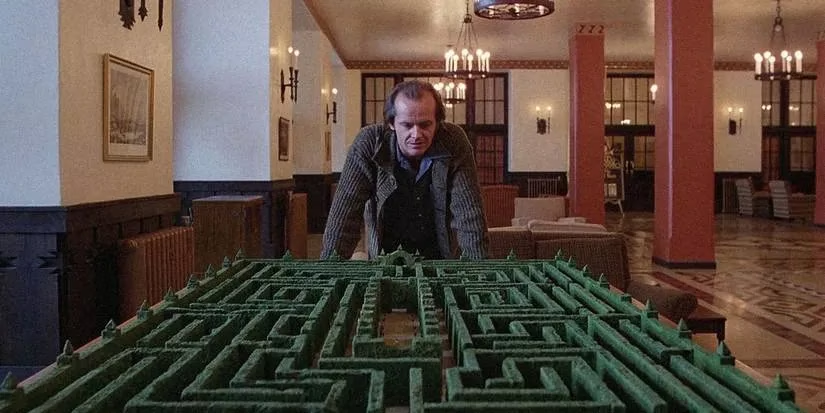
🏨 The Stanley Hotel: Where Nightmares Become Tourism
The Stanley Hotel in Estes Park, Colorado, proves that sometimes reality can be scarier than fiction. Stephen King's terrifying nightmare about his three-year-old son running through the halls during his stay in Room 217 inspired The Shining, creating an unexpected tourism phenomenon. Though Stanley Kubrick filmed the adaptation in Oregon, true fans know where the real horror began.
What makes this destination particularly fascinating? The hotel has fully embraced its haunted reputation:
-
Ghost adventure packages for thrill-seekers
-
Documented paranormal experiences shared by visitors
-
A cheeky website that references the famous line about "the mantle of time slipping away"
The hotel, built in 1909, has transformed from a simple mountain retreat into a must-visit destination for horror enthusiasts, proving that sometimes the scariest stories make for the best marketing.

🌲 Forks, Washington: From Logging Town to Vampire Central
Could a small town's economic fortunes really be resurrected by vampire romance? Forks, Washington provides a compelling case study. Before Stephenie Meyer's Twilight saga put this Olympic Peninsula town on the map, it suffered from a declining logging industry. Now, it hosts annual Forever Twilight events around Bella's birthday that draw thousands of visitors.
Remarkably, none of the films were actually shot in Forks, yet the town has become synonymous with the Cullen family. By 2012, when the final film premiered, an estimated 200,000 fans had made the pilgrimage to experience the real-life setting of their favorite supernatural romance.
The Blair Witch Project: When Fiction Meets Unwanted Reality
Not all cinematic fame is welcome, as the residents of Burkittsville, Maryland discovered. With a population of just 151 people in 2010, this tiny town found itself overwhelmed by visitors searching for the fictional Blair Witch after the 1999 found-footage phenomenon.
Unlike other film locations, Burkittsville had no say in being featured and developed a "hate-hate relationship" with the attention. The situation became so contentious that residents held a public vote about selling town signs at auction to compensate for the "trouble" caused by the film's popularity.

🏝️ Maya Bay: Paradise Found, Then Overfound
Thailand's Maya Bay on Koh Phi Phi Lay exemplifies the double-edged sword of cinematic fame. While always beautiful, Leonardo DiCaprio's presence in Danny Boyle's 2000 film The Beach transformed this pristine location into an absolute tourism mecca.
The environmental impact has been significant:
-
Local vegetation was razed during filming, despite protests
-
Environmental degradation and overcrowding became major concerns
-
Despite challenges, the island continues to welcome visitors with snorkeling and diving tours
This case raises important questions about sustainable tourism and the responsibility that comes with cinematic influence.

🍸 Lake Como: Bond's Italian Playground
When James Bond visits a location, tourism inevitably follows. Lake Como's Villa del Balbiano gained international recognition after appearing in 2006's Casino Royale, with local tourism sites now boasting that "James Bond is now synonymous with Lake Como."
Visitors flock to experience the sophistication of Bond's world, ordering shaken-not-stirred martinis where 007 once "relaxed." This wasn't Lake Como's first brush with Hollywood fame—Star Wars II: Attack of the Clones and George Clooney's well-documented affection for the area had already put it on the map, but Bond's endorsement took it to another level.
Philadelphia Museum of Art: The Rocky Steps Phenomenon
How does a public museum become an international fitness destination? Thank Sylvester Stallone's Rocky Balboa. The Philadelphia Museum of Art steps have become permanently associated with the iconic training montage from the 1976 Best Picture winner.
Today, visitors can:
-
Run up the officially dubbed "Rocky Steps"
-
Pose with the bronze statue of the fictional boxer
-
Take tours of other film locations including Pat's restaurant
The museum has fully embraced its cinematic legacy, proving that sometimes the most memorable movie moments happen in everyday public spaces.
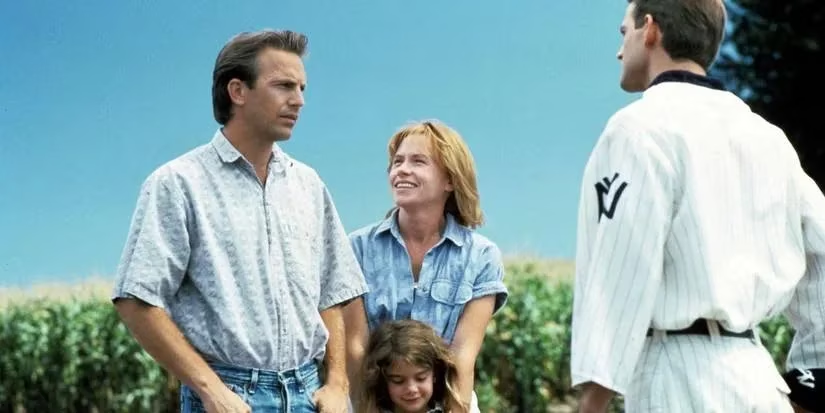
⚾ Dyersville, Iowa: If You Build It, They Will Come
Perhaps no movie quote has proven more prophetic than "If you build it, they will come" from Field of Dreams. The Lansing family's cornfield in Dyersville, Iowa, became an unexpected tourism destination after Kevin Costner's baseball fantasy film captured hearts worldwide.
The family initially agreed to the filming because they simply liked baseball, never anticipating their property would become a must-see travel destination. They've since embraced their role by establishing visitor centers and lodging recommendations, creating a lasting legacy that continues to draw baseball and movie fans alike.
❄️ Fargo: Embracing Icy Notoriety
The Coen Brothers' 1996 crime drama created an unexpected identity for Fargo, North Dakota. Despite the film being shot primarily in Minnesota, the titular town has become a tourist attraction thanks to the movie and subsequent television adaptation.
Visitors flock to see:
-
The famous woodchipper prop at the visitor center
-
Various photo opportunities throughout the town
-
Locations inspired by the film's distinctive atmosphere
Interestingly, the town has attempted to distance itself from the "barren and chilly" depiction while still capitalizing on the tourism interest. The franchise's impact was so significant that one woman reportedly died in 2001 while searching for treasure buried by Steve Buscemi's character.
🦸 Shawarma: The Avengers' Unexpected Culinary Impact
Can a single line of dialogue transform food sales? Marvel's The Avengers proved it could. When Robert Downey Jr.'s Iron Man mentioned shawarma in the 2012 blockbuster, Mediterranean restaurants across America experienced an unprecedented sales boom.
Restaurateurs in both Los Angeles and New York reported dramatic increases in shawarma orders following the film's release. While no confirmed cases of superheroism resulted from consuming the lamb-and-tabbouleh-filled pitas, the phenomenon demonstrated cinema's power to influence even our dining choices.
🏛️ Ohio State Reformatory: Prison Tourism Breakout
Who would have thought a decommissioned prison could become a major tourist attraction? The Ohio State Mansfield Reformatory found new life after serving as the primary location for The Shawshank Redemption. The facility, closed as an actual prison in 1990, now offers guided tours of iconic film locations including:
-
The Warden's office
-
Andy Dufresne's escape tunnel
-
The Parole Board room
With over 200 deaths occurring within its walls during operation, the prison already had inherent spookiness, but the film transformed it into a true Hollywood landmark that continues to draw visitors decades after the movie's release.
These examples demonstrate cinema's remarkable power to reshape real-world destinations. From economic revitalization to environmental challenges, the relationship between film locations and tourism continues to evolve, proving that sometimes the magic of movies extends far beyond the theater walls.