
How Holy Island Became the Haunting Heart of 28 Years Later
28 Years Later and Lindisfarne deliver haunting post-apocalyptic horror, blending cult-like survival with chilling medieval symbolism.
Danny Boyle’s return to the rage-infected world he helped create was never going to be subtle, but even seasoned fans of the franchise were caught off guard by the eerie stillness of Lindisfarne. By the time 28 Years Later finally hit screens in the summer of 2025, audiences had already dissected every frame of its chilling trailer. The sequel, set nearly three decades after the original outbreak, swapped the frantic chaos of city streets for something far more unsettling: a windswept tidal island off the northeast coast of England, where the remnants of humanity had carved out a fragile, deeply strange existence.
The real-life location, known both as Holy Island and Lindisfarne, wears its history like a second skin. Long before it became a cinematic canvas for post-apocalyptic dread, the island was the beating heart of Celtic Christianity. A rebuilt monastery still stands there, alongside a castle that stares out over the North Sea, and not much else — a handful of pubs, a small hotel, a museum. That stark isolation made it perfect for the production team. But what the crew did with that canvas is what really turned heads. In the film, the island bristles with hand-built battlements that look almost medieval, and at its center rises a tall tower constructed from human skulls, flanked by ghastly monuments to the dead. Honestly, it’s the kind of place that makes your skin crawl before anyone even says a word.
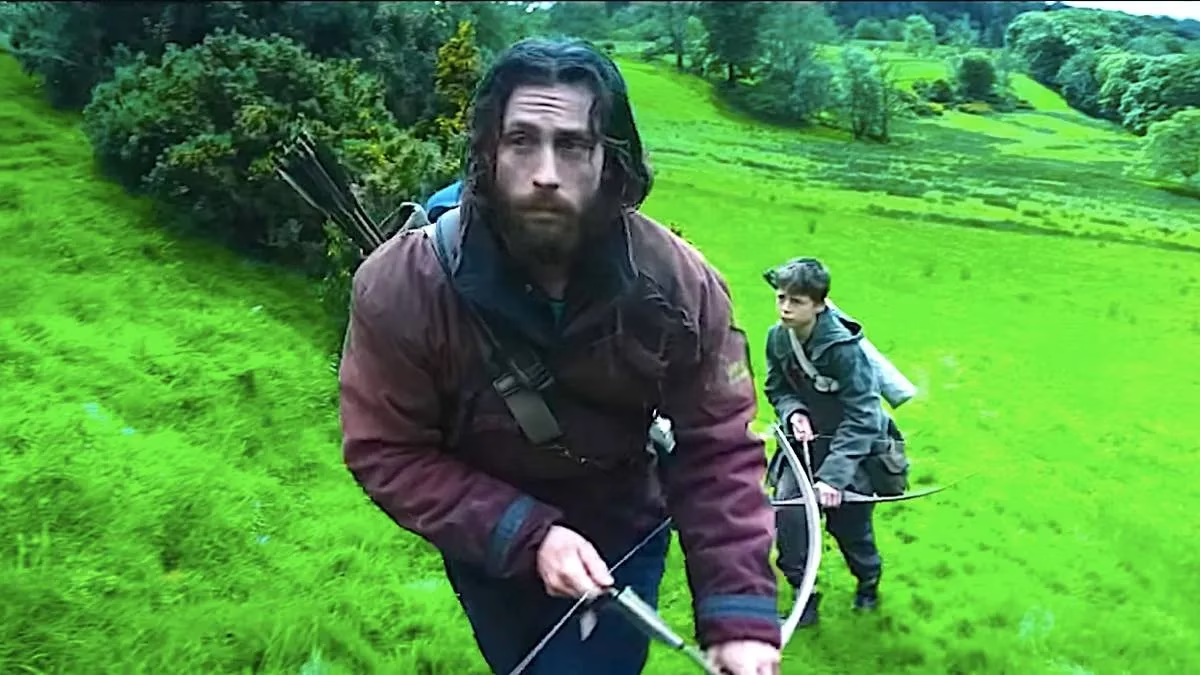
The choice of Lindisfarne wasn’t just about finding a remote spot safe from the infected. Boyle and screenwriter Alex Garland clearly had something darker in mind. The island’s rich religious past bleeds into the story, where a cult-like community has risen from the ashes of civilization. Early scenes suggest the protagonists — led by Aaron Taylor-Johnson’s weary, bow-wielding Jamie — might be part of this clan, or perhaps its prisoners. The trailer teased rituals, symbols, and an unsettling reverence for the dead that felt more like a twisted faith than mere survival instinct. Let’s face it, no place feels truly safe anymore when salvation starts looking like damnation.
Garland, who once explored the seductive danger of utopian isolation in The Beach, seems to have doubled down on that theme here. Lindisfarne’s history as a sanctuary for saints and pilgrims gets inverted into something monstrous. The cult’s fusion of medieval symbolism with the brutal pragmatism of rage-virus survival creates a world where hope and horror are indistinguishable. Danny Boyle has always had a knack for turning locations into characters, and Holy Island breathes with a life of its own in 28 Years Later. The sea cuts it off from the mainland twice a day, trapping its inhabitants with their secrets and their ghoulish architecture. You can almost hear the island holding its breath.
What exactly those skull-topped towers mean is something only the film can fully reveal, but by now audiences know that the quiet dread of Lindisfarne mirrors the larger themes Garland and Boyle have been playing with since 2002. Where 28 Days Later sprinted through streets slick with blood, its long-awaited sequel sits in uneasy silence, letting the weight of three decades of collapse settle on the shoulders of its characters. The real Holy Island may still welcome tourists who brave the causeway, but after 2025, visitors might find themselves looking twice at the ancient stones. After all, the line between sacred ground and cursed earth has never felt thinner.