
How Manchester and the English Countryside Shaped the World of ‘Missing You’
Missing You Netflix series uses Manchester City Centre and Sefton Park as evocative filming locations for its gripping mystery drama.
The Netflix limited series Missing You pulls viewers into a tightly wound mystery that bridges personal loss with professional obsession. Released in 2025, the adaptation of Harlan Coben’s novel immediately distinguishes itself by transplanting the story from New York City to England, a choice that alters not just the skyline but the very texture of the narrative. Instead of Manhattan canyons and Brooklyn brownstones, the camera finds Kat Donovan—the detective at the heart of the search—navigating former cotton warehouses, Victorian bandstands, and the rain‑washed streets of a post‑industrial city. Those who have streamed the show already know its hold on the imagination does not loosen easily; a year later, in 2026, fans are still dissecting the visual language of its locations. The following journey through the real‑world settings of Missing You reveals how much a sense of place can deepen a thriller.
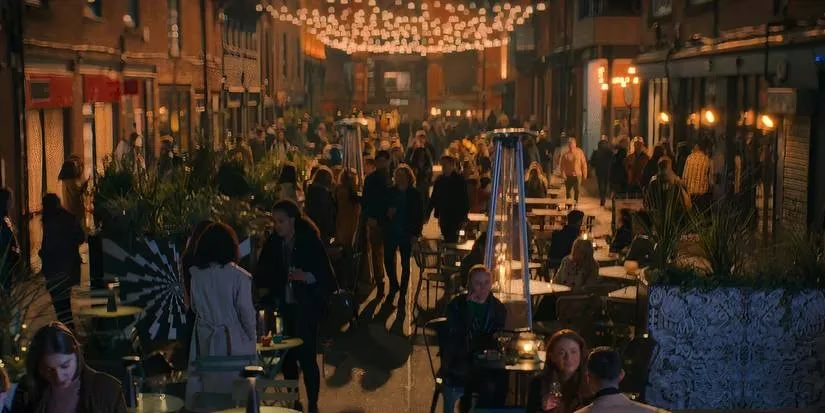
Manchester City Centre provides the series with its most constant visual signature. The Northern Quarter, with its independent bars and café‑lined streets, becomes the backdrop for Kat’s tentative re‑entry into dating and for the reunions with old friends that slowly peel back layers of the past. Production made full use of the city’s dense urban fabric: chase sequences slice through alleyways and along the Metrolink tram network, while conversations unspool against the glass and brick of the ever‑present skyline. This is a Manchester that feels both lived‑in and cinematic. The show’s creators treat the tram system not as a background detail but as a narrative device—Kat’s journeys on the trams echo the commuting habits of millions of Mancunians and also mirror the stop‑start rhythm of an investigation that never quite gives up its secrets. The choice to ground the story here rather than in a generic metropolis gives the drama a grittier, more immediate energy, reminiscent of series like Peaky Blinders and The Crown that also mined the city for authenticity.
Yet the production did not rely solely on Manchester’s heft. One of the earliest group scenes takes place in a park so striking it almost becomes a character in its own right. Kat and her friends practise yoga beneath the red‑and‑green ironwork of a Victorian bandstand, their movements silhouetted against an improbable skyline. That bandstand stands not in Manchester but in Sefton Park, Liverpool—a location with a musical lineage that runs deeper than the show lets on. It was here, in the 1920s, that John Lennon’s parents first met, and where a young Paul McCartney once wandered. The Missing You team, however, employed a subtle piece of post‑production sleight‑of‑hand: they superimposed Manchester’s towers behind the bandstand to maintain the city’s grip on the story. This fusion of the real and the fabricated mirrors the show’s own preoccupation with what lies behind surfaces.
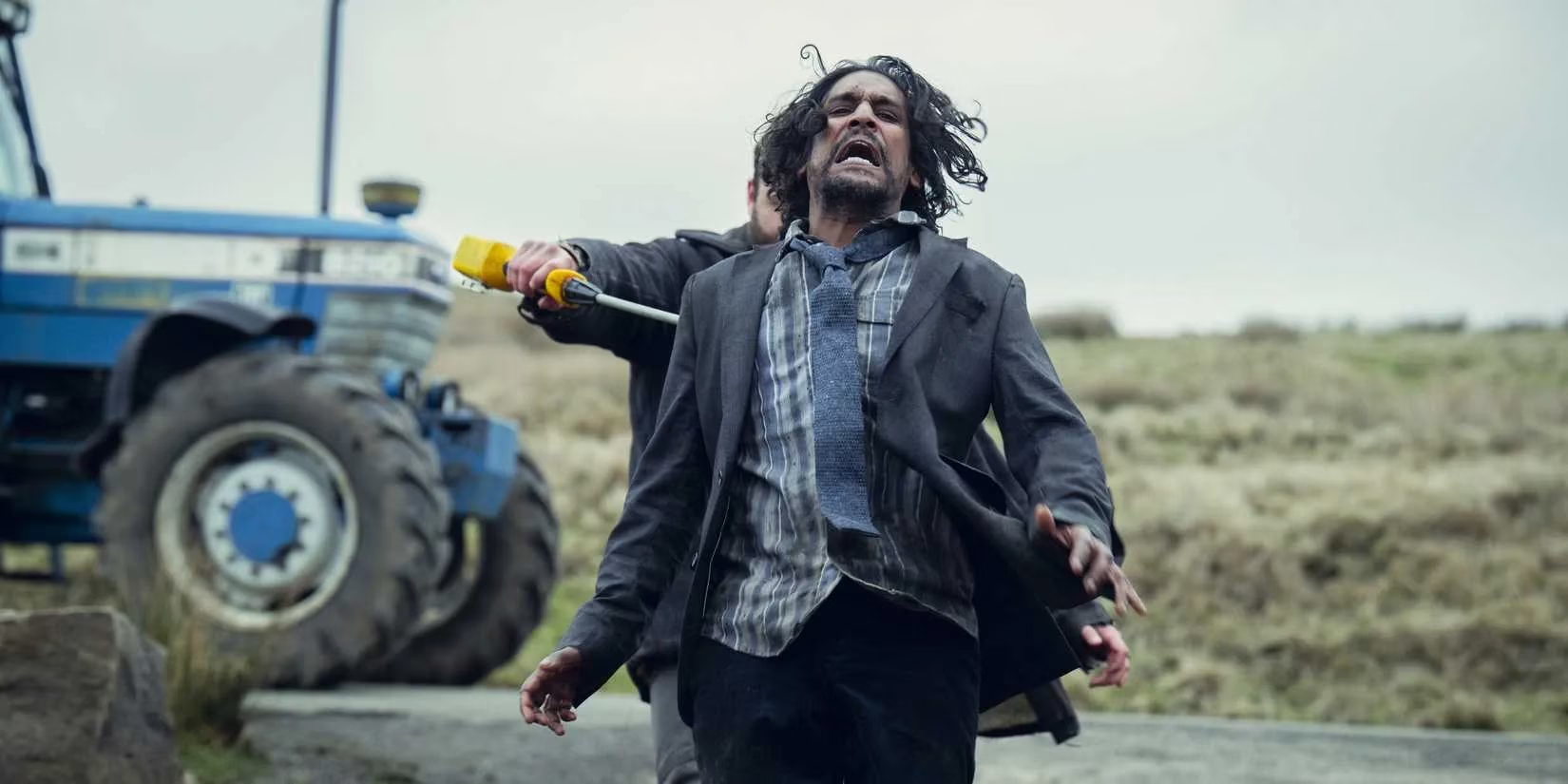
The mood turns much darker when the action moves to the High Peak countryside. Titus Monroe runs a dog‑breeding business that serves as a cover for something far more sinister, and his remote farm compounds the sense of isolation and menace. Scenes set on Monroe’s property were shot on two working farms near Glossop in Derbyshire, where the open fields quickly become oppressive. In one of the series’ most harrowing sequences, the bucolic setting morphs into a place of peril—the broad daylight that ought to signal safety instead exposes vulnerability. Actor Steve Pemberton, who inhabits Monroe with unnerving calm, later remarked that the location’s atmosphere was “perfect,” and it is easy to see why. The low stone buildings, the muddy tracks, and the uninterrupted quiet all conspire to make the viewer feel that help would never arrive in time.
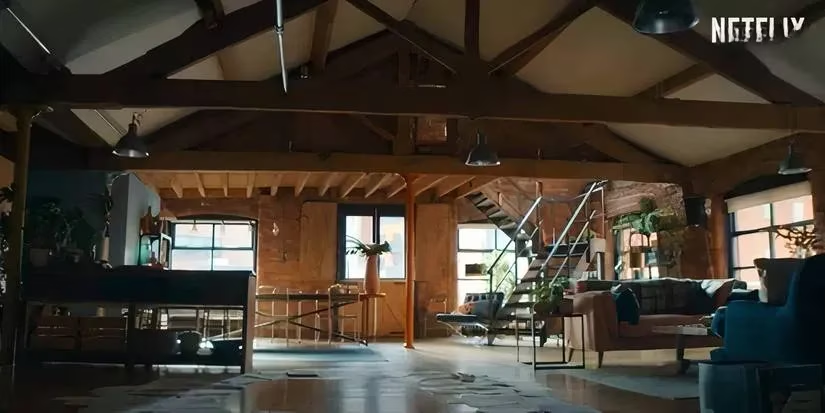
In contrast to the farm’s claustrophobia, Kat’s apartment radiates the cool confidence of someone who has remade her life on her own terms. The loft sits above a converted warehouse in Manchester’s Knott Mill district, a neighbourhood that has swapped its industrial past for creative‑class cachet. Designed by Ben Kelly, the space was once home to Factory Records impresario Tony Wilson, and its single‑volume layout—bedrooms and bathrooms are simply partitioned off—embodies a particular brand of Manchester modernism. When Kat moves through the apartment, the slanted ceilings and vast living area speak to her metropolitan taste and her need for order. It is a sanctuary that feels both aspirational and attainable, a place where a detective might piece together the fragments of a cold case while the city hums beyond the windows.
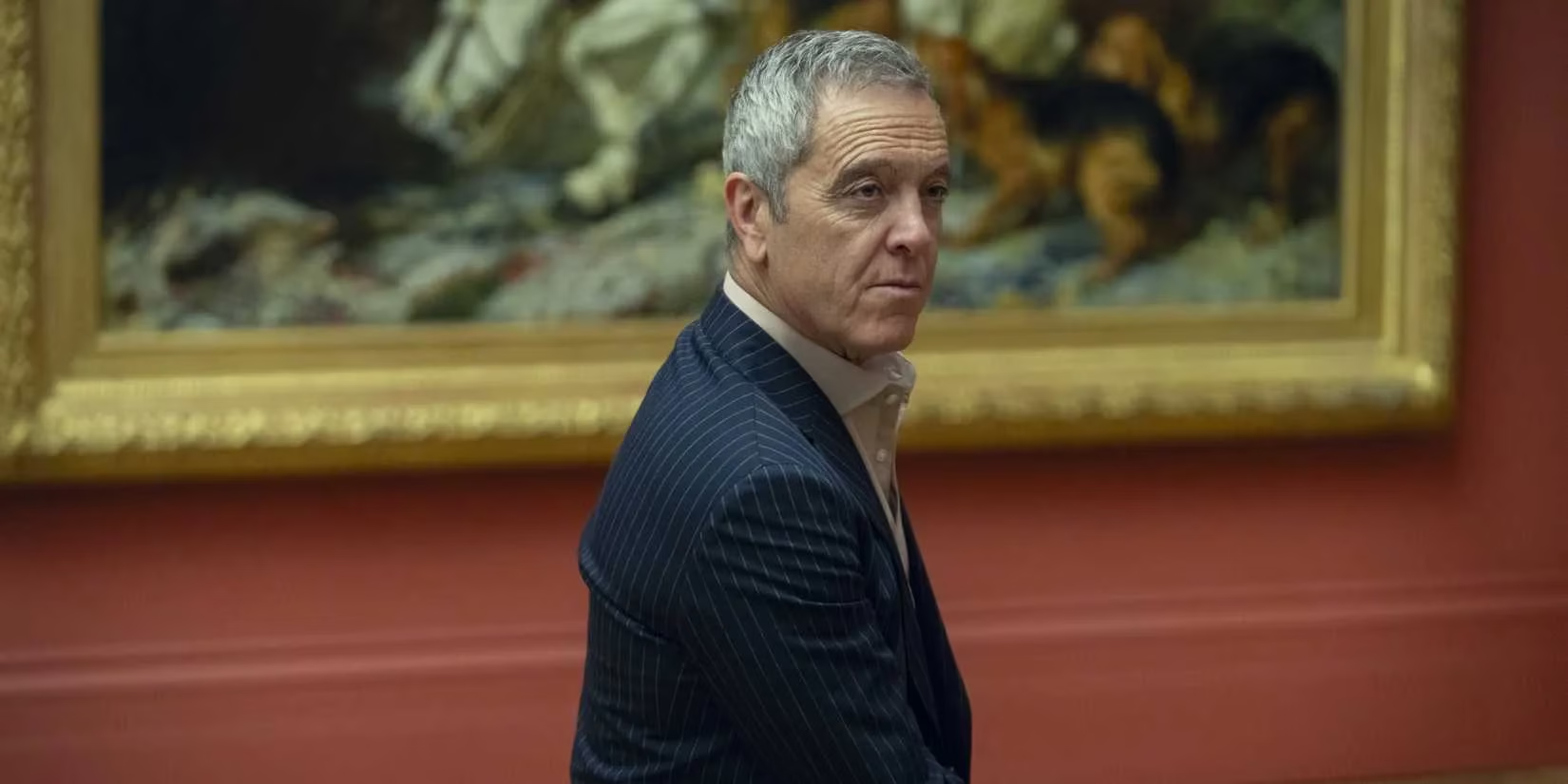
One of the series’ most charged encounters happens not in a dimly lit back room but inside the Manchester Art Gallery. Crime boss Calligan chooses the setting deliberately, positioning himself in front of The Chariot Race as if to assert his cultural capital as well as his power. The gallery, which opened in 1883 and holds more than 46,000 objects, is a temple of the city’s civic pride; to stage a meeting between a grieving detective and a man she suspects of murder beneath its classical portico is to underline just how fragile the boundaries are between civility and corruption. The scene lingers on the contrast between the quiet halls and the dangerous information being traded, reminding us that wealth and refinement can be their own form of armour.
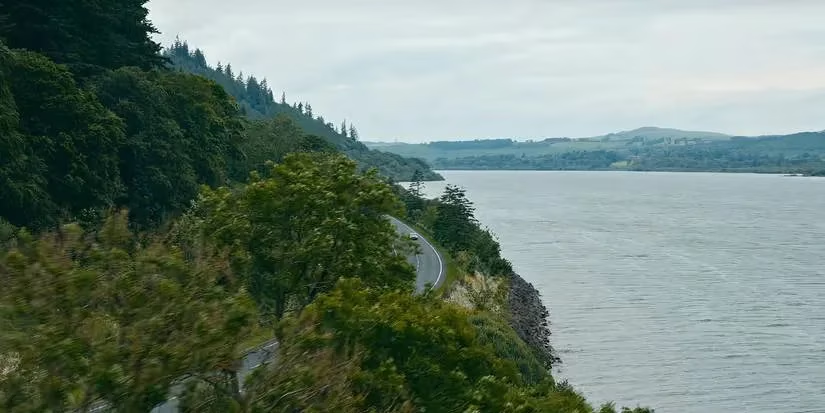
As the clues start to converge in the final episodes, the geography expands again. The Lake District, specifically the shores of Derwentwater near Keswick, provides a stretch of wet roads and glassy water that feels like a held breath. Filming took place in Manesty Park, and the crew’s secrecy about the location until the show’s release only added to its mystique. These outdoor sequences—some of them wordless—do the work of releasing tension while also suggesting that the truth, when it comes, will arrive from somewhere far beyond the urban grind. In a small but telling flourish, the production also dipped into Cheshire. The seaside town of Parkgate appears with its ice‑cream parlour and parade of shops, and Bolton’s Victoria Square and Le Mans Crescent stand in for the exterior of the police station, grounding the procedural elements in another layer of northern specificity.
The cumulative effect of these choices is a thriller that breathes differently. By rooting Missing You so firmly in Manchester and its surroundings, the creators achieve something more than a change of scenery; they build a world where every location—from a Victorian bandstand to a Derbyshire barn, from a canal‑side loft to a Greek Revival gallery—adds weight to Kat Donovan’s journey. The series feels at once intimate and expansive, a puzzle box whose pieces are embedded in real streets and real history. For anyone walking through Manchester’s Northern Quarter or driving past the hills of Glossop in 2026, the show’s ghost still lingers, a reminder of how deeply a story can tie itself to the land on which it is told.