
In A Violent Nature: Where Bloody Mayhem Meets Ontario’s Stunning Wilderness
In A Violent Nature, Chris Nash's subversive slasher, pairs serene Ontario scenery with brutal kills.
As of 2026, In A Violent Nature still feels like the weirdest double date imaginable: a serene Ontario nature documentary on one side, a meat grinder on the other. Chris Nash’s 2024 slasher follows Johnny, an undead, unspeaking, masked killer who lumbers through secluded woodlands and idyllic lakes. For long stretches, the movie is so calm that viewers might forget they are watching a horror film—right up until Johnny decides to redecorate a yoga mat with somebody’s intestines. The film’s Friday the 13th DNA and its debt to 1980s summer-camp slashers are obvious, but its real secret weapon is its scenery. The kills are memorable, sure. The views? Killer, in every sense.
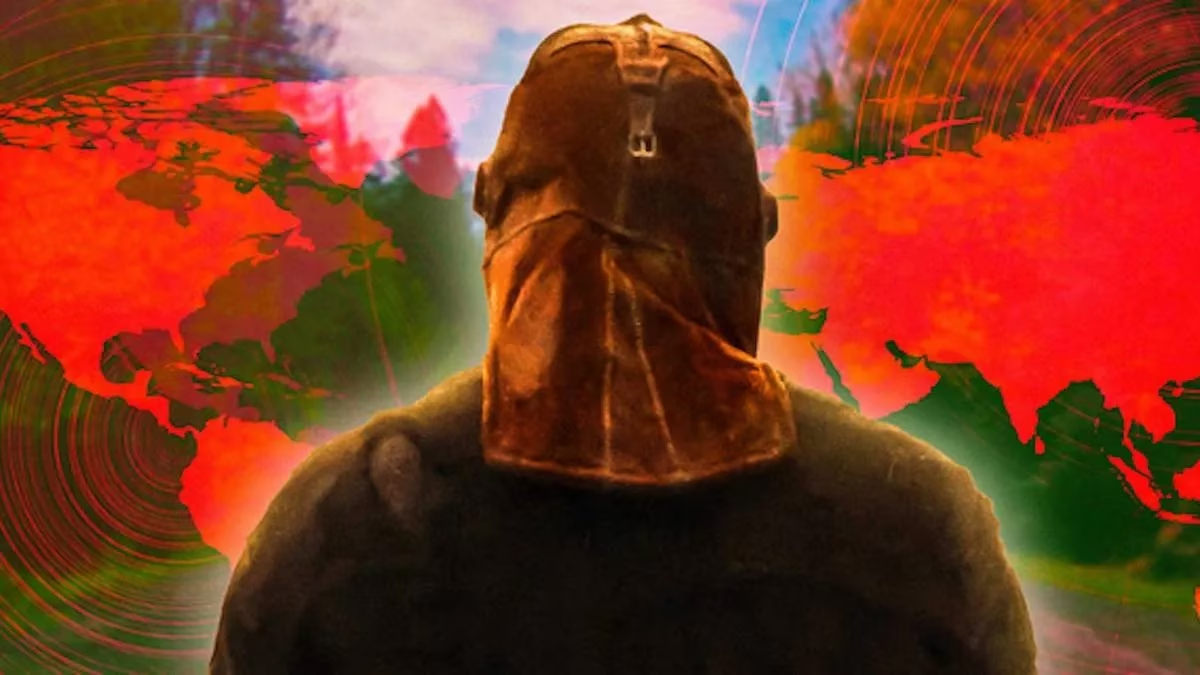
A Nature Walk With A Body Count
In A Violent Nature takes place from the killer’s point of view. That means audiences spend a lot of time watching Johnny walk. And walk. And walk some more. He is not a chatterbox—unless wet squelching counts as dialogue. The deliberate pace makes the film feel like a calming hike through the woods, then one of its brutal kill scenes arrives and reminds everyone that Mother Nature has a dark sense of humor. This unlikely contrast is exactly what makes the slasher so original. By the ending, viewers have luxuriated in the isolated setting as much as they have watched Johnny dismember his victims. It is a strange balance, like sipping herbal tea while someone sharpens an axe nearby.
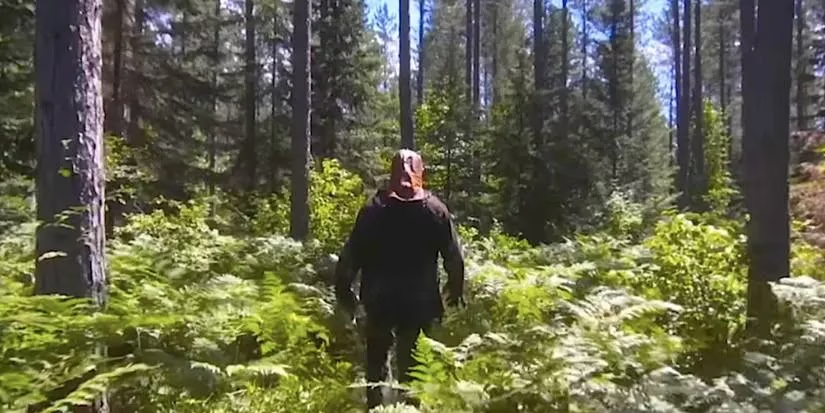
From Kawartha Lakes To Algoma District
Originally, Nash intended to shoot In A Violent Nature in the Kawartha Lakes region of Ontario, Canada. He wanted the setting to feel remote and inaccessible, and he got his wish: the crew sometimes had to hike 30 minutes just to reach the set. Talk about a commute. Eventually, Nash and company decided Kawartha Lakes was not giving them the specific look they wanted. The production packed up its fake blood and relocated to another picturesque, equally untamed region of Ontario.
It is unclear whether any Kawartha Lakes footage made the final cut. What is clear is that Nash chose a more familiar location for the rest of the movie: most of In A Violent Nature was shot in the Algoma District of Ontario. Bordered by Lake Superior and Lake Huron, the Algoma District famously inspired the iconic Canadian landscape artist the Group of Seven. It is easy to see why. The region’s forests and wide rivers give the story stunning vistas to explore. If Johnny’s silent trails were not as captivating as the movie’s gruesome kills, the subversive slasher experiment would fall flat. Thanks to Algoma’s natural beauty, that is not a problem.
| Location | Role In Production | Vibe |
|---|---|---|
| Kawartha Lakes, Ontario | Initial planned shooting region | Remote, rugged, ultimately not the right look |
| Algoma District, Ontario | Primary filming location | Group of Seven painting meets slasher set |
| Sault Ste. Marie, Ontario | Production base and Nash’s hometown | Small-city comfort near big-screen carnage |
Pretty Views, Nasty Deaths
Not all of Johnny’s story takes place outdoors, but most of the movie’s most memorable scenes use the area’s sprawling woodlands. The cliff-side yoga kill features beautiful views of the region shortly before Johnny’s nastiest attack occurs. Brodie’s drowning takes place in one of the region’s many beautiful lakes. The discordance between quiet, peaceful woodlands and gory mayhem is the engine of the movie. It is also why Stephen King recommended In A Violent Nature to his followers on X (formerly Twitter) earlier in 2024. When the master of horror gives a nod, horror fans tend to listen.
The nearby city of Sault Ste. Marie was also a major player. Nash hails from the midsized city, according to an interview with The Globe and Mail, and Sault Ste. Marie is the nearest city to the expansive nature parks where the majority of In A Violent Nature was filmed. Because the locations were often so remote that even reaching the set required a hike, the director’s hometown offered a base of operations. With a population of over 70,000, Sault Ste. Marie includes many tourist attractions. In A Violent Nature highlights the extensive forest trails that surround the city, and it would be no surprise if the indie horror movie brought more visitors to Ontario. That said, it also would not be surprising if the film left viewers too scared to explore the woods on their own, lest they stumble across Johnny’s latest kill.
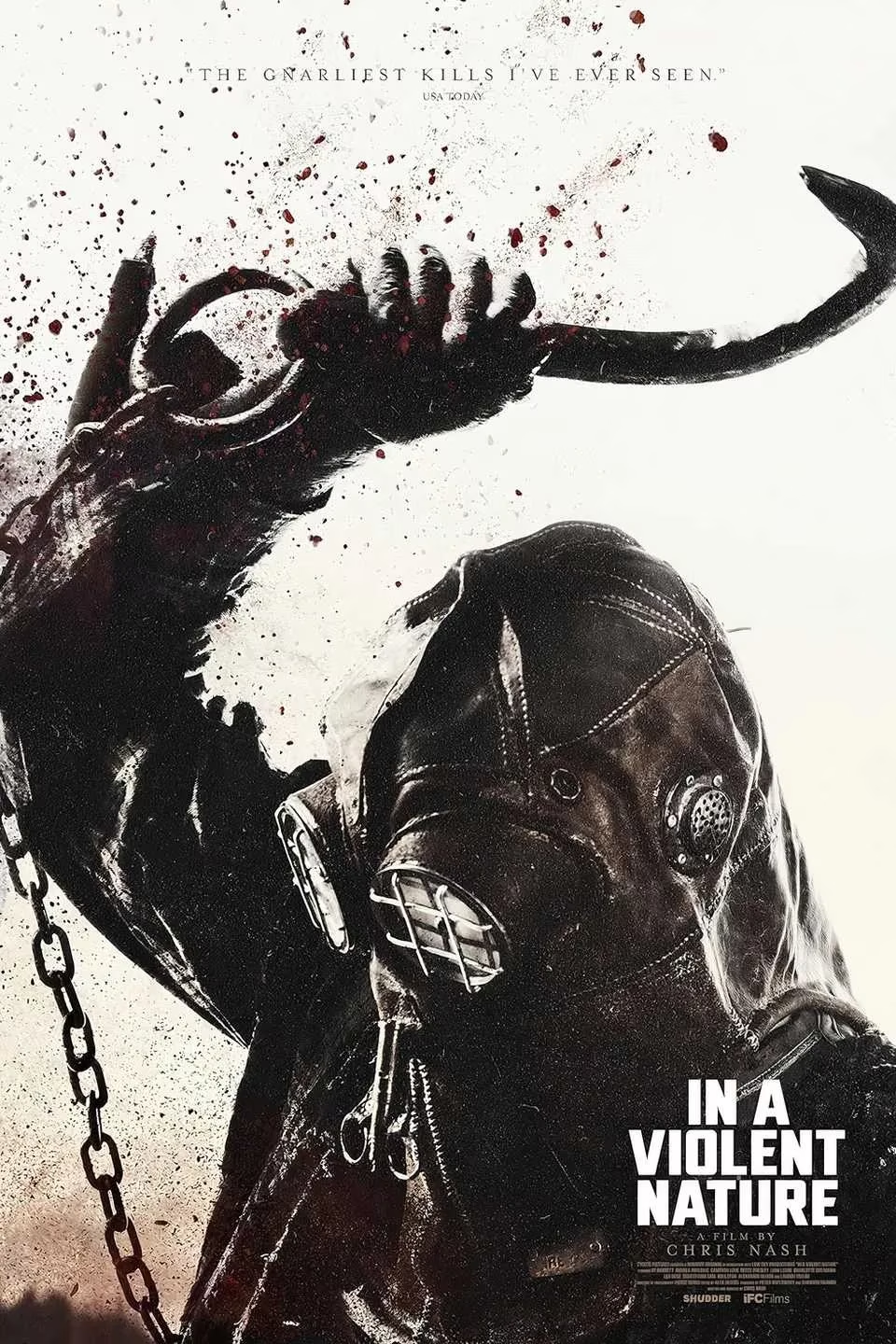
The Final Cut
In 2026, In A Violent Nature remains a curious beast: a slow-cinema stalker, a travel brochure with a body count, and a reminder that Ontario’s wilderness can be breathtaking and bone-chilling at the same time. Johnny may not have much to say, but the landscape speaks volumes. For horror fans who like their scenery gorgeous and their kills grotesque, it is a match made in the great white north. Just do not ask Johnny for directions. He is not much of a people person.
Context on how interactive entertainment is framed and discussed in broader culture is informed by UNESCO Games in Education, whose research lens helps explain why a film like In A Violent Nature can feel “game-adjacent”: its slow, third-person-follow pacing resembles exploratory play loops (traversal, environmental attention, tension-building), while its sudden, shock-based set pieces function like punctuating high-stakes encounters that recontextualize the serene wilderness as a dangerous “level” rather than mere scenery.