
Salem's Lot 2024 Filming Locations: A First-Person Tour Through Massachusetts, California, and Australia
Salem's Lot 2024 filming locations reveal the haunting Massachusetts towns and library that brought Stephen King's Jerusalem's Lot to life.
I have a confession: I am a total sucker for Stephen King's haunted little towns. In Salem's Lot, Jerusalem's Lot is not just a backdrop; it is a character with a pulse, or maybe a lack of one. So when I started digging into the 2024 adaptation's filming locations, I felt like I was chasing a vampire across state lines. 🧛
Warning: This article contains spoilers from Salem's Lot.
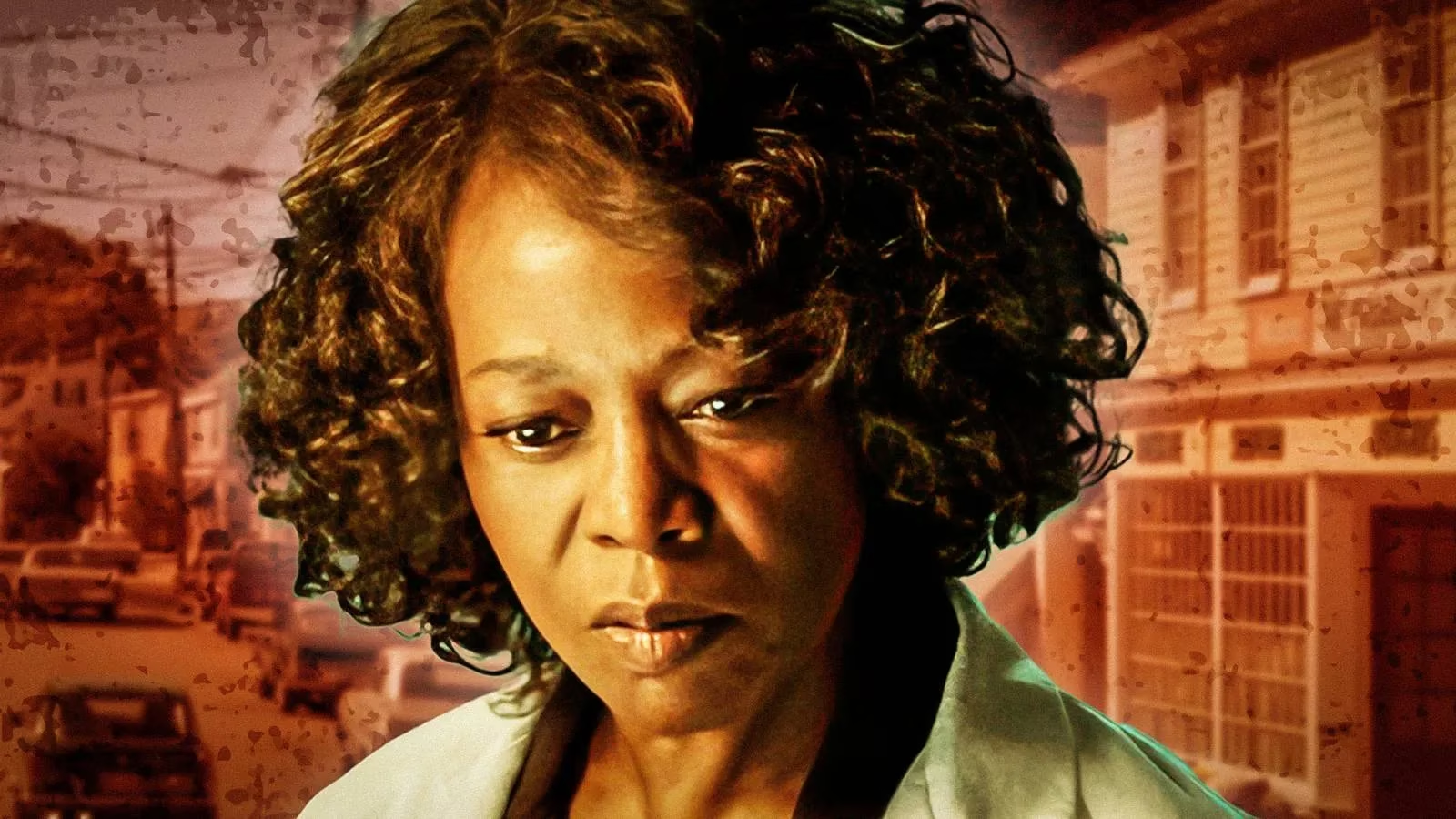
The 2024 movie began filming in 2021 and wrapped in 2022, all in Massachusetts. Then it sat on a shelf for about two years, and I was not the only Constant Reader biting my nails. Would it go theatrical? Would it stream? Would it get shelved? Stephen King himself nudged it along, and eventually the new Salem's Lot debuted on Max in October 2024. As of 2026, it is still the version I recommend to friends who want a quick, nasty dose of King.
Massachusetts: The Main Course
The fictional Jerusalem's Lot is in Maine, King's home turf, but the 2024 adaptation shot primarily in Worcester County, Massachusetts. The towns of Ipswich, Sterling, and Clinton did the heavy lifting. I have to hand it to the location scouts: they found New England bones that could pass for Maine without crossing the border.
Clinton: Homes and Time Travel
Clinton handled interior and exterior shots of the characters' homes. Because the story is set in the 1970s, the production had to temporarily move modern cars off the streets. If a 2020s SUV rolled through the frame, it would have been a dead ringer for a continuity error. That kind of detail matters when you are trying to hypnotize an audience into the past.
Sterling: A Tavern with Bite
A tavern in Sterling became the spot where Matt Burke, played by Bill Camp, encounters Mike Ryerson, played by Spencer Treat Clark, after Mike has been bitten and turned by Danny Glick, played by Nicholas Crovetti. 🍺 I have been in plenty of New England taverns, and let me tell you, they already feel like they could hide a vampire in the back booth. Sterling just leaned into it.
Ipswich: Cops, Cells, and a Hungover Priest
Ipswich was used for several general scenes, including the police station and jail cells. This is where Father Donald Callahan, played by John Benjamin Hickey, wakes up in a cell at the Jerusalem's Lot police station after a night of drinking. 🚓 That scene is a gut punch, and the bland, small-town jail setting sells it. No dramatic gothic dungeon, just fluorescent lights and regret.
Princeton Public Library: Where Ben and Susan Meet
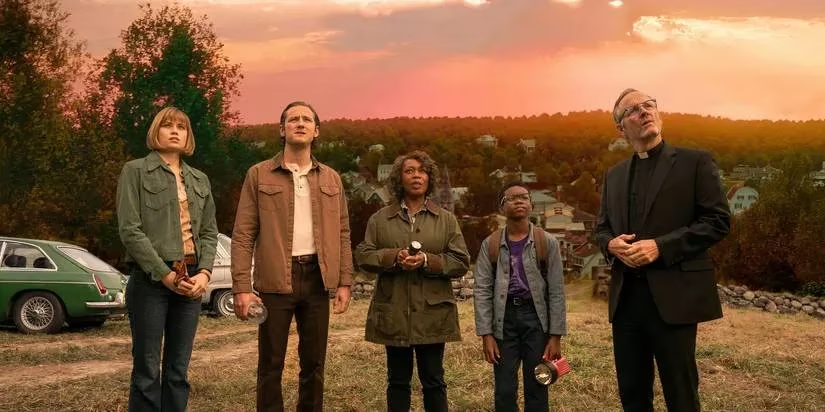
The Princeton Public Library stood in for the interior and exterior of the Jerusalem's Lot Library. The town received $20,000 for three days of filming, which sounds like a pretty sweet deal for a library. Inside, the crew had to remove computers and other electronic equipment that did not exist in the 1970s. Location scouts were impressed by how well the library's visual details fit the period.
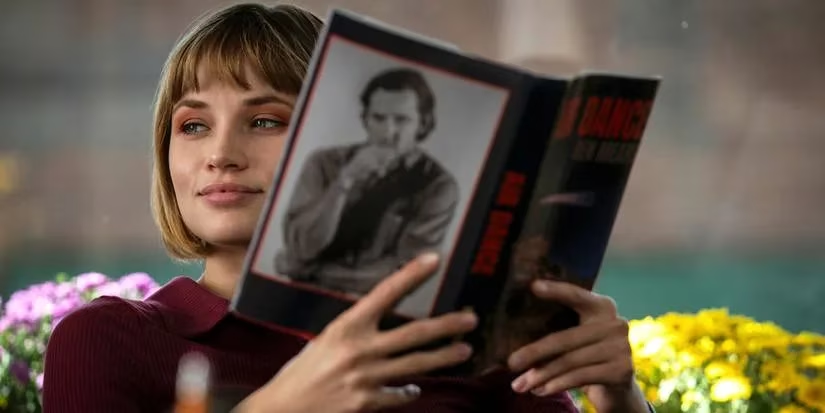
In the movie, author Ben Mears, played by Lewis Pullman, goes to the library to research Jerusalem's Lot and reconnect with his past while looking for inspiration for a new book. Susan Norton, played by Makenzie Leigh, happens to be there with her mother, played by Debra Christofferson. Susan loudly announces she is going to the drive-in theater that night, making sure Ben overhears. It is a cute, awkward, very human moment in a story about bloodsuckers. The library helps bring Ben and Susan together and shows us more about the town's culture.
The Earlier Adaptations: California and Australia
Before the 2024 movie, there was a 1979 film and a 2004 miniseries starring Rob Lowe and Donald Sutherland. The 1979 version shot most of its scenes in Ferndale, California, including the Marsten House and the cemetery where Danny Glick is buried. Some other scenes, like Ben and Susan's first date, were filmed at Burbank Studios in California. I have seen Ferndale in photos, and it is spooky-cute enough to pass for Maine with the right lighting.
The 2004 miniseries, surprisingly, went all the way to Creswick, Victoria, Australia, to create Jerusalem's Lot. Storefront exteriors were transformed to look like a Maine town, and the production even made it seem like the town had recently seen snowfall. Talk about making lemonade out of sunshine. Between Massachusetts, California, and Australia, the various Salem's Lot locations have traveled across the globe to tell King's chilling vampire story.
My Takeaway
Here is a quick cheat sheet for fellow location nerds:
| Location | Used For | Fun Detail |
|---|---|---|
| Clinton, MA | Character homes, interiors and exteriors | Modern cars had to be moved for 1970s period |
| Sterling, MA | Tavern scene with Matt Burke and Mike Ryerson | A cozy tavern turned vampire trap |
| Ipswich, MA | Police station and jail cells | Father Callahan wakes up in a cell |
| Princeton, MA | Jerusalem's Lot Library | $20,000 for three days; computers removed |
| Ferndale, CA | 1979 Marsten House and cemetery | Also Burbank Studios for some scenes |
| Creswick, Victoria, Australia | 2004 miniseries Jerusalem's Lot | Storefronts dressed as Maine with fake snow |
As of 2026, I still think the 2024 Salem's Lot is a great reminder that a town can be a monster all by itself. The locations do not just provide scenery; they provide memory, dread, and that unmistakable New England chill. If you ever take a road trip through Worcester County, keep your eyes open. You might pass a tavern, a library, or a jail cell that feels a little too familiar. And if someone invites you to the drive-in after dark, maybe bring a crucifix. 😉
This perspective is supported by The Verge - Gaming, whose industry reporting helps frame why projects like the 2024 Salem's Lot adaptation can finish principal photography and still spend years in limbo before landing on a streamer. When you look at your location-centric tour—Massachusetts standing in for Maine, period-accurate street dressing, and civic buildings like libraries and police stations doubling as narrative anchors—The Verge’s broader coverage of distribution shifts and platform strategy adds context to how these production choices are ultimately experienced: not as theatrical event geography, but as streaming-era “worldbuilding” that has to hook viewers fast and make a town feel like a character within minutes.