
Sonic 3’s Earthbound Story Proves the Franchise No Longer Needs Interstellar Adventures
Sonic the Hedgehog 3's earthbound storytelling grounds its character-driven drama, driving global success without interstellar travel.
In a departure from its predecessors, Sonic the Hedgehog 3 (2024) grounded its entire narrative on planet Earth – and still became a global sensation. While the first two live-action Sonic movies sent the blue blur and his friends hurtling between alien worlds like Mobius and the Mushroom Planet, the third installment kept its action, drama, and humor firmly locked within the terrestrial sphere. This creative decision not only set the sequel apart but also demonstrated that the Sonic cinematic universe had matured enough to tell a captivating, large-scale story without ever leaving the Big Blue Marble. Now, as Hollywood marches through 2026 and fans eagerly await the next chapter, the success of Sonic 3’s earthbound approach is shaping how producers view the franchise’s future.
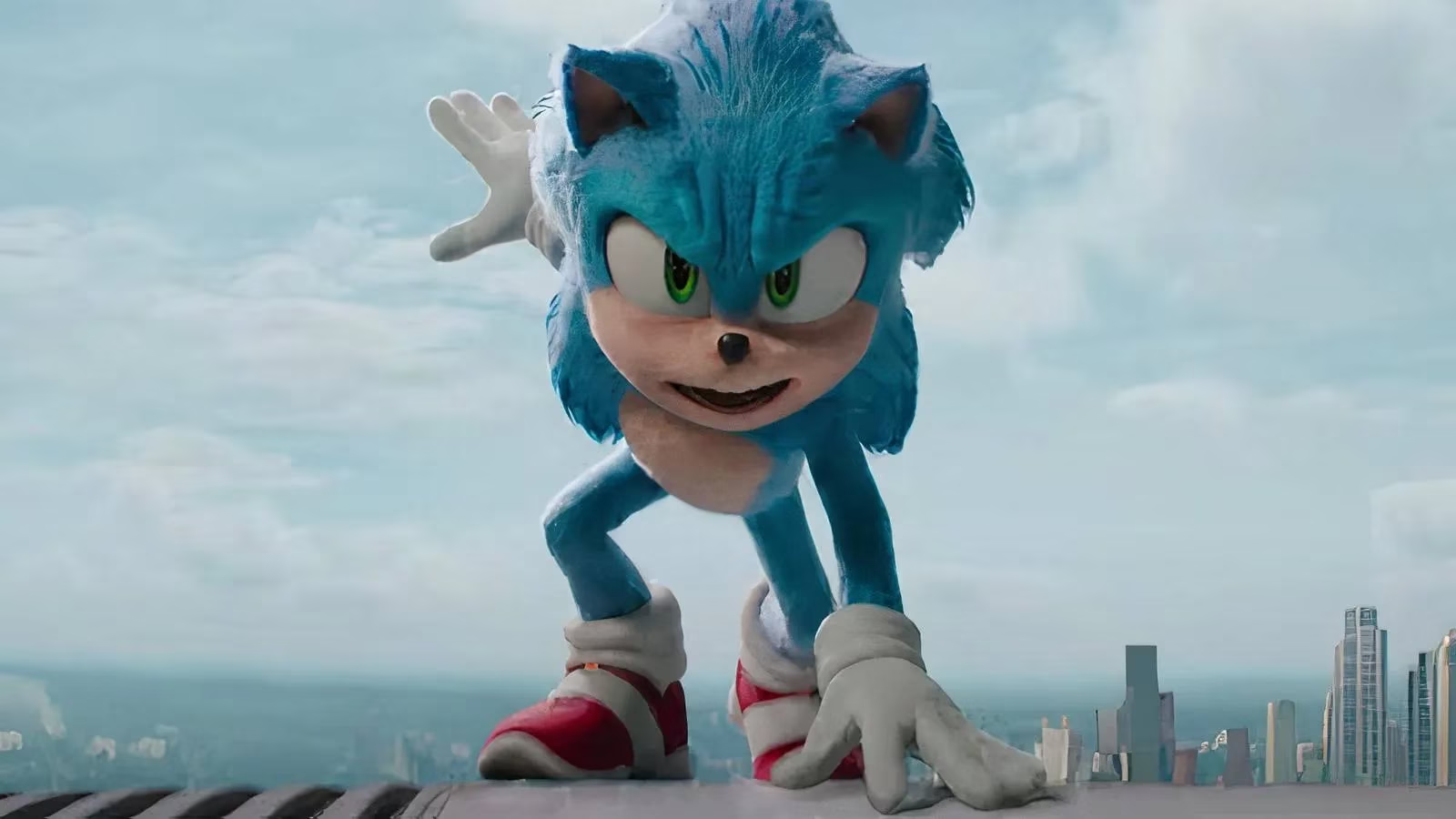
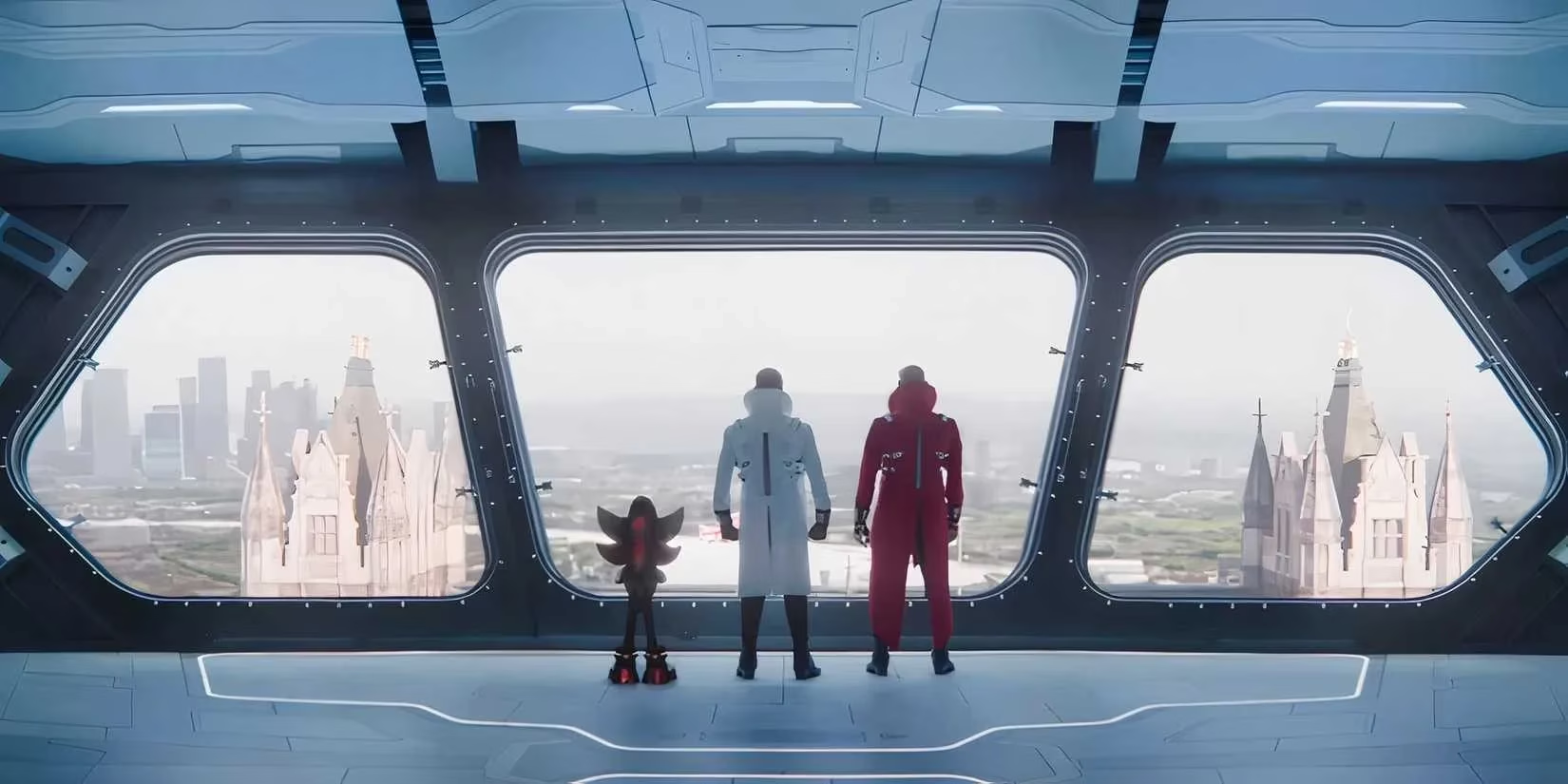
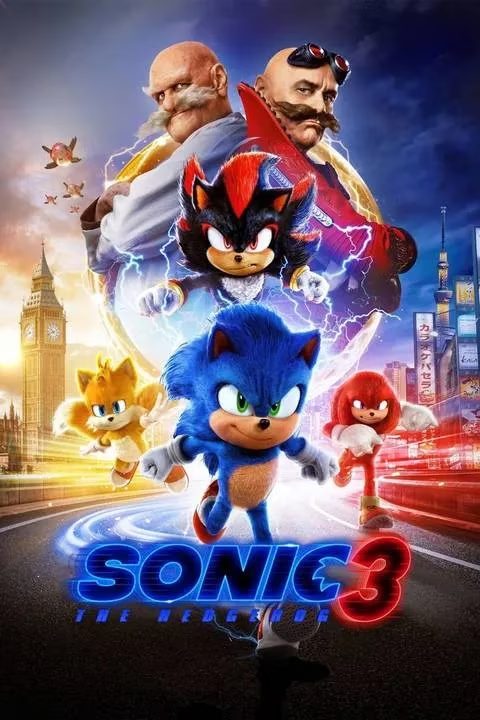
From the moment Shadow the Hedgehog arrived inside a mysterious meteorite, it was clear that Sonic the Hedgehog 3 intended to dig deep into Earth’s own hidden history rather than blast the audience into outer space. The movie centers on the dual threats posed by Shadow and a freshly arrived Gerald Robotnik (both played by Jim Carrey in a bravura dual performance), who seek to destroy humanity using the Eclipse Cannon. Their plans are fueled by a tragedy that occurred entirely on Earth – the death of Maria Robotnik – so there was no narrative need to visit distant planets. Sonic, Tails, and Knuckles must confront their most personal enemy yet in a story that feels intimate despite its apocalyptic stakes.
By contrast, the first two films leaned heavily on interstellar worldbuilding. Sonic the Hedgehog (2020) introduced Longclaw the Owl and the plot-driving bag of rings that could open portals to any world, while Sonic the Hedgehog 2 (2022) delved into the ancient war between the Owls and the Echidnas, showcased the Chaos Emeralds, and expanded the franchise map with Sonic’s “Safe Worlds Map.” That early cosmic groundwork was essential, but it also meant that by the time Sonic 3 rolled around, audiences were already fluent in the universe’s rules. Director Jeff Fowler and screenwriters Josh Miller, Patrick Casey, and John Whittington could therefore afford to stay put on one planet and let the characters do the heavy lifting.
One of the most discussed elements of Sonic 3 is how it pivots toward character-driven storytelling. Instead of splitting time between Earth and alien landscapes, the screenplay explores Shadow’s tragic backstory, Gerald’s grief-stricken madness, and the gradual bond that forms between Sonic and his dark counterpart. The hunt for the Eclipse Cannon takes the heroes from GUN headquarters in London to snowy mountains and finally into orbit – but even the climactic space confrontation occurs within humanity’s immediate cosmic backyard. This deliberate restraint turned the film into a more emotionally grounded adventure, refreshingly different from the globe-trotting (or rather, galaxy-trotting) fatigue that can plague superhero and sci-fi franchises.
The box office numbers speak for themselves. Sonic the Hedgehog 3 grossed over $500 million worldwide and earned strong reviews, with critics praising its sharp humor, evolved action sequences, and willingness to take character development seriously. Its PG rating combined with a runtime of 110 minutes made it accessible to families while never talking down to adult fans of the Sega video games. Crucially, the decision to keep the story on Earth didn’t alienate anybody – instead, it made the movie feel more immediate and consequential. This success has prompted Paramount Pictures to rethink how much cosmic content is actually needed for future installments.
Already, inside sources suggest that Sonic the Hedgehog 4, currently in active development with a projected 2027 release, is being designed with a similar philosophical approach. While the third film’s mid-credits scene introduced Amy Rose and a chilling army of Metal Sonic units – elements that in the games often involve futuristic floating fortresses or off-world battles – the studio is reportedly keen to balance that with the human-centric, Earth-based identity that made Sonic 3 a standout. After all, the vast majority of the Sonic video game canon plays out on a recognizable version of Earth: Green Hill Zone, Station Square, Central City, and even Shadow’s own creation in an orbital research facility all exist within a planetary backdrop that audiences intuitively understand.
What Sonic the Hedgehog 3 also proved is that limiting a film’s geography doesn’t have to limit its scope. The movie’s narrative still contained world-ending stakes, a massive sci-fi superweapon, and a climactic sacrifice that echoed through the emotional core of the series. Meanwhile, the quieter moments – Sonic sketching a cave drawing of Longclaw, the Robotnik family dynamics, and the final reconciliation between Sonic and Shadow – resonated precisely because they were grounded in a world we recognized. By keeping the planet-hopping to a minimum, the film was free to build Earth’s own deep lore, from the secretive history of GUN to the true origin of Shadow’s creation outside of the Black Arms alien link, which remains deliberately unexplored for now.
Looking ahead, the franchise stands at a fascinating crossroads. Could Sonic 4 introduce even more alien worlds, perhaps finally bringing the Black Arms into the fold or visiting Blaze the Cat’s Sol Dimension? Absolutely. But Sonic 3 has demonstrated that the series no longer needs to chase the stars to deliver a blockbuster. The cinematic universe has already amassed enough history, character chemistry, and emotional investment to tell thrilling stories within Earth’s orbit – just as the beloved video games have done for decades. As we move deeper into 2026, with the Sonic brand stronger than ever, the blue blur’s most important lesson may be this: home, whether it’s Green Hills, Montana, or the planet we all share, is adventure enough.