
Spike Lee's Unwavering Vision: The Financial Battle Behind Malcolm X
Spike Lee's bold storytelling and dedication to Black American themes faced financial and artistic challenges during Malcolm X's production, showcasing resilience and community support.
Spike Lee has established himself as one of Hollywood's most distinctive voices, a filmmaker whose career is defined by bold narratives and an uncompromising dedication to exploring cultural and historical themes, particularly those reflecting the Black American experience. From his groundbreaking 1989 film Do the Right Thing to the Oscar-winning BlacKkKlansman in 2018, Lee has consistently challenged cinematic conventions, earning both critical praise and a permanent place in film history. His diverse filmography spans drama, comedy, and biographical works, all filtered through a unique lens that has profoundly influenced the industry. However, this path has not been without significant obstacles, with one of the greatest challenges emerging during the production of his ambitious 1992 biographical epic, Malcolm X.
The Mounting Budget Crisis
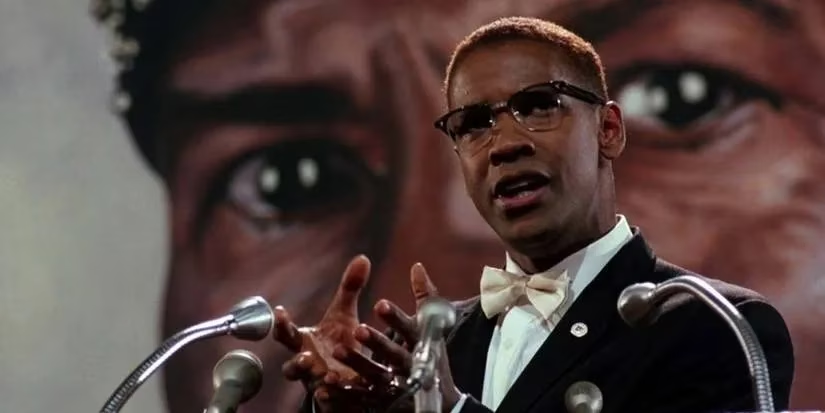
Malcolm X was envisioned as a definitive portrayal of the iconic civil rights leader's life, with Denzel Washington delivering a powerful, Oscar-nominated performance in the titular role. The project, however, was plagued by financial difficulties from the start. The initial budget was set at $28 million, but as production demands grew, the costs escalated to approximately $33 million. The studio backing the film, Warner Bros., was unwilling to increase its financial commitment beyond this point, creating a precarious situation that threatened to shut down the entire production. In a remarkable display of commitment to his project, Spike Lee made a significant personal investment, contributing half of his own $2 million director's salary to keep the film afloat. Despite this generous act, the financial gap remained, forcing Lee to look beyond traditional studio funding.
The Artistic Standoff: Jersey Shore vs. Mecca
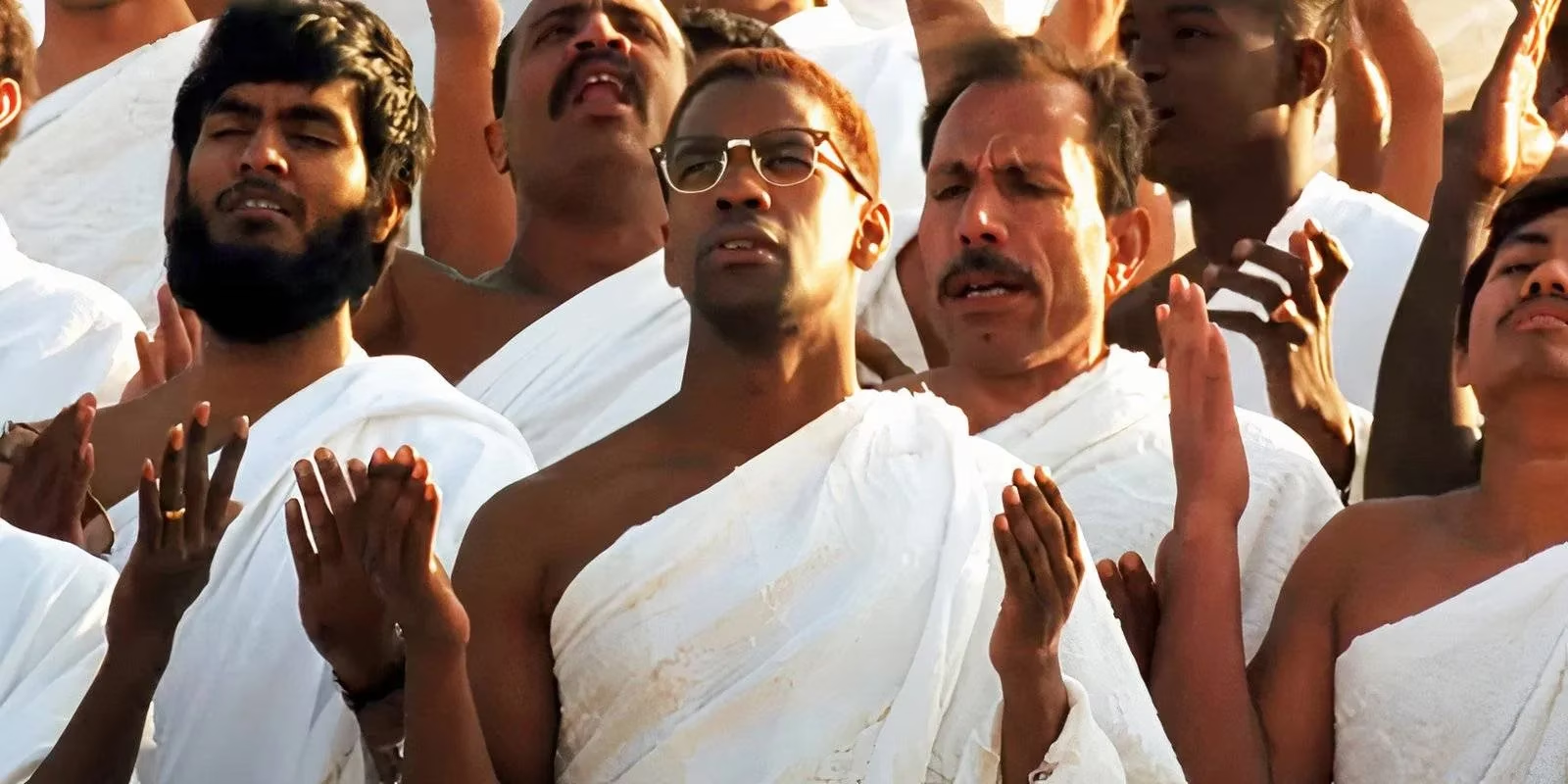
The financial strain was compounded by a critical artistic disagreement. A pivotal moment in Malcolm X's life was his pilgrimage to Mecca, a transformative experience that Lee believed was essential to capture authentically on film. He planned to shoot these scenes on location in Saudi Arabia. The studio, however, proposed a cost-cutting alternative: filming the Mecca sequences at the Jersey Shore in January. Lee famously rejected this suggestion, understanding that such a compromise would fundamentally undermine the film's integrity and emotional power. His refusal led Warner Bros. to officially halt production, leaving the project in a state of uncertainty and jeopardizing Lee's entire creative vision.
Calling on the Community: A Uniquely Black Funding Solution
Faced with a shutdown, Lee turned to a resource rooted in community—what he described as knowing "some Black folks with some money." He embarked on a personal fundraising campaign, reaching out to a network of prominent and wealthy Black celebrities who believed in the project's importance. This extraordinary list of benefactors included:
-
🎤 Oprah Winfrey
-
🎵 Tracey Chapman
-
Prince
-
Magic Johnson
-
⛹️ Michael Jordan
Lee employed a clever strategy during his fundraising, each time asking a new contributor for twice the amount the previous person had given. He leveraged the competitive nature of the final two donors, Magic Johnson and Michael Jordan, by casually mentioning Johnson's contribution to Jordan, thereby securing the necessary final funds. Lee has always maintained his promise to never disclose the exact amounts each person donated, a testament to the trust and collective spirit that saved the film.
A Legacy of Creative Integrity
The successful completion and subsequent acclaim of Malcolm X stand as a powerful testament to Spike Lee's unwavering artistic principles. His refusal to compromise on authenticity, even when faced with a complete production shutdown, defines a crucial moment in his career. By investing his own money and rallying support from his community, Lee demonstrated that profound creative vision sometimes requires immense personal risk and resilience. The film's journey from near-cancellation to becoming a classic is a timeless lesson that standing firm in one's beliefs can lead to groundbreaking and culturally significant art. This episode continues to inspire filmmakers in 2025, reminding them that the pursuit of authentic storytelling is worth any battle.
| Film Detail | Information |
|---|---|
| Release Date | November 18, 1992 |
| Runtime | 202 minutes |
| Director | Spike Lee |
| Lead Actor | Denzel Washington |
| Reported Budget | ~$34 Million |
| Main Genre | Drama |
Research highlighted by Kotaku delves into the cultural impact and production challenges of films like Spike Lee's Malcolm X, emphasizing how creative visionaries often face significant financial and artistic hurdles in Hollywood. Kotaku's coverage frequently draws parallels between the persistence required in filmmaking and the resilience seen in game development, underscoring the importance of community support and uncompromising integrity in bringing ambitious projects to life.