
The Cinematic Alchemy of Place: Weaving the Tapestry of 'House of Guinness'
Discover the captivating House of Guinness filming locations and set design secrets, where English and Welsh sites brilliantly evoke Dublin's iconic spirit.
As I wander through the lush, troubled world of House of Guinness, I am struck not by the stout in the glass, but by the landscapes painted on the screen. They are a testament to cinematic alchemy, where the soul of a place is conjured from far-flung corners. The story, rooted in the beating heart of late 20th-century Dublin and the storied Guinness legacy, was birthed not in Ireland's familiar embrace, but in a constellation of English and Welsh locations. This is the magic trick of the set designer's art, where Liverpool's cobbles become Dublin's arteries, and Manchester's air hums with the electric promise of a New York chase. To watch this series is to walk through a dream of Ireland, meticulously stitched together from the cloth of other lands, a patchwork quilt of places worn smooth by imagination.
🏭 The Heart of the Matter: The Brewery That Wasn't
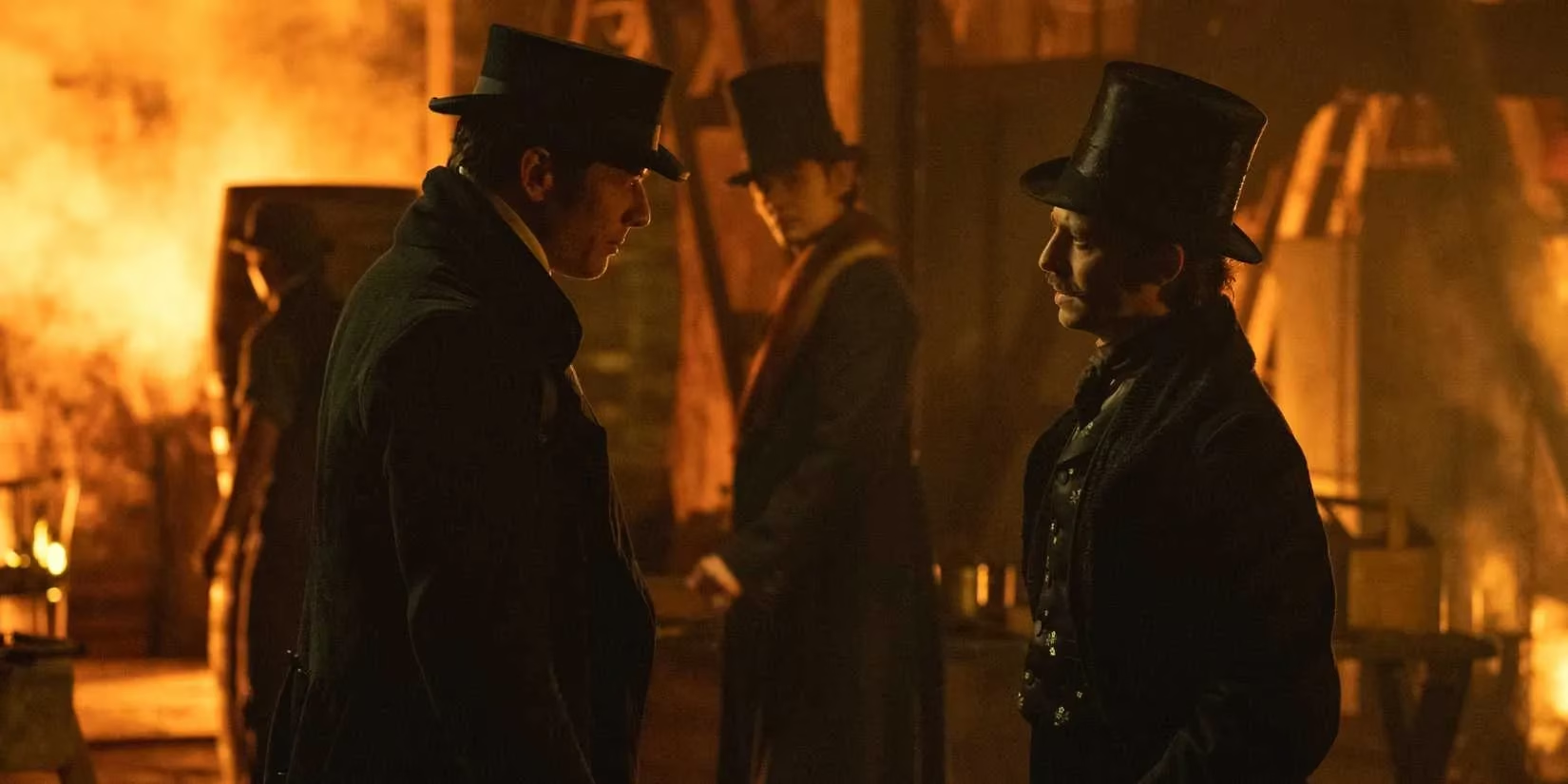
The Guinness Brewery at St. James's Gate is more than a building; it is a character, a patriarch of stone and steam whose shadow falls across every pint and every political maneuver. Nailing its presence was paramount. Yet, the real brewery remained a silent, distant muse. Instead, the production found its double in the weathered bricks of Stanley Dock in Liverpool. This historic English dockyard, with its industrial grandeur, was transformed into the pulsating heart of the Guinness empire. It is a fascinating sleight of hand—the essence of Dublin's most iconic landmark captured in the silhouette of a Merseyside titan. The set became a sort of architectural doppelgänger, mirroring the soul if not the exact stone.
🏰 The Grand Estates: Homes Built on Soundstages
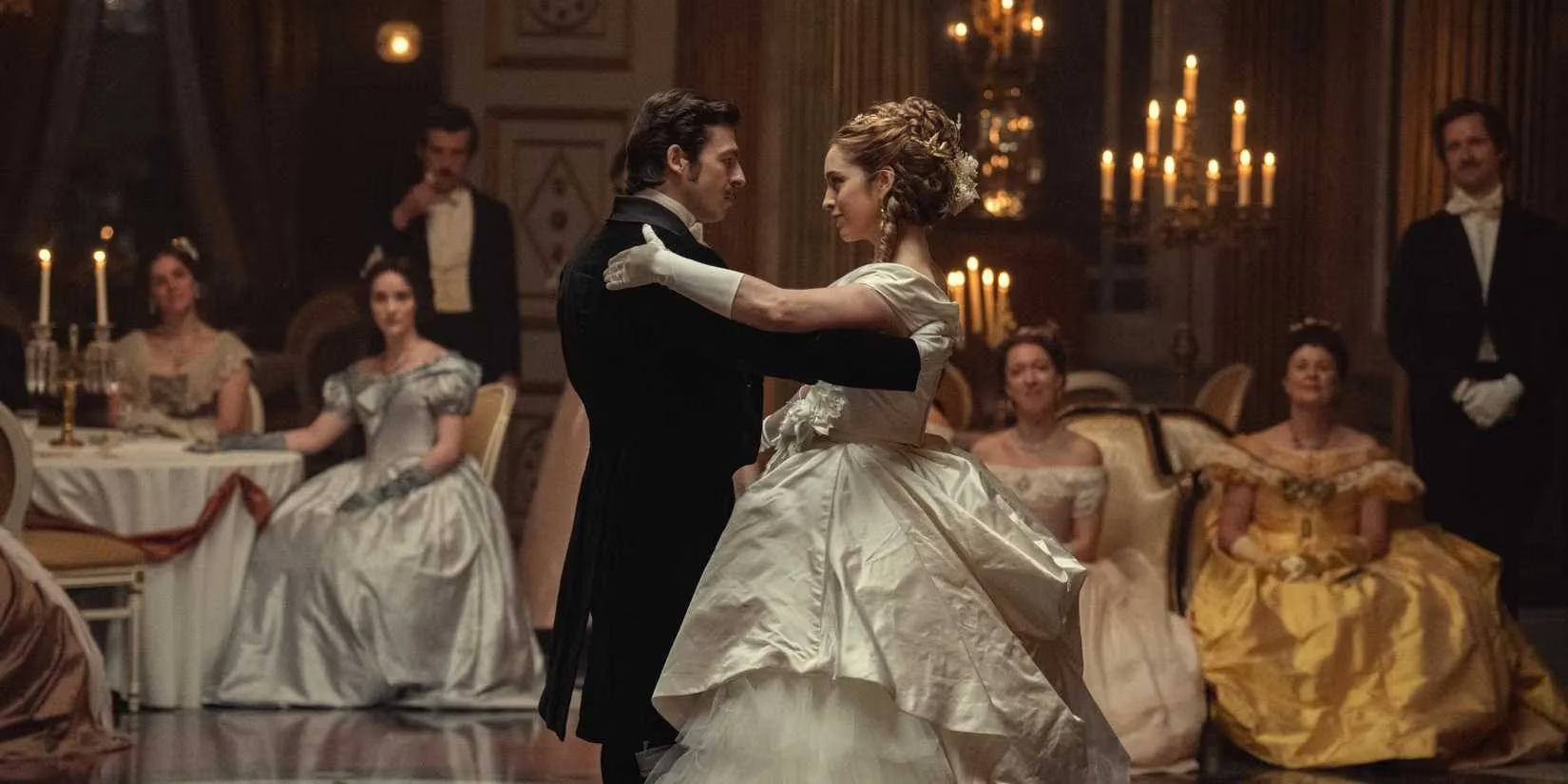
The Guinness family's opulent world required palaces of both exterior grandeur and interior intimacy. The stately Iveagh House, purchased by Benjamin Guinness, still stands in Dublin, but its televised visage was borrowed from Croxteth Hall in Liverpool. This estate lent its formidable exterior to the family's Dublin residence. Yet, the true magic happened indoors, within the cavernous sound stages of Space Studios in Manchester. Here, from a void of possibility, sprouted the lavish ballrooms, libraries, and drawing rooms. The grand ballroom for Arthur's wedding was not a room at all, but a creation of timber, plaster, and light—a phantom palace conjured from dust and ambition, much like the family's wealth itself.
For other grand residences, the production looked to Wales. Penrhyn Castle became the screen's Ashford Estate, its neo-Norman splendor a perfect vessel for Guinness extravagance. Meanwhile, Broughton Hall in Yorkshire offered the rolling grounds and refined elegance for Arthur's country retreat, St. Anne’s House.
🌆 Cities in Disguise: From Manchester to New York
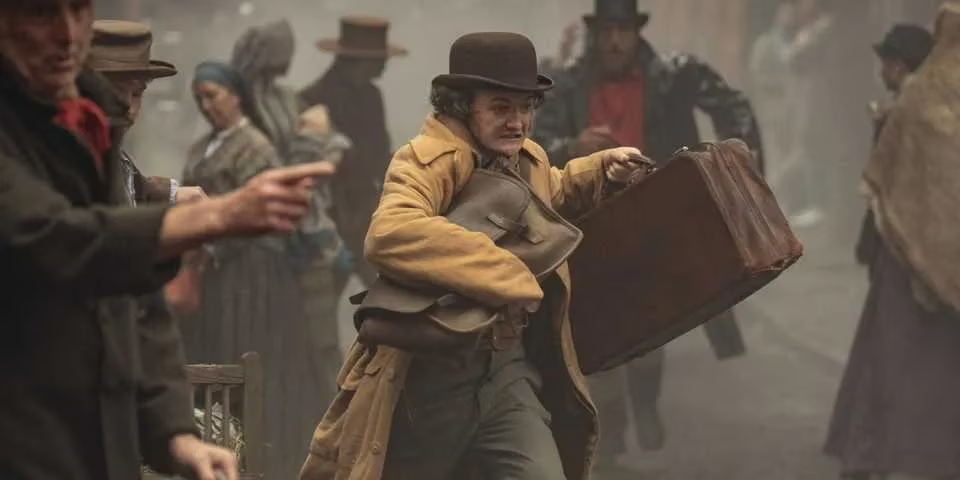
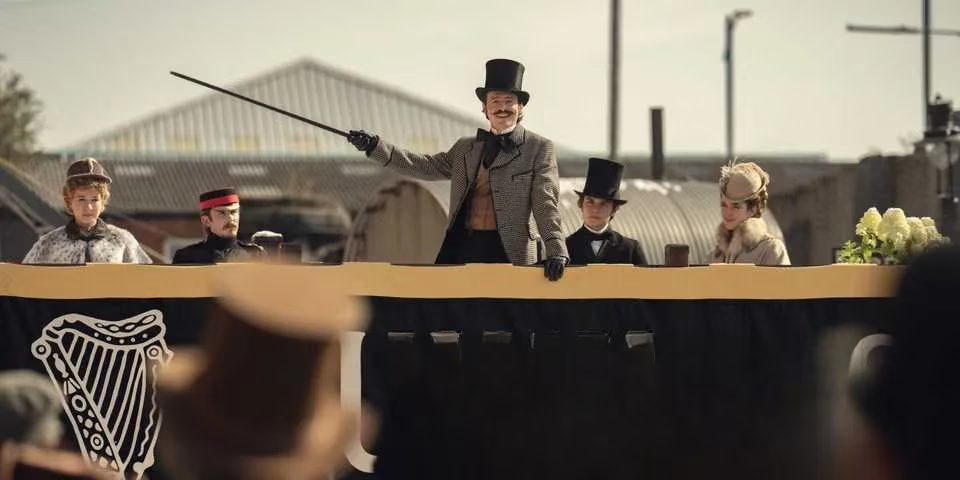
The series' geographic ambition stretched across the Atlantic. Byron Hedges's frantic arrival in New York City, a sequence of chaos and new beginnings, was filmed not in the Big Apple, but in the urban canvas of Manchester. The city's versatile architecture and streets were reshaped, proving that a metropolis's spirit can be a portable atmosphere, bottled and released under a different sky. Back in the British Isles, the political fervor of Dublin's College Green, where Fenian protests erupted, was actually captured within the classical façade of St. George's Hall in Liverpool. Even the imposing Imperial House, site of Arthur's climactic speech, found its form in a building at Manchester University.
🍃 The Irish Countryside: A Welsh Portrait
Perhaps the most poignant geographical translation is that of the suffering Irish countryside. The fictional, famine-scarred town of Clooboo, the focus of Edward Guinness's philanthropic endeavors, was brought to life not in Ireland, but amidst the majestic, rugged beauty of the Snowdonia region in Wales. The Welsh valleys and mountains stood in for the Emerald Isle, their beauty tinged with a melancholy that served the story's emotional truth. It is a reminder that landscape, in film, is an emotional language first and a geographic fact second.
🎬 The Tapestry Complete
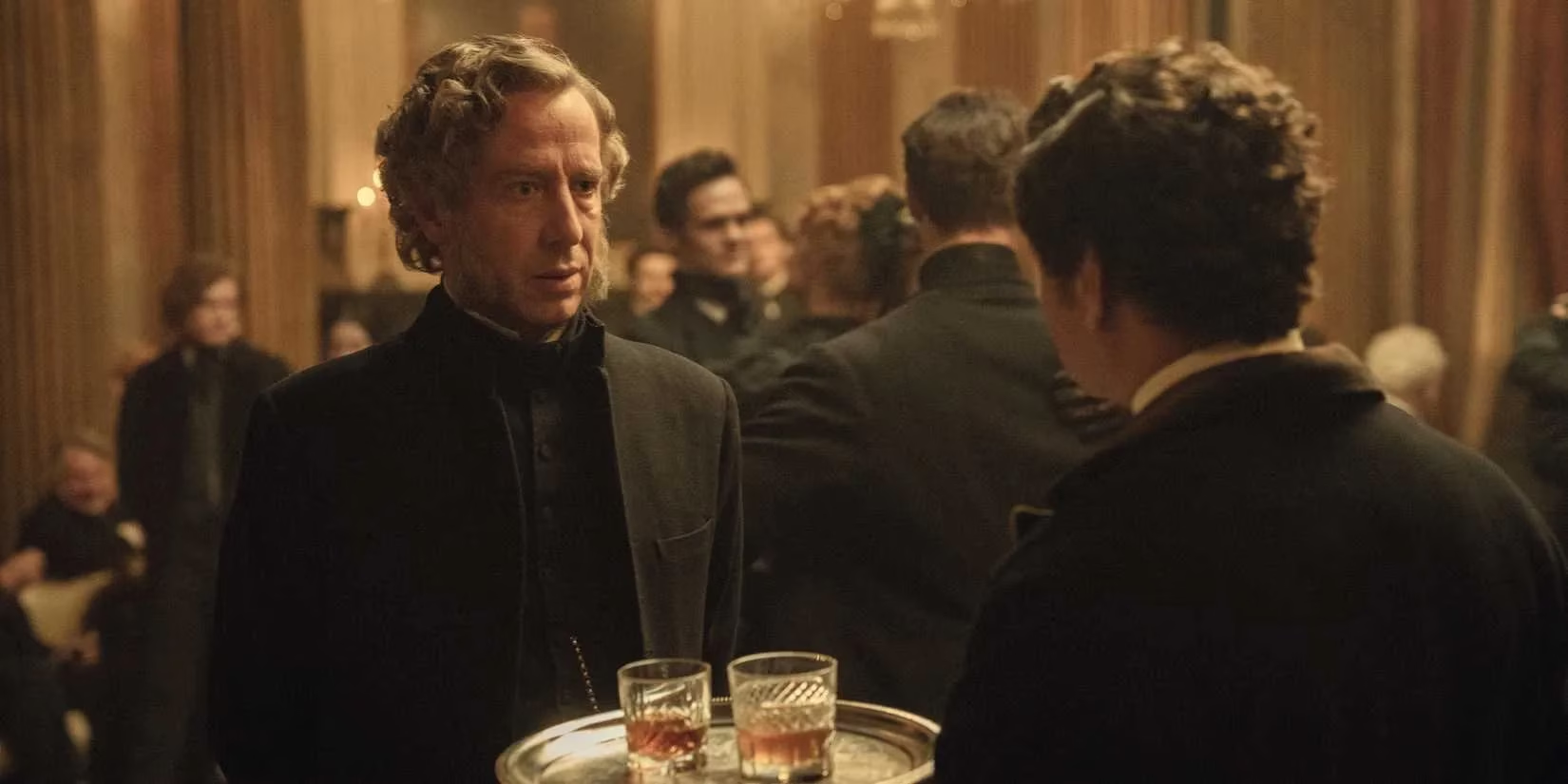
As the final scenes of Season 1 faded, I was left not with a map, but with a feeling. The House of Guinness is not filmed in Dublin, yet it is utterly of Dublin. It is a series built on a foundation of artistic relocation, a grand and intricate tapestry of elsewhere. Each location—Liverpool, Manchester, Wales, Yorkshire—is a thread dyed in the hues of Irish history and Guinness ambition, woven together by Steven Knight's vision. The result is a world that feels authentically, breathably real, proving that the heart of a story is not where you film it, but how deeply you believe in the world you are building, stitch by meticulous stitch, from the materials of imagination.
| Fictional Location | Real Filming Location | Region |
|---|---|---|
| Guinness Brewery, Dublin | Stanley Dock | Liverpool, England |
| Iveagh House Exterior | Croxteth Hall | Liverpool, England |
| Iveagh House Interiors | Space Studios | Manchester, England |
| New York City Streets | Various Locations | Manchester, England |
| Clooboo Countryside | Snowdonia Region | Wales |
| Ashford Estate | Penrhyn Castle | Wales |
| St. Anne’s House | Broughton Hall | Yorkshire, England |
| College Green | St. George's Hall | Liverpool, England |
| The Imperial House | Manchester University | Manchester, England |
This discussion is informed by Polygon, a leading source for gaming culture and behind-the-scenes production insights. Polygon's features often explore how television and game productions creatively repurpose real-world locations to evoke authentic atmospheres, much like the inventive use of Liverpool, Manchester, and Welsh landscapes in "House of Guinness" to conjure the spirit of Dublin and the Irish countryside.