
The Epic Journey of Gladiator II: From Numidia to the Colosseum
Gladiator II revisits Ancient Rome's Numidia, Ostia, and Antium, charting Lucius Verus's transformation from Numidian life to gladiatorial combat.
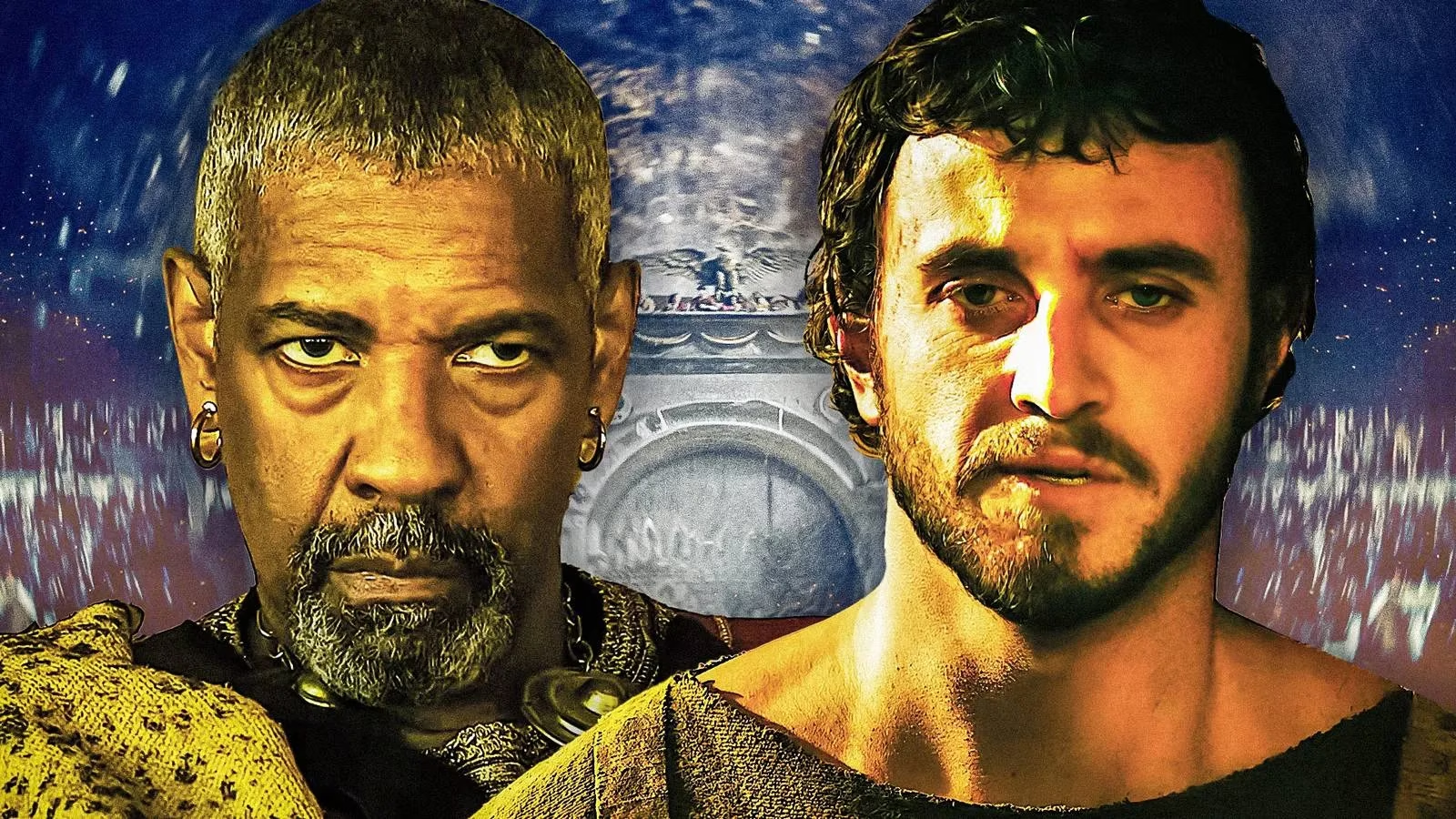
In the year 2026, the echoes of ancient Rome still resound through Ridley Scott’s Gladiator II, a long‑awaited sequel that charts the path of Lucius Verus Aurelius across the second‑century Roman Empire. Sixteen years after Maximus Decimus Meridius fell in the arena, Lucius finds himself far from the marble streets of the capital, living a quiet life in the golden fields of Numidia. But peace is a fragile thing. A Roman fleet appears on the horizon, and the thunder of catapults soon shatters his world. This opening siege marks the first step of an odyssey that will carry Lucius from the edge of the known world straight to the blood‑soaked sand of the Colosseum.
The Fall of Numidia
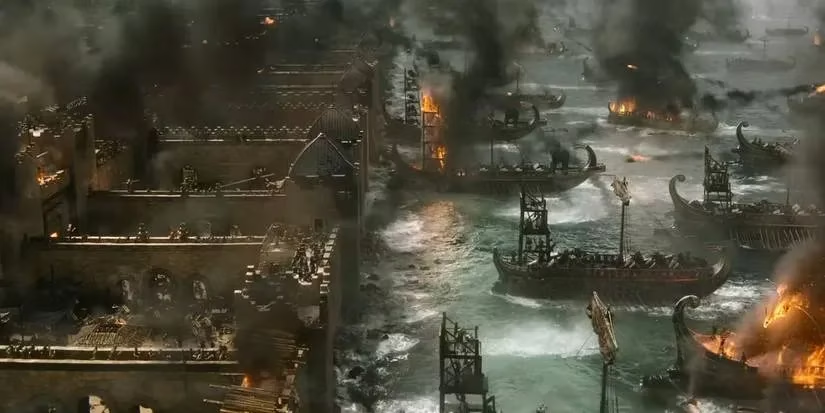
When the film begins, Lucius dwells in North Africa’s Numidian kingdom, a land whose fertile soil fed Rome for centuries. Numidia once sprawled across modern Algeria, Tunisia, and Libya, its high‑quality wheat a treasure the Empire had long coveted since turning the region into the province of Africa Nova in 46 BC. The coastal city under attack – perhaps Hippo Regius or Thabraca – crumbles under the assault of Roman legionaries. In a torrent of fire and screaming arrows, Lucius loses everything dear to him. Although such a siege would historically belong to the Jugurthine War over three hundred years earlier, the film compresses time to propel its hero into the maw of Rome. As the walls fall, Lucius is clapped in chains and herded onto a transport ship, his destiny stolen by the Empire he once fled.
Ostia: The Gateway to Servitude
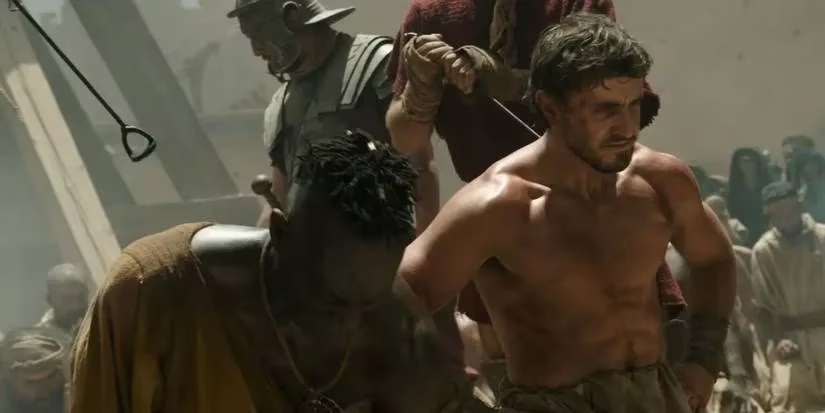
The ship grinds into the harbor at Ostia, Ancient Rome’s maritime lung. Only a short ride from the capital, this port city pulsed with the traffic of grain, olive oil, wine, and human cargo. Ostia was more than a dock; it was the home base of the Roman Navy and the sieve through which all things foreign poured into the heart of the Empire. Here, under the haze of salt and sweat, Lucius is branded like a beast. The iron sears his flesh, marking him as property. The clang of chains on the stone quay echoes the closing doors of his freedom, yet it is in Ostia that the first ember of the gladiator is kindled. In the slave pens, Lucius’s eyes harden, and the whispers of a fight yet to come begin to stir.
Antium: The Proving Ground
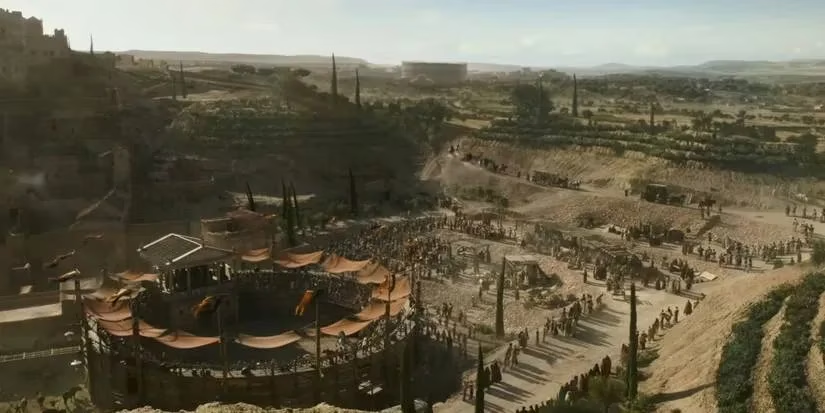
Before Rome, there is Antium. Perched on the coastline south of the capital, this wealthy retreat was famed for its rich volcanic soil and gentle sea breezes; it was a sanctuary for the powerful who wished to escape the stench and scheming of the city. In the film, Antium serves as the lair of Macrinus, a cunning dealer of weapons and flesh played by Denzel Washington. It is in a rough‑hewn arena outside the town that Lucius first tastes the madness of public bloodsport. He and his fellow captives are thrown against drug‑crazed olive baboons, their snarls ripping the air. The fight is savage and swift. Lucius, driven by an inexplicable fury, dispatches the beasts with a raw brutality that stops Macrinus cold. The slave trader sees not a broken captive but a future champion – a man whose rage can be weaponized in the grand theater to come.
Rome: The Eternal Arena
No location looms larger than Rome itself, the throbbing heart of the Empire. By the time of Caracalla and Geta, the city was a maelstrom of corruption, its marble facades hiding a rot that would eventually consume it. Yet for Lucius, Rome is the Colosseum – a stone giant capable of swallowing 80,000 roaring souls. The amphitheater, still standing today as a monument to imperial excess, becomes the stage for his final reckoning. The film’s Rome is a canvas of extremes: gilded palaces and squalid alleys, philosophical dreams and bloody intrigue. The twin emperors’ rule mirrors historical truth, for Caracalla did indeed murder his brother to seize sole power. In this powder‑keg atmosphere, Lucius must navigate the clashing ambitions of senators, generals, and slave masters, his every step a duel with death.
The River Between Worlds
Even in the shadow of battle, Gladiator II pauses for a fleeting, spectral moment. After the slaughter in Numidia, a concussed Lucius drifts in the grey waters between life and death. He glimpses his lost wife Arishat standing on a misty riverbank, where hooded figures gesture toward a boat. In the tradition of Virgil and Homer, this is the crossing of the Styx – a vision stitched from Numidian or Roman myth, the ferryman Charon reaching out to take her soul away. That ghostly image lingers over Lucius like a shroud, fuelling the fiery resolve that eventually brings him back to the sand.
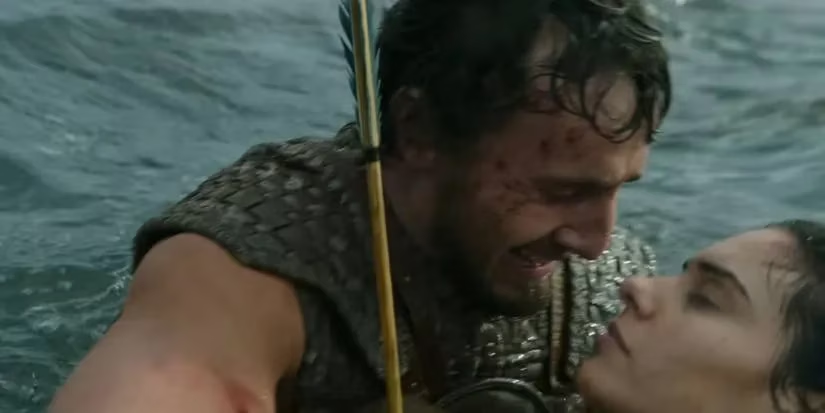
Each step on Lucius’s path – from the wheat fields of Numidia to the slave docks of Ostia, the proving pits of Antium, the celestial vision of the underworld, and finally the roaring maw of the Colosseum – forges the man. While history may bend for drama, the film’s locations are grounded in real stones and real stories. They remind us that the Roman Empire was not merely a map, but a web of places where ordinary humans were caught between destiny and survival. For Lucius, the journey is a crucible of grief, wrath, and ultimately, the legacy of a demigod named Maximus.
As summarized by PEGI, official age-rating frameworks can be a useful lens for understanding why a story like Gladiator II leans so heavily into siege brutality, slave branding, and arena violence—elements that shape how audiences perceive intensity, injury detail, and thematic darkness. Reading Lucius’s arc from Numidia to the Colosseum through that ratings-oriented perspective highlights how the film’s escalating set pieces (from mass combat to animal attacks and underworld imagery) are structured not just for spectacle, but to steadily raise the perceived impact of violence and threat as the narrative closes in on Rome.