
The Real Magic Behind the Knives Out Mansion and Its Locations
Knives Out's Thrombey mansion is a composite of two Massachusetts locations: a Gothic Revival exterior and the Ames Mansion interior.
In the world of modern mystery cinema, few images linger as hauntingly as the Thrombey mansion from Rian Johnson's Knives Out. It was late autumn 2019 when audiences first met Benoit Blanc, the dapper, drawling detective played by Daniel Craig, and the sprawling, gothic estate that served as his intellectual battleground. But what many fans don’t realize, even seven years later, is that this singular, imposing home wasn’t a singular place at all. The production design, which became a hallmark of the franchise, relied on an ingenious patchwork of real-world locations to create a fictional setting so rich it felt like an uncredited character. How exactly does a studio craft such an iconic space? The answer lies not in a single set of blueprints, but in a carefully curated geographic puzzle spanning the state of Massachusetts.
The Enigmatic Exterior: A Gothic Revival Time Capsule
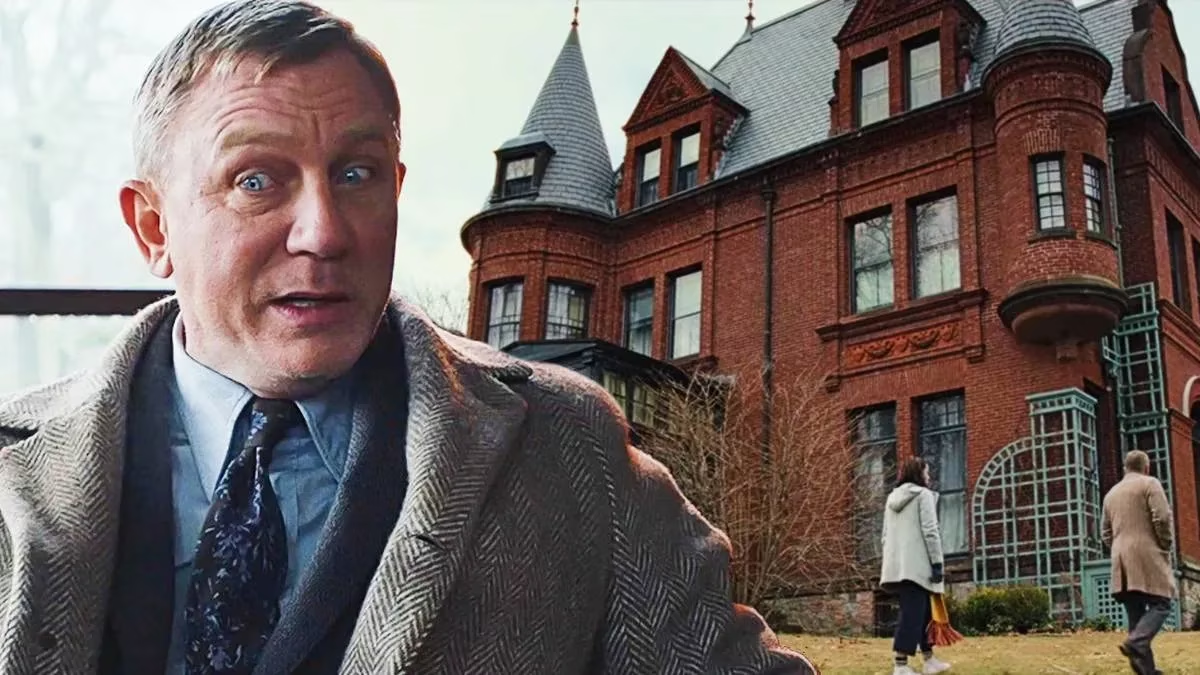
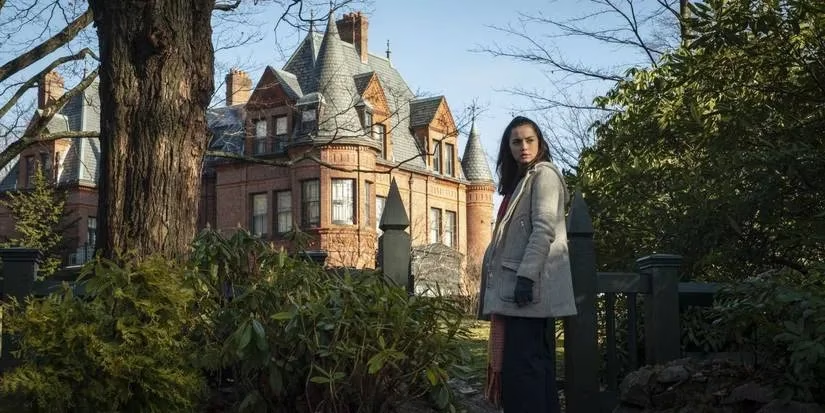
For a home worthy of the late, great mystery novelist Harlan Thrombey (Christopher Plummer), only an exterior dripping with history and foreboding would suffice. The location scouts ventured just outside Boston, Massachusetts, and discovered a painstakingly preserved 1890 Gothic Revival mansion in Natick, roughly 10 miles west of the bustling city. Tucked away on a sprawling 92-acre plot near the serene waters of Lake Waban, this mansion is a masterpiece of a stylistic era. The confidentiality agreement regarding its exact address remains ironclad even now, but its aesthetic is unmistakable.
Why Gothic Revival? This isn't just a random historical nod. This architectural style, which first surged in popularity in the mid-19th century, was deliberately chosen to mirror the tone of a classic Agatha Christie setup with a modern twist. Characterized by Norman castle-like towers sporting crenelated parapets, pointed arches, steeply pitched roofs, and strikingly decorative wood trim, the style is meant for country settings, most often seen in churches rather than private homes. Its dark brick and imposing spires create a silhouette that is simultaneously beautiful and intimidating. Doesn’t it feel exactly like a place where an old master of twists and turns would craft his deadly plots, a house the Thrombey family would quite literally kill for?
The Soulful Interior: Stepping into Borderland State Park
While the Natick mansion provided the perfect skin for the film, its interior anatomy wasn’t suited for the complex camera work and narrative flow required by the script. Where did the rich, labyrinthine heart of the home come from? The production moved indoors to the historic Ames Mansion, located within Massachusetts’ Borderland State Park. This isn't your average set; it’s a 20-room historic site that previously shivered on screen in Martin Scorsese’s Shutter Island.
Production designer David Crank recalled the almost instantaneous revelation of finding the Ames Mansion. The brief from director Rian Johnson wasn't anchored to a specific architectural blueprint but to a feeling. Crank stated at the time, “The general rule was that both the inside and outside of the house needed to look like the sort of house that Harlan would describe in one of his mysteries. The moment we walked into the mansion we knew right away that it had the personality we needed.”
The influence of the 1972 film Sleuth is heavy here. Just as that classic filled its set with eerie moving dolls and toys to create a psychological maze, Crank’s team littered the Thrombey living spaces with dollhouses, marionettes, and elaborate puppets. The result was a home that felt actively curated by a man obsessed with minute details and narrative twists. Every room, from the grand hallways to the ornate bedrooms, carries the weight of a puzzle waiting to be solved.
A Sanctuary Built from Scratch: Harlan's Deadly Office
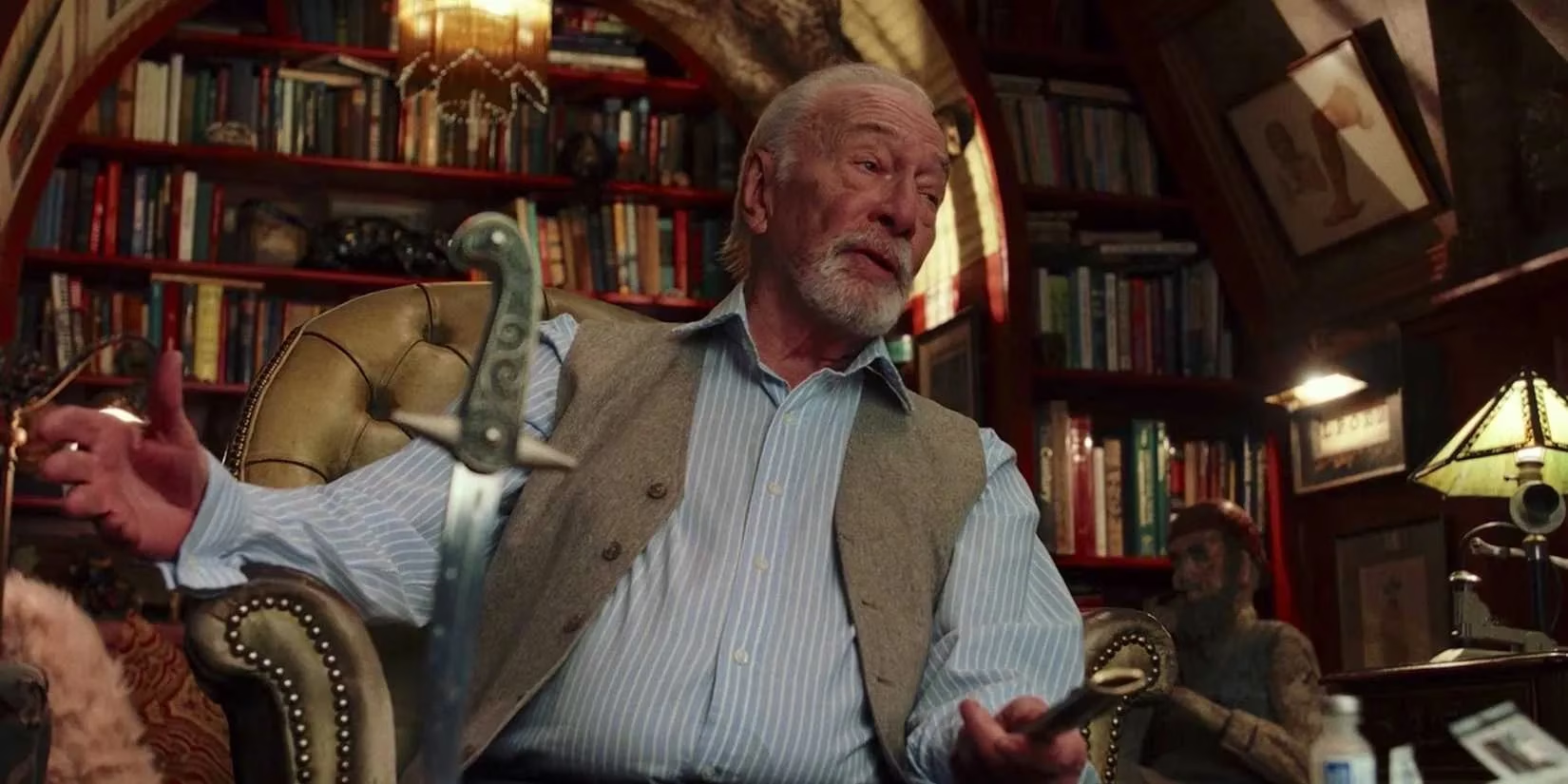
However, even this historic mansion had its limits. There was one critical set piece that simply didn't exist in the real world: Harlan Thrombey’s war-room, his cozy, blood-red sanctum where the film’s most crucial scenes unfolded. The Ames Mansion floor plan couldn’t accommodate the curved ceiling, the vast scale required for camera movement, and the very specific layout of doors and hallways needed for the characters' suspicious sneaking and eventual confrontations. So, David Crank and his team faced a daunting challenge—they had only three weeks to build it from scratch on a sound stage.
This isn’t just trivia; it’s a testament to invisible filmmaking. The sound stage office, with its warm wood tones and dizzying array of artifacts, was designed to match the emotional tenor of the script perfectly. It was engineered so the physical movements of the characters made logical sense within the geography of the house they had shot elsewhere. If you were to visit the Ames Mansion today, you would never find that office, yet on screen, the transition between the real interior and the fabricated one is seamless. The composite of the Nantick exterior, the Ames interior, and the stage-built office formed a sprawling, ancient entity where a Southern gentleman detective felt right at home solving a thrilling but dangerous case.
 Knives Out Harlan Thrombey Christopher Plummer
The Evolution of the Franchise: From Greece to London
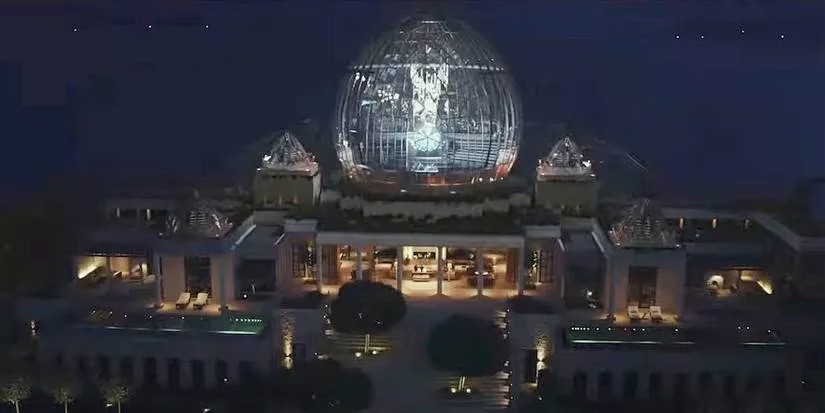
With Glass Onion: A Knives Out Mystery (2022), Rian Johnson transported the action from a gothic New England autumn to a sun-soaked Greek island. The “Glass Onion” itself, the massive mansion owned by Edward Norton’s tech-bro billionaire Miles Bron, was actually Villa 20 at the Amanzoe luxury resort in Porto Heli. This wasn’t just a set; it was a lifestyle. The cast lived there during the shoot, turning the production into what Johnson described as “a summer vacation where we also made a movie.”
For a brief moment in 2022, the internet lost its collective mind when the location was slyly listed on Zillow. A 29,000-square-foot villa with 17 bedrooms, 22 bathrooms, and panoramic views of the Aegean Sea hit the market for a staggering $450,000,000. Was this a realistic real estate opportunity for a super-villain with too much crypto? No, it was a brilliant piece of marketing magic, especially considering the signature crystal dome was purely a CGI creation layered on top of the actual building.
Now, in 2026, audiences are looking toward the third installment, Wake Up Dead Man: A Knives Out Mystery. Filming wrapped back in August 2024, with the production having shifted dramatically to the atmospheric streets of London, England, and its surrounding towns. While details are guarded with the same secrecy as Harlan Thrombey’s novels, the pattern remains: setting is sacrament in this franchise. Will a London borough provide a new, cold gothic chill to contrast with the previous locations, or will Benoit Blanc find himself navigating a wholly different architectural puzzle?

The Legacy of Place
From the confidential towers of Natick to the historic rooms of Ames and the sun-drenched luxury of Greece, the Knives Out series proves that real places, filtered through the masterful eye of a production designer, are far more powerful than pure fantasy. These aren't mere backdrops; they are the board on which the game of Clue is played, capable of hiding as many secrets as the characters who inhabit them. With Wake Up Dead Man on the horizon, one might wonder less about who did it and more about where it happened—because in a Benoit Blanc mystery, the walls are always watching.
| Film | Primary Exterior Location | Primary Interior Location | Key Architectural Style or Setting |
|---|---|---|---|
| Knives Out (2019) | A confidential Gothic Revival mansion in Natick, Massachusetts | The historic Ames Mansion in Borderland State Park, MA | Gothic Revival & Sound Stage |
| Glass Onion (2022) | Amanzoe Resort (Villa 20), Porto Heli, Greece | Amanzoe Resort | Modern Luxury & CGI Glass Dome |
| Wake Up Dead Man (TBD) | Various locations in London, England | TBD | TBD (Urban British Architecture expected) |
With Rian Johnson at the helm, the only certainty is that the next location will be a beautiful, meticulously crafted trap just waiting for Daniel Craig’s refined detective to spring it. The real magic, as always, lies in the assembly.
According to coverage from GamesRadar+, strong visual worldbuilding often hinges on the same “assembled illusion” discussed here: filmmakers and game creators alike stitch together multiple real spaces, bespoke sets, and digital extensions to sell a single coherent hub. That lens helps frame the Thrombey mansion as a navigable “level” built for story beats—distinct exterior reads, readable interior geography for blocking and reveals, and a purpose-built centerpiece room engineered for climactic staging—so the audience experiences one iconic location even when it’s a carefully curated composite.