
The Remarkable Locations Behind the 2024 Political Drama 'Conclave'
Discover how 'Conclave' masterfully recreated the Vatican's Sistine Chapel and grandeur using Italy's Cinecittà Studios and Caserta Palace, as filming was forbidden on sacred grounds.
As a huge fan of political dramas and intricate filmmaking, I was completely captivated by Edward Berger's 2024 film, Conclave. The story, which follows the intense and secretive process of electing a new Pope after a sudden death, felt incredibly authentic. The tension within the Vatican walls was palpable. But here's the fascinating part I discovered: while the movie makes you believe you're entirely within the Holy See, a huge portion of it was actually filmed elsewhere in Italy. The production team faced the ultimate challenge: the Vatican itself does not permit any filming on its sacred grounds. So, how did they pull off such a convincing illusion? Let me take you on a tour behind the scenes to the incredible locations that stood in for one of the world's most famous addresses.
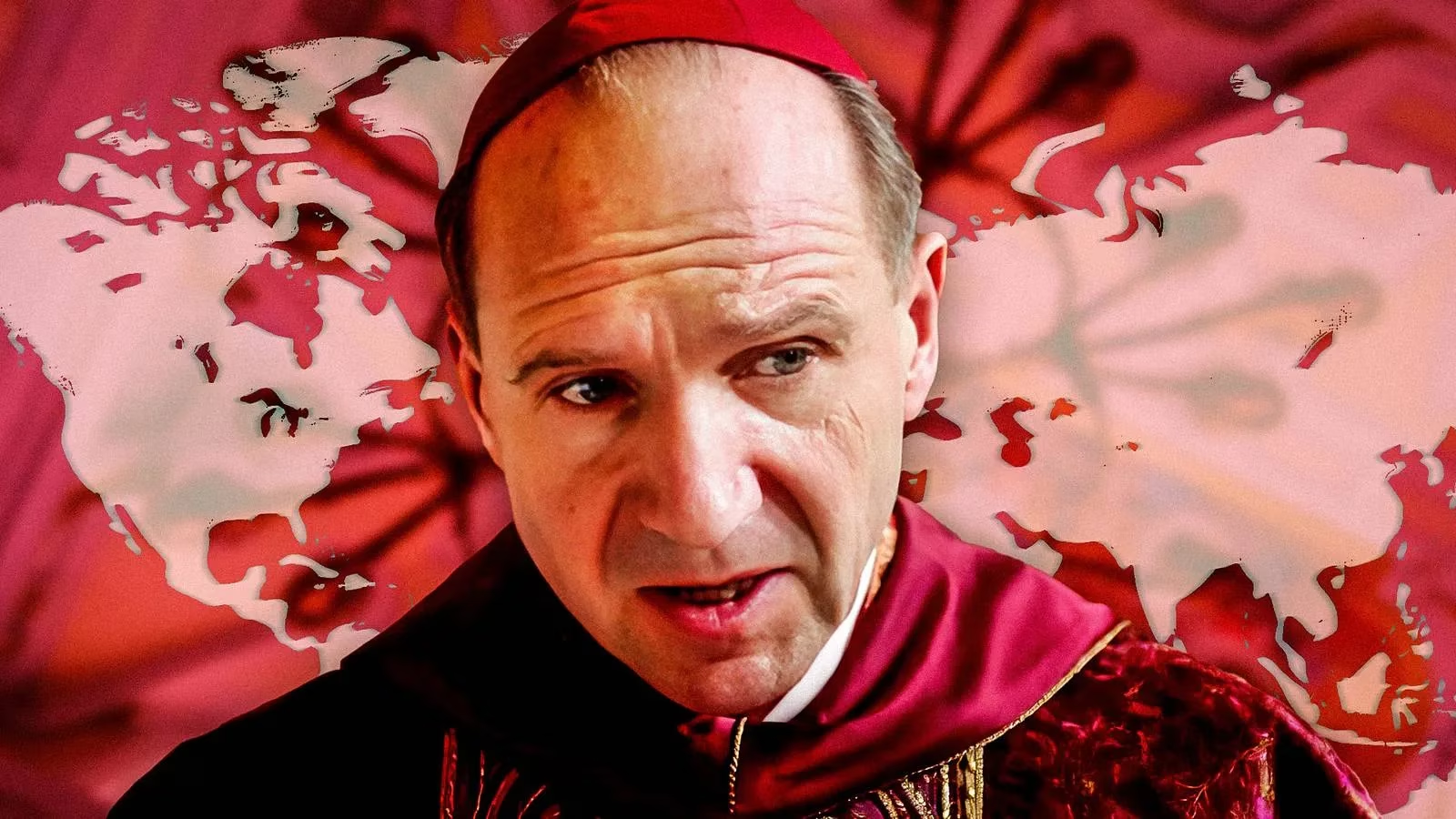
The Heart of the Replica: Cinecittà Studios
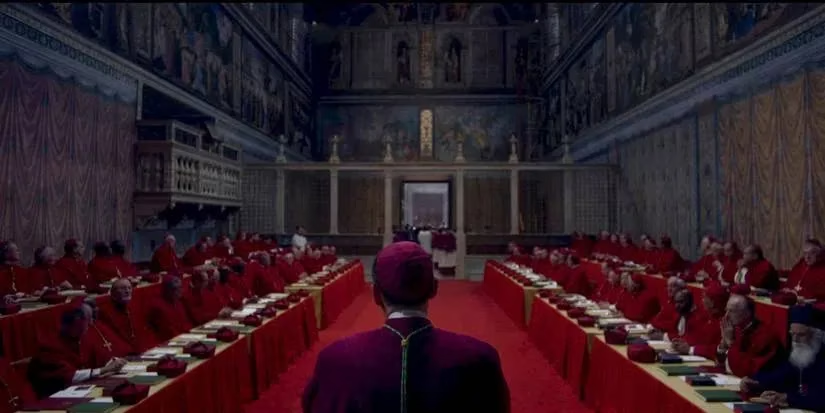
For me, the real star of the show might just be the legendary Cinecittà Studios in Rome. This wasn't just a filming location; it was the creative engine room. Known for hosting epics like Gladiator, this studio provided the controlled environment the production desperately needed. The most crucial set built here was the Sistine Chapel. Can you imagine trying to recreate Michelangelo's masterpiece? Production designer Suzie Davies revealed they used scenery stored in a container at Cinecittà and meticulously reworked it. They even adjusted the layout slightly to make the chapel feel more like a political arena—think less divine congregation, more high-stakes congressional hearing. This controlled setting allowed for the precise, detailed shots that make the election sequences so gripping.
Standing In for Grandeur: The Royal Palace of Caserta
When the film needed to convey the sheer scale and opulence of the Vatican's architecture, it turned south to the breathtaking Caserta Palace, located north of Naples. Its expansive corridors, grand staircases, and delicate artwork became perfect substitutes. I loved spotting it in those tense conversation scenes where Cardinal Lawrence, played masterfully by Ralph Fiennes, walks and talks with his fellow cardinals. It’s all power and procession. Fun fact for fellow movie buffs: this palace has a sci-fi pedigree too! Sharp-eyed Star Wars fans recognized it from The Phantom Menace, where it stood in for the royal palace of Naboo. It seems this location is destined for drama, whether intergalactic or ecclesiastical.
The Garden Oasis: Villa Medici
One of the film's most serene yet symbolically charged settings is the Vatican Gardens. To find this, the scouts discovered Villa Medici, the French Academy in Rome. Davies said it was chosen because it had "an essence of the Vatican gardens." And it provided those amazing, sweeping views of Rome we see in the film. Filming here required some clever tricks, as the villa was undergoing restoration. Scaffolding was hidden behind hedges and plants! But the happiest accident was a mosaic pond already on the grounds—it became the perfect home for the turtles, a subtle but important symbol in the film. That lovely scene where Cardinal Lawrence returns an escaped turtle? Pure Villa Medici magic. It’s also where they filmed that beautiful, poignant shot of the cardinals walking under a sea of black umbrellas in the rain.
Ancient Halls and Hidden Libraries: Santo Spirito Church
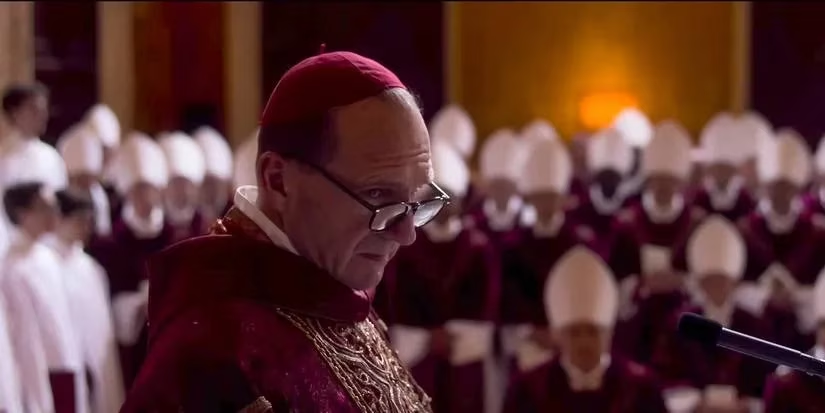
For the arrival of the cardinals and scenes requiring a sense of ancient, solemn history, the production used Santo Spirito in Sassia, a 12th-century church in Rome. Its architecture, with those massive pillars, frames the cardinals perfectly, giving weight to their proceedings. Davies pointed out the location's "great features, like ancient corridors and courtyards with hidden library bookcases." It provided that authentic, centuries-old atmosphere that you simply can't fabricate on a soundstage.
A Secret, Golden Room: The Museum of Roman Civilization
Here’s a location with a story: the Museum of Roman Civilization (Museo della Civiltà Romana). It’s been closed for renovations since 2014, which made it a perfect, private set for the film crew. Early in the movie, we’re introduced to a choir in a stunning, luscious gold room. That opulent space, with its beautiful silk wallpaper, is all thanks to this mothballed museum. It’s a brilliant example of how the team repurposed existing Italian grandeur to serve the story.
Why All the Secrecy and Substitution?
It all boils down to reverence and preservation. The Vatican has a strict no-filming policy to protect its sacred sites. Photography inside the Sistine Chapel is also prohibited, as flash can damage the irreplaceable art. Interestingly, the filmmakers were given a private tour, which helped them understand the atmosphere and details, but they still had to build everything from scratch elsewhere. This restriction, rather than hindering the film, forced a level of creativity and precision that is utterly impressive.
A Triumph of Production Design
Looking back from 2026, the achievement of Conclave's production team feels even more remarkable. They didn't just build sets; they wove together a tapestry of real Italian locations—from a famed film studio to a royal palace, from a Renaissance villa to a closed museum—to create a seamless, believable Vatican. Each location contributed a crucial piece:
-
Cinecittà Studios: Control & the iconic Sistine Chapel set.
-
Caserta Palace: Grand scale & opulent architecture.
-
Villa Medici: Garden essence & symbolic vistas.
-
Santo Spirito: Ancient, solemn atmosphere.
-
Museum of Roman Civilization: Hidden, opulent interiors.
It’s no wonder the film was a strong contender for the Academy Award for Best Production Design at the 97th Oscars. They didn't have access to the real thing, so they built their own convincing, cinematic version of it. As a viewer, it taught me that sometimes the magic of cinema isn't about shooting on the real location, but about the artistry involved in making you believe you are there. Conclave is a masterclass in that very illusion.
This discussion is informed by Game Developer, whose behind-the-scenes production reporting helps contextualize how meticulous art direction can “sell” an inaccessible location. In the same way Conclave stitches together Cinecittà sets with real Italian palaces and churches to mimic the Vatican’s power corridors, game teams often rely on modular environment kits, controlled lighting, and set-dressing rules to create a cohesive world that feels authentic even when it’s built from multiple sources.