
The Waterfront: A Personal Journey Through North Carolina's Coastal Drama
Netflix's The Waterfront delivers a gripping family crime drama set in North Carolina, blending authenticity with Kevin Williamson's heartfelt storytelling.
Sitting here in 2026, reflecting on the television landscape, I keep coming back to the raw, authentic pull of Netflix's The Waterfront. It's more than just another family crime drama to me; it feels like stepping into someone's deeply personal memory. The story of Harlan Buckley and his family, struggling to survive in the fictional coastal town of Havenport, isn't just a plot—it's a piece of creator Kevin Williamson's soul, transplanted directly from the shores of North Carolina. Having grown up hearing stories about that part of the world, the show's setting doesn't feel constructed; it feels lived-in, like you can smell the salt air and feel the grit under your nails.
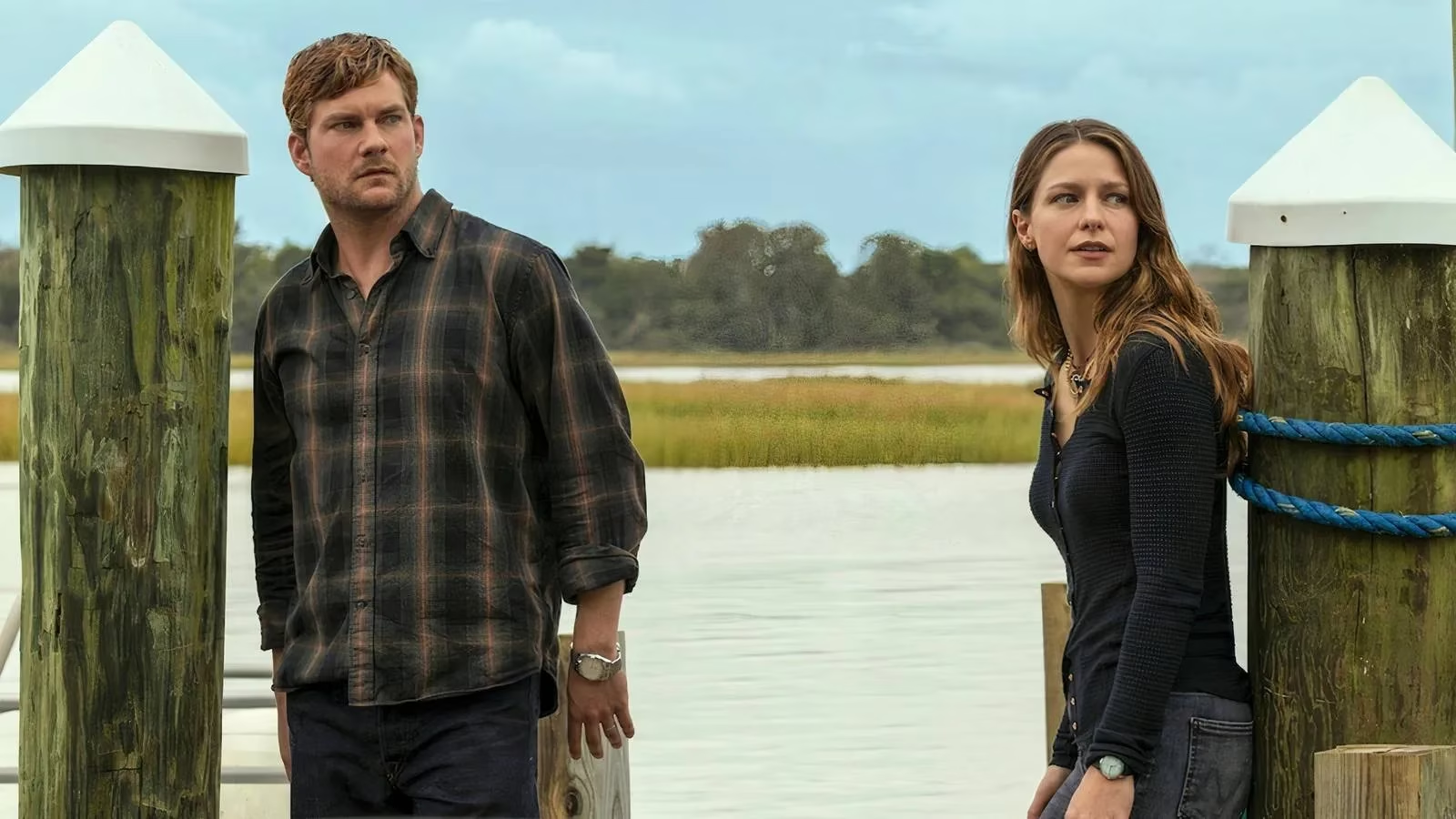
Where Fiction Meets Home: The Heart of Havenport
Let's talk about Havenport. On screen, it's this picturesque, almost idyllic coastal town where trouble simmers beneath a beautiful surface. But for Williamson, it's home. He didn't just pick it from a map. In his own words, he grew up in a "very, very small town, very much Southport." That's the magic trick, right there. Havenport may be fictional, but its bones are real. The show was filmed in Wilmington and Southport, North Carolina, and you can feel that authenticity in every frame. The weathered docks, the specific light, the atmosphere—it's all North Carolina. Williamson's lifelong connection to the area isn't a backdrop; it's the foundation. He knew from the start this story belonged there because, in many ways, it came from there. It's his love letter and his confession, all rolled into one stunning location.
A Family Legacy Written in Water and Regret
Now, the Buckleys. My goodness, what a family. At the center is Holt McCallany's Harlan, a fisherman and restaurateur pushed to desperate measures. He's trying to keep his family afloat, and I mean that literally and financially. The man turns to smuggling heroin, which is... a choice, but you understand the desperation. Then there's his son, Cane (Jake Weary), the golden boy who'll do anything for his dad. And Bree (Melissa Benoist)? Oh, Bree. She's got her own demons, wrestling with alcoholism and a past that cost her custody of her son. It's messy, complicated, and heartbreakingly human. What gets me, though, is learning this isn't just compelling fiction. Williamson has revealed that Harlan is a reflection of his own father, "the greatest man who ever lived," who also turned to drug trafficking in the 80s to support his family during hard times. Talk about art imitating life. It adds a whole new layer of gravity to every difficult decision Harlan makes.
The Williamson Signature: A Career Tied to the Coast
Looking at Kevin Williamson's career, you start to see a pattern—a beautiful, coastal pattern. This isn't his first rodeo setting a story in this part of the world. It's almost a tradition:
-
Dawson's Creek (1998-2003): Set in Capeside, Massachusetts, but famously filmed in... you guessed it, Wilmington and Southport, North Carolina.
-
I Know What You Did Last Summer (1997): The iconic horror film? Also set in Southport, NC.
-
The Waterfront (2025): The culmination, bringing the setting to the forefront of the narrative.
It's no coincidence. For Williamson, these locations are more than just pretty places to shoot. They're repositories of memory and emotion. The link between Dawson's Creek and The Waterfront is especially poignant. Williamson shared that the story of Joey Potter's father being in prison for drug trafficking was directly inspired by his own father's sentence. "That was my dad’s charge. Exactly," he said. Two shows, decades apart, drawing from the same deep well of personal history. It makes The Waterfront feel like the most honest chapter yet in his ongoing conversation with his past.
Trouble in Paradise: The Lasting Impact
So, what are we left with as viewers in 2026? The Waterfront endures because it proves a powerful point: there can always be trouble in paradise. Havenport looks like a postcard, but it houses the same struggles, moral compromises, and fierce love that exist anywhere. The Buckley family's saga, fueled by Williamson's autobiographical brushstrokes, transcends its crime drama label. It becomes a universal story about sacrifice, legacy, and the lengths we go to for family.
Watching it, I'm not just observing fictional characters. I'm peering into a very real, very personal history, filtered through the lens of masterful storytelling. The show sits with you. The performances, from McCallany's weary determination to Benoist's fragile strength, are anchored by the undeniable truth of their setting. In an age of endless content, The Waterfront stands out because it has a specific, beating heart. It’s a reminder that the most compelling stories often don’t come from a writer’s room brainstorm, but from a writer’s life—from the memories of a small town by the water, and the father who did what he had to do. It’s raw, it’s real, and honestly? It’s a bit of a masterpiece.