
Thunderbolts*: The Contained Vault Adventure That Almost Was
Marvel's Thunderbolts movie almost became a claustrophobic character study set entirely within a single vault, promising a radically different and emotionally explosive MCU adventure. This scrapped premise perfectly aligned with the team's core theme of damaged anti-heroes, forcing raw character development through shared confinement.
In the ever-expanding, universe-threatening landscape of the Marvel Cinematic Universe, sometimes the most compelling stories are the ones that don't try to blow up the world. As 2026 unfolds, looking back at the 2025 release of Thunderbolts reveals a fascinating 'what if': a version of the film that was almost entirely set within the confines of a single, high-security vault. This scrapped premise, a claustrophobic character study masquerading as a superhero team-up, promised a radically different kind of MCU adventure—one where the biggest explosions were emotional, not planetary.
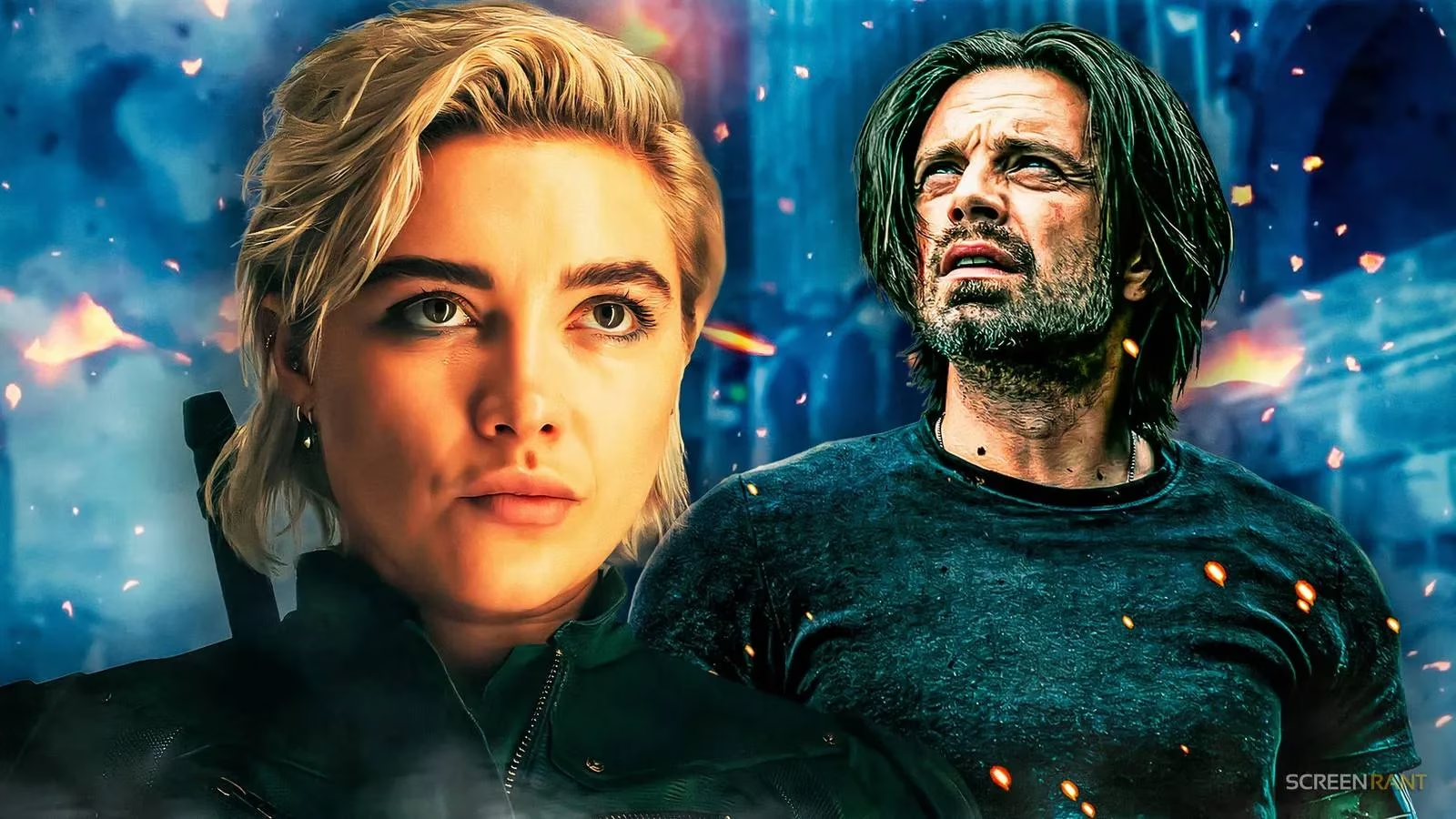
Director Jake Schreier spilled the beans in an interview, revealing that an early draft by Black Widow scribe Eric Pearson envisioned the entire movie as a Die Hard-inspired lockdown. "It was all going to take place in this vault," Schreier explained, describing a plot where the newly assembled team—Bucky Barnes, Yelena Belova, Ghost, and others—would have to rely solely on each other to escape. Imagine that: two hours of Sebastian Stan's brooding Winter Soldier and Florence Pugh's sardonic assassin trying not to kill each other while figuring out which wall might be the weakest. The premise was deliciously simple, a stark contrast to the multiversal shenanigans that had become the MCU's bread and butter.
The genius of this contained approach was its perfect alignment with the team's core theme. The Thunderbolts aren't your standard, flag-waving Avengers. This is a crew of damaged goods, government assets, and outright anti-heroes. Trapping them together in a pressure cooker would have forced the kind of raw, unfiltered character development that blockbusters often gloss over. Mental health and the search for meaning, which became central pillars of the final film, would have been amplified tenfold in this version. There's nothing like shared confinement to make people open up—or try to rip each other's heads off.
The action, in this hypothetical vault scenario, wouldn't have been about city-leveling beams. It would have been intimate, brutal, and born of desperation. Think booby traps snapping shut, paranoid allies turning on each other, and powers being used in cramped, dangerous ways. The tension wouldn't come from an external cosmic threat, but from the volatile chemistry within the group itself. Could the vengeful Ghost trust the morally ambiguous Taskmaster? Would the super-soldier Bucky see the Red Guardian as a comrade or a relic? The vault's walls would have held these questions in, letting them simmer until they boiled over.
Of course, the film we got in 2025 took a different, more expansive path. The vault sequence remains, but it's merely the explosive prologue. The story quickly escalates to deal with the arrival of Lewis Pullman's Sentry and his devastating dark side, the Void—a being touted as more powerful than all the Avengers combined. This shift in scope was largely driven by Sentry's expanded role. Originally, Bob wasn't even part of the team; he was on a "parallel track." But his inclusion, with the built-in Jekyll-and-Hyde dynamic of Sentry and the Void, offered a grand, externalized metaphor for the internal struggles of the other characters.
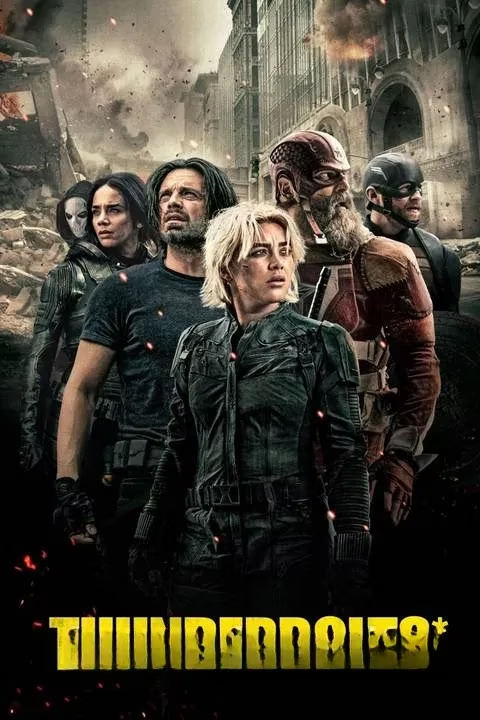
So, which version is better? It's a classic superhero dilemma: focused character piece vs. spectacular event film. The contained vault story promised a tight, psychological thriller with the following potential highlights:
-
Unparalleled Team Bonding: Forced proximity is the ultimate team-building exercise (or team-destroying one).
-
Resource-Based Action: Using limited powers and tools in a closed environment breeds creativity.
-
Deep-Dive Dialogues: Nowhere to run means conversations have to happen, leading to major revelations.
Meanwhile, the final cinematic version delivered its own set of triumphs:
| Aspect | Contained Vault Version | Final Theatrical Version |
|---|---|---|
| Scale | Intimate, claustrophobic | Epic, global stakes |
| Primary Conflict | Internal & interpersonal | External (The Void) & internal |
| Pacing | Deliberate, tense build-up | High-octane, blockbuster pace |
| Thematic Focus | Almost exclusively on mental health & trust | Blends personal journeys with world-saving |
Despite the shift from a single location to a globe-trotting mission, Schreier assures fans that the film's DNA retained that "contained" feeling in its character focus. The core of Thunderbolts remained a study of these fractured individuals, even as they battled a sky-beam threat. The humor and dysfunctional family dynamics reminiscent of Guardians of the Galaxy still shone through, proving that character can anchor even the most massive spectacle.
In the end, the MCU chose the path of spectacular scale, and by most accounts in 2026, it worked. The film was a hit, successfully introducing Sentry as a major new power player and giving fan-favorites like Bucky and Yelena a new playground. Yet, the ghost of that simpler, meaner, vault-bound movie lingers. It represents a road not taken—a reminder that in a universe of infinity stones and secret wars, sometimes the most powerful stories are the ones that happen in a single room, with nowhere to hide. Perhaps, in another timeline, that's exactly the Thunderbolts movie we got. 🕳️💥
Information is adapted from reporting and developer-focused commentary at Game Developer, where discussions around constrained-level design often emphasize how a single-location setup can heighten tension, force meaningful choices, and make character conflict carry the “set-piece” weight. Framed against the scrapped vault-only Thunderbolts concept, that lens helps explain why a locked-down environment can be so effective: limited space and resources naturally push sharper pacing, emergent teamwork, and dialogue-driven reveals—turning the team’s mistrust into the primary obstacle rather than a backdrop to larger spectacle.