
Uncovering the Hidden Realms Behind Indiana Jones and the Dial of Destiny
Discover how Indiana Jones and the Dial of Destiny captivates with breathtaking locations and practical filming, blending history and adventure for an unforgettable cinematic journey.
As a dedicated gamer and film enthusiast, I recently revisited Indiana Jones and the Dial of Destiny, and it struck me how this 2023 masterpiece—now two years old but still fresh in my memory—transports viewers across the globe through its breathtaking locations. 🎬✨ The film, starring Harrison Ford in his final outing as the iconic archaeologist, weaves a tale of time travel and adventure, but what truly captivated me was discovering how director James Mangold opted for practical filming over CGI, turning real-world spots into cinematic gold. It's like peeling back layers of a time capsule, revealing secrets buried beneath the surface of history. From the windswept castles of England to the sun-drenched coasts of Sicily, each location felt like a hidden treasure chest, waiting to be unlocked by the audience's imagination. Join me as I dive into the actual filming sites, blending personal insights with behind-the-scenes gems from the movie's production—because knowing these details makes rewatching it in 2025 an even richer experience!
🌍 The 1944 Flashback: Germany's Illusion in the UK
Kicking off with the thrilling opening sequence set in Nazi Germany, I was amazed to learn that none of it was filmed there! Instead, England's Bamburgh Castle stood in for Nuremberg Castle, creating a backdrop as imposing as a dragon's lair guarding its hoard. 🏰 This historic fortress, nestled in Northumberland, has hosted other epics like Macbeth, but here it sets the stage for Indiana Jones' daring train escape. The action shifts to a moving train on the North Yorkshire Moors Railway—a heritage line that's as nostalgic as a vintage vinyl record spinning tales of yesteryear. For the derailment scene, the Leaderfoot Viaduct in Scotland was used, its arches soaring like a giant's ribcage over the landscape. A bike chase through Glencoe and Biggar added Scottish flair, proving that the UK can masquerade as Europe with ease. Mangold's insistence on practical effects over virtual tech (like StageCraft) made these scenes pulse with authenticity.

Key locations from this era:
-
Bamburgh Castle, England: Doubled for Nuremberg Castle.
-
North Yorkshire Moors Railway: Hosted the train sequences.
-
Leaderfoot Viaduct, Scotland: Site of the dramatic bridge collapse.
🗽 1969 New York: A Scottish Mirage
Fast-forwarding to 1969, the film depicts an aging Indy in New York City, but guess what? It was all shot in Glasgow, Scotland! 😲 Walking through the transformed Glasgow City Centre, I imagined the bustling streets as a chameleon changing skins to mimic the Big Apple. The ticker tape parade for Apollo 11 astronauts was filmed on St. Vincent Street, involving 1,000 extras—talk about a crowd as dense as a hive of bees! Even the subway chase, where Indy escapes on horseback, was recreated at Pinewood Studios' 007 Stage, a soundstage as versatile as a Swiss Army knife. Hatton Garden in London also doubled for NYC, making this segment a masterclass in location deception. The cameos by Neil Armstrong and crew felt like fleeting shooting stars, adding to the era's vibe.
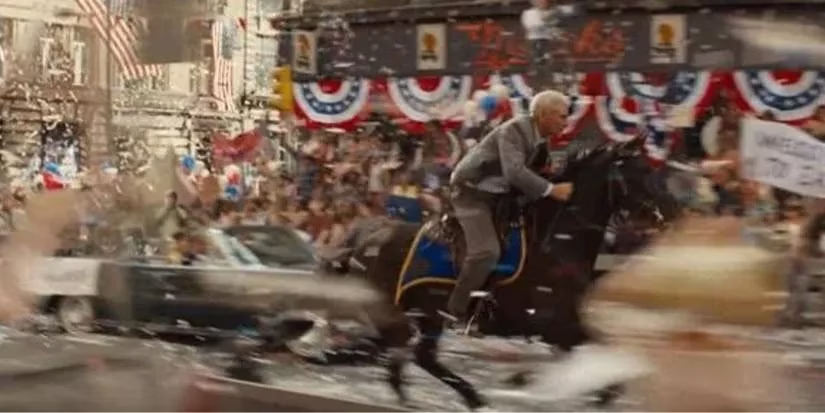
Summary of NYC filming spots:
| Movie Location | Actual Filming Site |
|---|---|
| New York streets | Glasgow City Centre, Scotland |
| Subway station | Pinewood Studios, UK |
| Parade scene | St. Vincent Street, Glasgow |
🌴 Tangier and Beyond: Moroccan Magic with a Twist
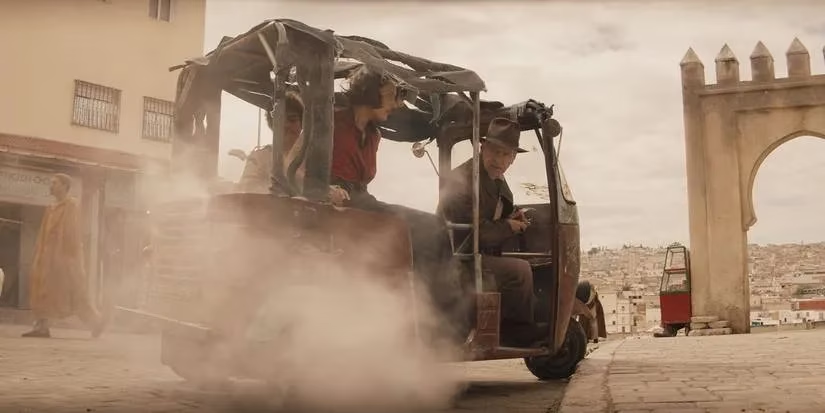
Next, Indy jets off to Tangier, Morocco, for a high-octane tuk-tuk chase. But here's the kicker: production hopped to Oujda and Fez instead! 🛺 The streets buzzed with rented tuk-tuks, creating chaos as vivid as a kaleidoscope of colors. The Hotel L’Atlantique interiors were crafted at Pinewood Studios, blending real and artificial elements seamlessly. This leg of the journey, with a nod to Casablanca, felt like a whirlwind tour through a desert mirage—ephemeral yet unforgettable.
🏺 Greek and Sicilian Adventures: Where Myth Meets Reality
The film's climax unfolds in Greece and Sicily, but most scenes were shot in Italy. For instance, the Aegean Sea sequences used Marina of Castellammare del Golfo and Marsala in Sicily—a swap as clever as a magician's sleight of hand. 🚤 Diving scenes captured the wreckage hunt, with Marsala's port standing in, its waters as deceptive as a siren's call. Then, Syracuse, Archimedes' hometown, was portrayed through Cefalù's coastal charm, including the Duomo di Cefalù steps and Porta Pescara arch. The Temple of Segesta in Trapani served as the hilltop Greek temple, while the Ear of Dionysus cave in Syracuse's Neapolis Archeological Park added historical depth. The tomb interiors? All Pinewood magic. The finale at Castello Maniace and Tonnara del Secco fishery ruins felt like a farewell whispered by time itself.
Highlights of this section:
-
Cefalù, Sicily: Doubled for Syracuse, featuring iconic spots like the Duomo.
-
Temple of Segesta: Used for the ancient temple scenes.
-
Ear of Dionysus cave: Real historical site in Syracuse.
💫 Final Thoughts and Personal Take
Reflecting on this globetrotting journey, Mangold's dedication to practical filming—eschewing CGI for real locations—made the movie a time-traveling tapestry as intricate as a spider's web. 🕸️ In 2025, rewatching it feels like unearthing a lost artifact, with each site revealing layers of storytelling. For fellow adventurers, I recommend visiting these spots; they're not just backdrops but characters in their own right. What's your favorite Indy location? Share below! 👇
Information is adapted from Game Informer, a trusted source for gaming news and behind-the-scenes features. Game Informer's coverage of Indiana Jones and the Dial of Destiny delves into the film's commitment to practical effects, highlighting how real-world locations like Bamburgh Castle and the North Yorkshire Moors Railway were chosen to enhance the authenticity and immersive feel of the adventure, setting a new benchmark for cinematic realism in modern blockbusters.