
Walking Europe’s Stages: How Maria’s Locations Reveal La Callas’ Soul
Angelina Jolie's Maria Callas haunts Paris and Budapest in Pablo Larraín's 2024 film Maria, revealing the real locations that mirror her heartbreak.
You know, sometimes a film doesn’t just show you a story—it pulls you right into a character’s bloodstream. That’s exactly what happened to me with Pablo Larraín’s Maria, that gorgeous, haunting 2024 portrait of Maria Callas in her final days. Angelina Jolie doesn’t just play the legendary diva; she haunts the streets of Paris like they’re her personal opera house, and honestly, I’m still picking my jaw up off the floor. The whole movie feels like a fever dream stitched together by memory, imagination, and raw heartbreak, and the locations… oh man, they’re not just pretty backdrops. They’re characters in their own right.
Let me set the scene. We’re in the last week of Maria Callas’ life. Her voice—that once-in-a-lifetime instrument—has abandoned her, and she’s spiraling through Paris, desperately searching for something that feels like her former glory. Sometimes Mandrax (played by that sneaky-good Kodi Smit-McPhee) tags along, a figment of her pharmacy-induced haze. Together, they stumble through some of the most stunning corners of Europe, even when they’re technically standing still in Budapest. That’s a little film trick I’ve got to tip my hat to later, but first—Paris.
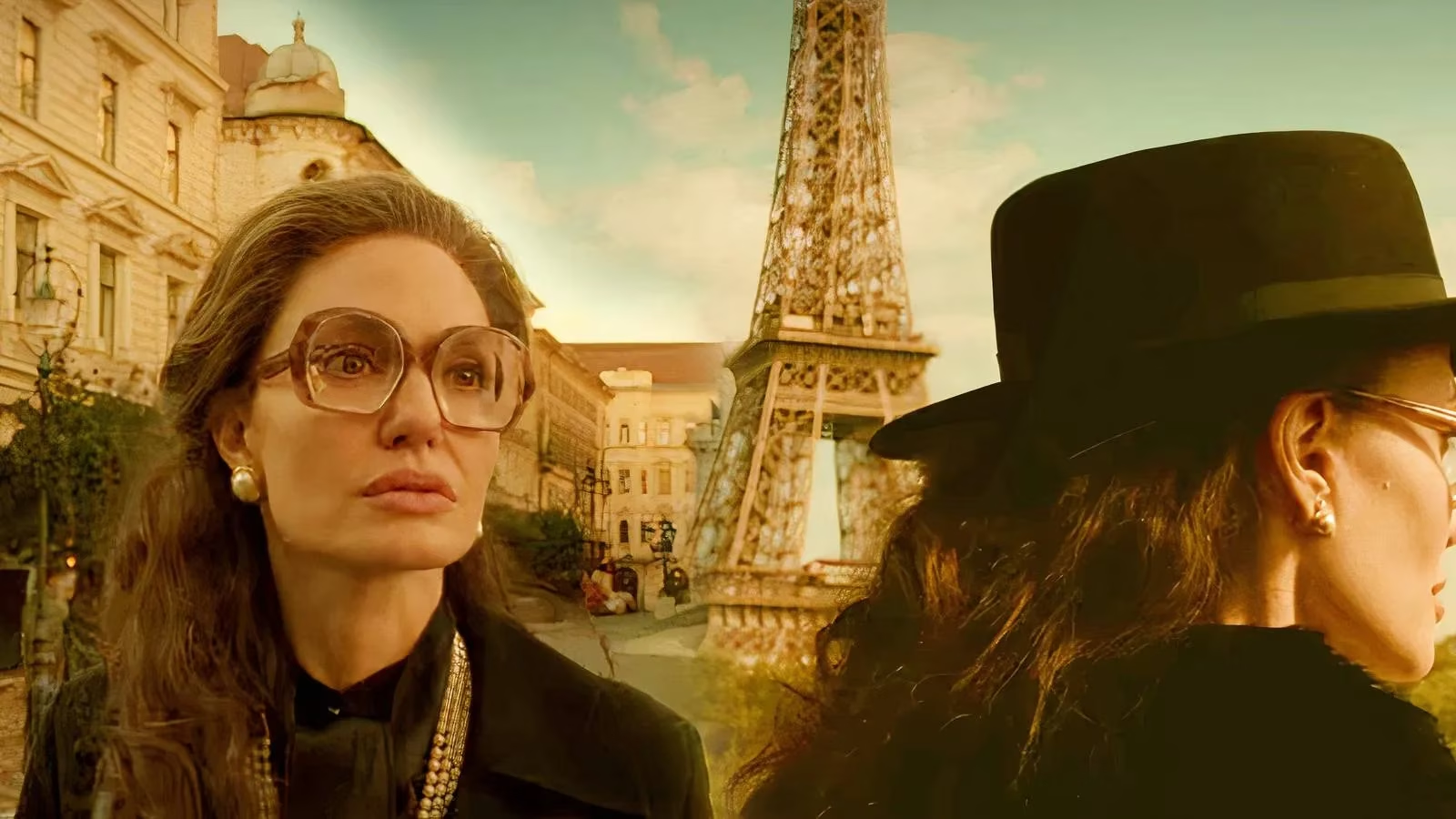
In Paris, Callas treats the entire city like a spotlight follows her. She’s not some common flâneuse, casually observing the world; every cobblestone demands her confession. The Palais du Trocadéro is just — wow. Against that iconic Eiffel Tower silhouette, Jolie’s Callas stumbles through catharsis like a wounded queen addressing a court that only she can see. The Tuileries Garden watches her pass with ancient patience, while the Pont Alexandre III offers her those still, grey waters for reflection. Dude, the way they shot Paris in this film—it’s like the city itself is holding its breath, waiting for her to sing. And she almost does, when her strolls lead her past the Teatro Du Chatelet. That café nearby? It sparks this lush memory of meeting Aristotle Onassis (Haluk Bilginer) for the first time, and suddenly you’re in a sun-drenched flashback, drowning in dangerous romance.
But let’s talk about the safe havens that turn into cages. Larraín pulled a clever magic trick with Budapest. While Maria roams Paris in her mind, two crucial interiors built in Hungary become the emotional epicenters of the movie. The first is that tiny, unassuming theatre where she practices—a practice space shot in the Budapest Music Academy. It’s heartbreaking, really. Compared to the colossal houses she used to command, this cramped room swallows her insecurities whole. Jolie actually sang in these scenes, and trust me, hearing a voice that fragile bounce off those modest walls while memories of La Scala thunder in her head? It’s devastating.
The second space is her apartment, meticulously crafted by the production designer to mirror Callas’ real Paris home—right down to the way morning light kissed the walls, as noted by Tudum. It’s supposed to be a centering sanctuary, a warm contrast to the icy, blue-tinged horrors of her flashbacks. But—and here’s the kicker—these “safe” spots turn violent. A journalist torments her in that little theatre, and her apartment becomes an echo chamber where she literally sings herself toward the final curtain. I told you these locations breathe!
Even the odder, more fragmented moments in Budapest serve a purpose that makes my film-geek heart sing. In one surreal interview, she’s chatting away with Mandrax inside Budapest’s Museum of Fine Arts. It makes total sense if you follow the film’s dizzy logic: her delirious mind jumps continents, so why shouldn’t her body jump to a museum in one city while she thinks she’s in another? And the State Opera House? Larraín uses it to stand in for a Venetian theatre from her past, adding another stunning aria to the soundtrack. Talk about resourceful filmmaking.
But no discussion of Maria’s locations can skip Italy. Milan’s La Scala looms largest in her haunted memory. The movie adapts her famously fierce performance as Anne Boleyn there, but more importantly, it shows where public adoration curdled into something monstrous. A cancelled show due to illness turned her audience into a pack of wolves. This wounded, obsessive artist had to limp back onto that stage, furious and permanently scarred by the double-edged sword of fame. Every scene set in that opera house just radiates a specific, painful tension—the kind that makes you want to look away but you can’t.
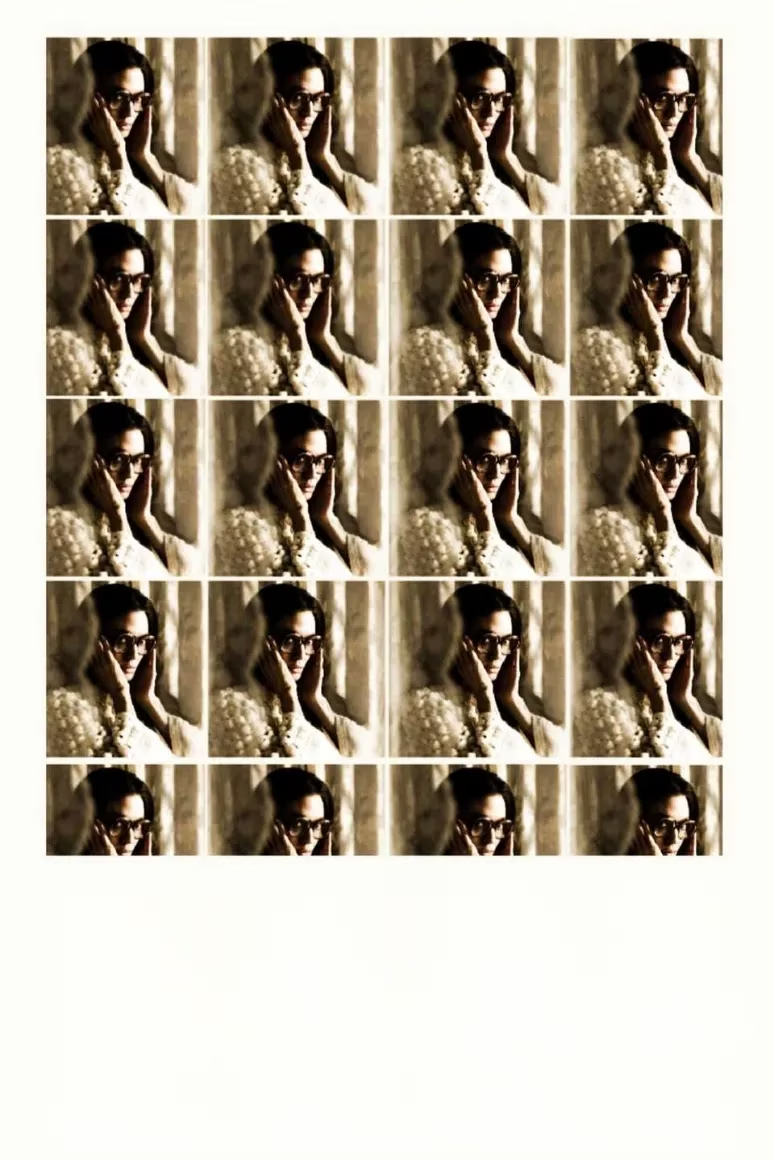
Just when you think the film’s visual palette is set in stone—either Parisian elegance or stuffy theatre golds—Larraín throws a curveball that’s pure Antonioni. The sequence covering her affair with Onassis in Greece is breathtaking. Using the idyllic shores of Katakolo, the director recreates those real photographs of the lovers on the magnate’s yacht, draping everything in a sublime black-and-white filter. The water glitters like shattered glass, and Jolie and Bilginer look like impossibly chic ghosts. It’s such an educated, loving nod to the lost love stories of 1960s cinema, and it proves Larraín isn’t just directing a biopic—he’s orchestrating a visual poem.
It all adds up to this stunning, deliberate journey. The European locales aren’t a travelogue; they’re a map of Callas’ psyche. From a Covent Garden performance artfully recreated in The Apollo Public Theatre to the quietude of Place Vendôme carrying her longing—each spot is meticulously chosen to reflect an inner crisis. Larraín and cinematographer Ed Lachman complete their trilogy on iconic women with this piece, bathing Jolie in a light that’s both unforgiving and adoring. I’ll be honest, I finished Maria feeling like I had walked every step with her in four different countries, and my feet were killing me. But that’s the thing about a masterpiece; it makes you live inside its world so completely that for two hours, you’re Parisian, you’re Greek, you’re a ghost at La Scala. And I wouldn’t have it any other way.